What they have and what they do are secondary to what they are….

Mother Teresa
Mother Teresa (1910-1997)

Mother Teresa’s greatness and power arose because she addressed the most noble qualities within human nature—unconditional love and nonjudgmental compassion.

When someone dedicates their life to carrying out the principle of universal truth, that person becomes magnetic. They develop the power of attraction. What they have and what they do are secondary to what they are. It is that quality, which the world acknowledges and brings them, that we term success.

What was it that Mother Teresa acknowledged in others and, by so doing, magnificently brought forth for all of us to see in her? When she ministered to the poor and the sick and the dying in the streets of Kolkata, was she trying to save them from death? Was she trying to raise funds for the poor? No. What she ministered to and acknowledged was the intrinsic truth of human dignity, worth, value, nobility, lovability, and greatness. Those qualities are intrinsic in every human being no matter how abysmal their external life situation may seem to be.
The Map of Consciousness Explained: A Proven Energy Scale to Actualize Your Ultimate Potential by David R. Hawkins
Beginning of economic populism?

What happened with Gamestop is the beginning of economic populism. Robinhood weaponized the Occupy Wall Street movement, social drove viral interest, and nearly everyone hates Wall Street and Robinhood. There’s a lot to unpack here, political, economic, social, and technological, but understanding how all these themes come together is crucial to understand the future of fintech…..

In this interconnected world cooperation and reciprocity are the best strategies of all

Generous Corn Farmer
There was a farmer who grew excellent quality corn. Every year he won the award for the best grown corn. One year a newspaper reporter interviewed him and learned something interesting about how he grew it. The reporter...
GENEROUS CORN FARMER

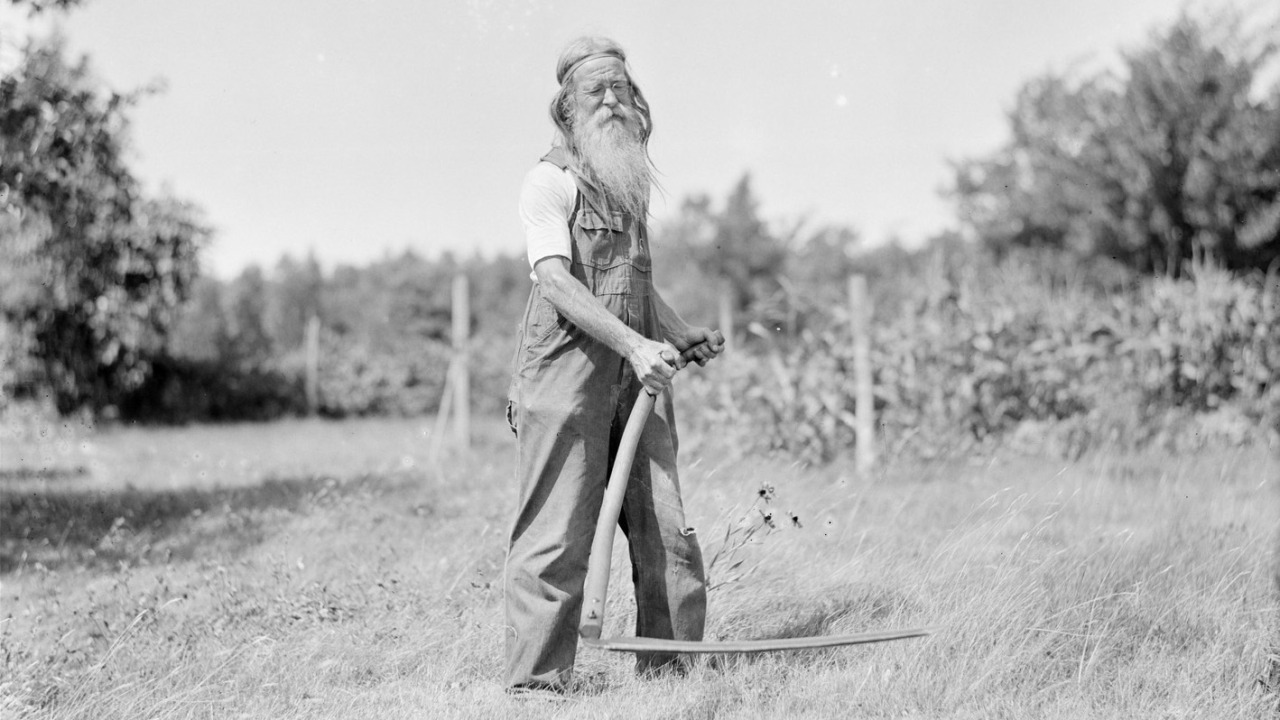
There was a farmer who grew excellent quality corn. Every year he won the award for the best grown corn. One year a newspaper reporter interviewed him and learned something interesting about how he grew it. The reporter discovered that the farmer shared his seed corn with his neighbors. “How can you afford to share your best seed corn with your neighbors when they are entering corn in competition with yours each year?” the reporter asked.

“Why sir,” said the farmer, “Didn’t you know? The wind picks up pollen from the ripening corn and swirls it from field to field. If my neighbors grow inferior corn, cross-pollination will steadily degrade the quality of my corn. If I am to grow good corn, I must help my neighbors grow good corn.”

Bottom line:

If you manage to see how interconnected the game really is, then it becomes evident that cooperation and reciprocity are the best strategies of all.

-STORY.FUND

Liberty lies in the hearts of men and women

“I often wonder whether we do not rest our hopes too much upon constitutions, upon law and upon courts. These are false hopes, believe me, these are false hopes. Liberty lies in the hearts of men and women; when it dies there, no constitution, no law, no court can save it; no constitution, no law, no court can even do much to help it. While it lies there it needs no constitution, no law, no courts to save it.”

~ Judge Learned Hand
(1872-1961), Judge, U. S. Court of Appeals

Moonshot Mindset

What if you could achieve 10X growth while your competitors achieve 10% growth?

A Moonshot is going 10X bigger or better when everyone else is pursuing incremental change.

Most companies ask questions such as, “How do we reduce costs by 10%?” or “How can we increase profits by 10%?”

Continue reading

Yuval Noah Harari on The Story of Sapiens

Prof. Yuval Noah Harari (@harari_yuval) is a historian and bestselling author who is considered one of the world’s most influential public intellectuals today. His popular books—Sapiens: A Brief History of Humankind, Homo Deus: A Brief History of Tomorrow, and 21 Lessons for the 21st Century— have sold 27.5 million copies in 60 languages. They have been recommended by Barack Obama, Chris Evans, Janelle Monáe, Bill Gates, and many others. The Guardian has credited Sapiens with revolutionizing the nonfiction market and popularizing “brainy books.”

He is also behind Sapiens: A Graphic History, a new graphic novel series in collaboration with comics artists David Vandermeulen (co-writer) and Daniel Casanave (illustrator). This beautifully illustrated series is a radical reworking of his book Sapiens: A Brief History of Humankind. The series will be published in four volumes starting in fall 2020 with Volume 1, The Birth of Humankind, which is out now.