Build a point of view (POV). Understand what is changing in the world and what opportunities these changes make possible. Create a POV that is credible, coherent, compelling and commercial. Start your journey with a sense of destiny. Don’t be afraid to dream big. Continue reading →
For the vast majority of us, debate is familiar because we live in debate cultures (of what Deborah Tannen calls ‘argument cultures’). Continue reading →
Picture an egg. Day after day, it sits there. No one pays attention to it. No one notices it. Certainly no one takes a picture of it or puts it on the cover of a celebrity-focused business magazine. Then one day, the shell cracks and out jumps a chicken.
All of a sudden, the major magazines and newspapers jump on the story: “Stunning Turnaround at Egg!” and “The Chick Who Led the Breakthrough at Egg!” From the outside, the story always reads like an overnight sensation — as if the egg had suddenly and radically altered itself into a chicken.
Now picture the egg from the chicken’s point of view.
While the outside world was ignoring this seemingly dormant egg, the chicken within was evolving, growing, developing — changing. From the chicken’s point of view, the moment of breakthrough, of cracking the egg, was simply one more step in a long chain of steps that had led up to that moment. Granted, it was a big step — but it was hardly the radical transformation that it looked like from the outside.
It’s a silly analogy — but then our conventional way of looking at change is no less silly. Everyone looks for the “miracle moment” when “change happens.” But ask the good-to-great executives when change happened. They cannot pinpoint a single key event that exemplified their successful transition.
Now picture a huge, heavy flywheel. It’s a massive, metal disk mounted horizontally on an axle. It’s about 100 feet in diameter, 10 feet thick, and it weighs about 25 tons. That flywheel is your company. Your job is to get that flywheel to move as fast as possible, because momentum — mass times velocity — is what will generate superior economic results over time. Continue reading →
Inside the cage, hang a banana on a string and place a set of stairs under it. Before long, a monkey will go to the stairs and start to climb towards the banana. As soon as he touches the stairs, spray all of the other monkeys with cold water.
After a while, another monkey makes an attempt with the same result – all the other monkeys are sprayed with cold water. Pretty soon, when another monkey tries to climb the stairs, the other monkeys will try to prevent it.Continue reading →
Instead of focusing on what’s next , let’s get back to what’s first . The previous era of business was defined by the question, Where’s the opportunity? I’m convinced that business success in the future starts with the question, What should I do with my life? Continue reading →
Sam Walton, the founder of Wal-Mart, grew up poor in a farm community in rural Missouri during the Great Depression. The poverty he experienced while growing up taught him the value of money and to persevere. Continue reading →
Here’s the full text of Nokia CEO Stephen Elop’s “Burning Platform” memo, which bemoans missed opportunities and identifies multiple strategic challenges to the mobile phone company. Continue reading →
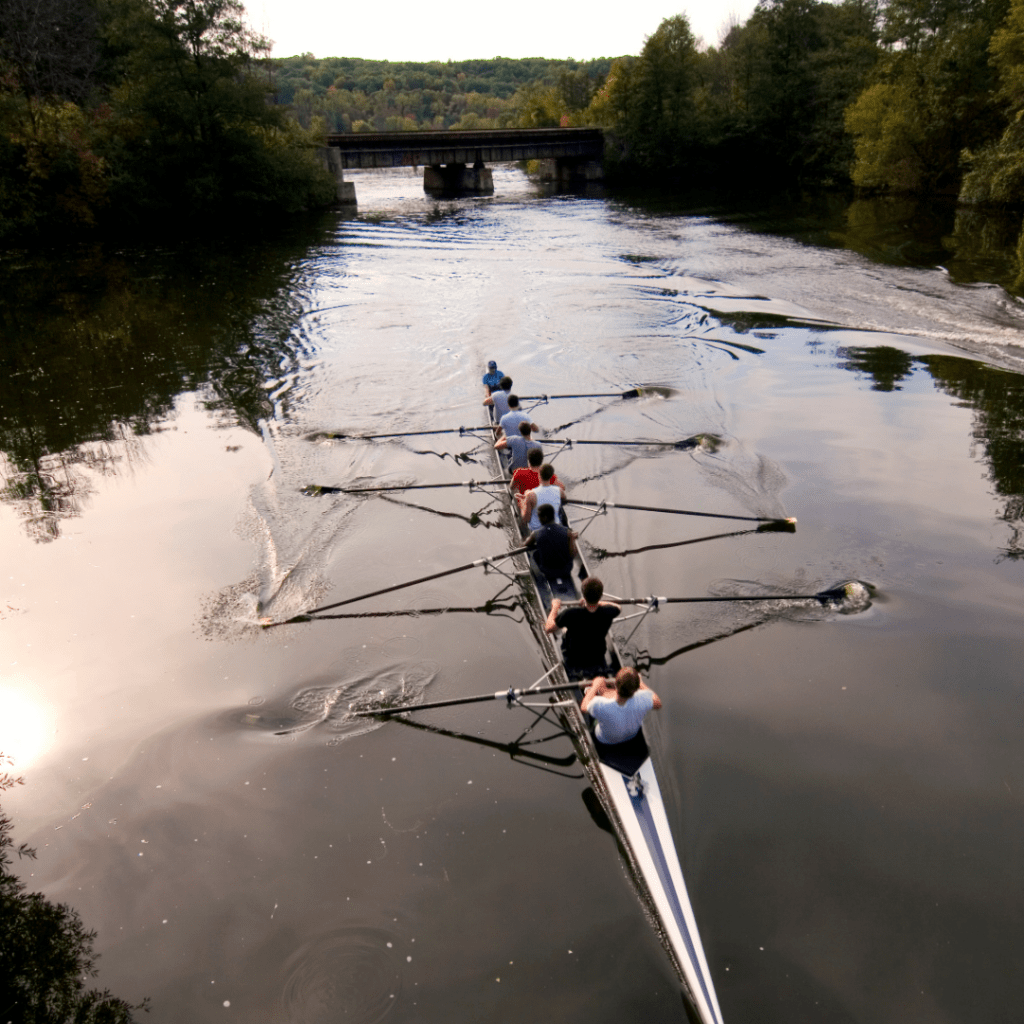
At their best, the units in good trust-based organizations hardly have to be managed, but they do need a multiplicity of leaders. I once teased an English audience by comparing a team of Englishmen to a rowing crew on the river – eight men going backward as fast as they can without talking to each other, steered by the one person who can’t row! I thought it quite witty at the time, but I was corrected after the session by one of the participants, who had once been an Olympic oarsman. “How do you think we could go backward so: fast without communicating, steered by this little fellow in the stern, if we didn’t know each other very well, didn’t have total confidence to do our jobs and a shared commitment – almost a passion – for the same goal! It is the perfect formula for a team.”


 ONE TUSK