
Thought of the week – 16th June 2025


“To desire is to obtain; to aspire is to achieve.”
“You will become as small as your controlling desire; as great as your dominant aspiration:”
How the author had managed to deliver so many helpful lessons in so little number of pages seems most incredible. Self-help or Self-development books are often long and descriptive books, typically attempting to orient the reader along a particular school of thought (which is not a bad thing). But this book is an exception to that rule. An incredible amount of principles are explained in this tiny book, and in such a clear way, with all the characteristics of any other self-help book. I’m certain that this should be a must have book for anyone whose interested in this genre. It won’t take you more than an hour to read the entire book, but you will be surprised how much you’ll come across.
– Tharindu

In Values over Valuables, Harmon Kong, a seasoned wealth manager with decades of experience in helping families secure their financial futures, delves into the importance of passing on meaningful values rather than just material wealth. He highlights how families can avoid conflicts and build a legacy rooted in shared values and open communication. Allowing families to grow together and strengthen their bonds through stories, guidance and actionable items for families to do.
Whether you have little or a lot, Kong provides practical guidance for all families on preparing to not only manage money responsibly but also to uphold the family’s guiding principles, in some cases helping families redefine what wealth means to them. By prioritizing core values over financial details, families can achieve wealth beyond measure and ensure their legacy has a lasting, significant impact.
In this book you will discover how to:
Value over Valuables equips families with the tools to have conversations that matter, align around shared values, and use their wealth as a means to support a positive, multi-generational legacy. Are you wanting more from your legacy?
A Refreshing Take on Financial Wisdom
This thoughtful guide offers a unique perspective on managing money that goes beyond the typical financial advice. The author skillfully weaves personal experiences with practical insights, making complex financial concepts easily digestible. The narrative flows smoothly as it challenges conventional thinking about wealth and success, encouraging readers to align their financial decisions with their core values. The writing style is engaging and conversational, making it feel like a chat with a knowledgeable friend rather than a lecture from a financial expert. What stands out is the balanced approach to wealth creation while maintaining personal integrity and well-being. The practical examples and actionable strategies are particularly helpful for anyone looking to make meaningful changes in their relationship with money. While some concepts might seem familiar, the fresh perspective and genuine approach make this an enlightening read that I’d happily recommend to others seeking financial guidance with a conscience.
-Matt
Here’s how you, as a leader, can help make your company future-
ready:
Hans-Paul Bürkner
Managing Director & Global Chair Emeritus
Boston Consulting Group
1. To solve an issue quickly, be soft on the person and hard on the problem.
2. Pretend everyone was sent to teach you something.
3. Pause in speaking + eye contact = confidence.
4. Make people feel important with the SHR Method: Seen, Heard, Remembered.
5. A person’s favorite sound is their name, so remember it (h/t Dale Carnegie).
6. “Praise publicly. Criticize privately.” —Warren Buffett
7. To give feedback, first let the other person know you have their back.
8. “Unspoken expectations are premeditated resentments.” —Neil Strauss
9. The best networking strategy is a helping others first strategy.
10. Loneliness is a silent pandemic; assume people want to meet you.
Continue reading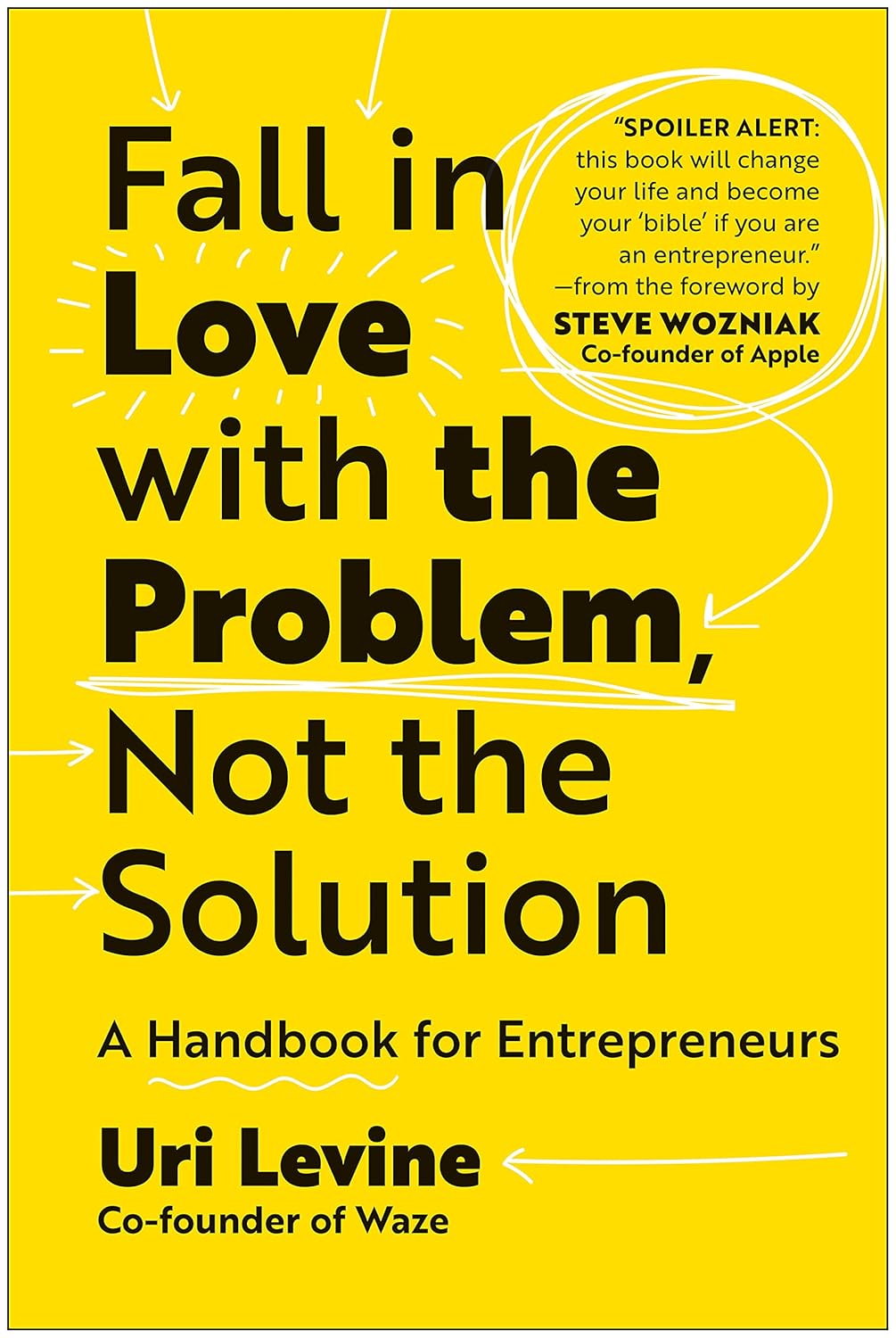
Unicorns—companies that reach a valuation of more than $1 billion—are rare. Uri Levine has built two.
And in Fall in Love with the Problem, Not the Solution, he shows you just how he did it.
As the cofounder of Waze—the world’s leading commuting and navigation app with more than 700 million users to date, and which Google acquired in 2013 for $1.15 billion—Levine is committed to spreading entrepreneurial thinking so that other founders, managers, and employees in the tech space can build their own highly valued companies.
Levine offers an inside look at the creation and sale of Waze and his second unicorn, Moovit, revealing the formula that drove those companies to compete with industry veterans and giants alike. He offers tips on:
Fall in Love with the Problem, Not the Solution offers mentorship in a book from one of the world’s most successful entrepreneurs, and empowers you to build a successful business by identifying your consumers’ biggest problems and disrupting the inefficient markets that currently serve them.
Continue reading ONE TUSK