20 sentences that can maximise your social intelligence

1. To solve an issue quickly, be soft on the person and hard on the problem.

2. Pretend everyone was sent to teach you something.

3. Pause in speaking + eye contact = confidence.

4. Make people feel important with the SHR Method: Seen, Heard, Remembered.

5. A person’s favorite sound is their name, so remember it (h/t Dale Carnegie).

6. “Praise publicly. Criticize privately.” —Warren Buffett

7. To give feedback, first let the other person know you have their back.

8. “Unspoken expectations are premeditated resentments.” —Neil Strauss

9. The best networking strategy is a helping others first strategy.

10. Loneliness is a silent pandemic; assume people want to meet you.

Continue reading

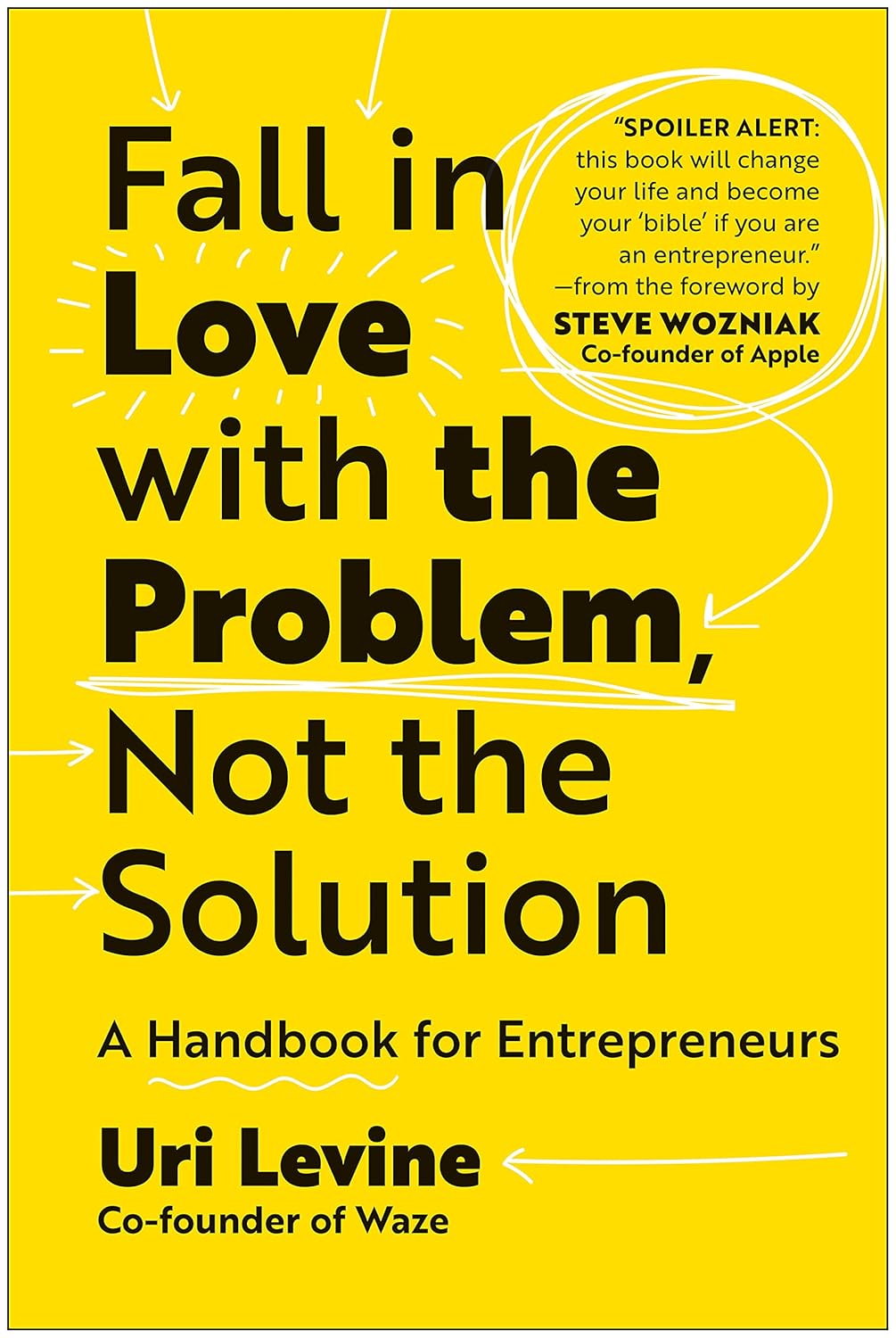
Book of the Month – June 2024: Fall in Love with the Problem, not the Solution by Uri Levine

Unicorns—companies that reach a valuation of more than $1 billion—are rare. Uri Levine has built two.

And in Fall in Love with the Problem, Not the Solution, he shows you just how he did it.

As the cofounder of Waze—the world’s leading commuting and navigation app with more than 700 million users to date, and which Google acquired in 2013 for $1.15 billion—Levine is committed to spreading entrepreneurial thinking so that other founders, managers, and employees in the tech space can build their own highly valued companies.

Levine offers an inside look at the creation and sale of Waze and his second unicorn, Moovit, revealing the formula that drove those companies to compete with industry veterans and giants alike. He offers tips on:

  • Firing and hiring
  • Disrupting “broken” markets
  • Raising funding
  • Understanding your users
  • Reaching product market fit
  • Making scale-up decisions
  • Going global
  • Deciding when to sell

Fall in Love with the Problem, Not the Solution offers mentorship in a book from one of the world’s most successful entrepreneurs, and empowers you to build a successful business by identifying your consumers’ biggest problems and disrupting the inefficient markets that currently serve them.

Continue reading

Thought of the Week – 13th May 2024 (3)

Photo by Marco Meyer on Unsplash

We are all “heroes in training”

Heroism is rather a mind-set or an accumulation of our personal and social habits. It is a way of being. And it is a special way of viewing ourselves. To be a hero requires taking effective action at crucial junctures in our lives, to make an active attempt to address injustice or create positive change in the world. To be a hero requires great moral courage. And each of us has an inner hero waiting to be expressed. We are all “heroes in training.” Our hero training is life, the daily circumstances that invite us to practice the habits of heroism: to commit daily deeds of kindness; to radiate compassion, starting with self-compassion; to bring out the best in others and ourselves; to sustain love, even in our most challenging relationships; to celebrate and exercise the power of our mental freedom.

“Isn’t it amazing?” she said. “The worst brings out the best in us.”

– Philip Zinbardo

How to Read a Book by Mortimer J. Adler

May be an image of text that says "make FADIMAN you nestolgic for for slower, suggestions FADIMA MANNE S will "Adler and Yan Doren's more cornest, loss triviel time. HOW TO READ A O GUIDE INTELLIGENT THE CLASSIC READING to ADLER and DOREN MORTIMER J. CHARLES"

Imagine a world where reading isn’t just passing words on a page, but a thrilling puzzle to be cracked, a conversation to be engaged in, and a treasure trove of knowledge to be unearthed.

This is the world promised by Mortimer J. Adler’s seminal work, “How to Read a Book”.

Here are 10 guiding principles of reading from “How to Read a Book” by Mortimer J. Adler:

Principle One: Active Reading

Imagine reading like a detective, not a spectator. Don’t simply let the words flow past you. Actively engage the text:

What is the author’s main point?

What evidence do they use to support their claims?

Are there any logical fallacies or inconsistencies?

Can I connect this to other things I know?

Take notes on key points, arguments, and questions. Highlight significant passages for later reference.

Principle Two: Purposeful Reading

What drives you to pick up a book? Identify your reason:

Enjoyment: Get lost in a story, laugh, or escape reality.

Information: Learn new facts, gain knowledge on a specific topic.

Understanding: Develop a deeper comprehension of complex ideas or philosophies.

Knowing your purpose guides your reading pace, level of analysis, and whether you annotate or simply absorb the story.

Principle Three: Diversity in Reading

Don’t get stuck in a reading rut! Explore different genres, authors, and topics. Reading a variety of books:

-Expands your knowledge base.

-Challenges your existing perspectives.

-Develops different reading skills for different types of texts.

-Think of it like exercising different muscles to become a well-rounded reader.

Principle Four: Syntopic Reading

Don’t read books in isolation. Look for other books on the same subject and compare and contrast them. This allows you to:

-See different perspectives and interpretations of the topic.

-Identify common themes and arguments across different sources.

-Form a more nuanced and informed understanding of the subject.

-It’s like having a conversation with several experts on the same topic.

Principle Five: Annotation as Memory Enhancement

Treat your books like active learning tools. Underline key passages, write notes in the margins, and even create diagrams to visualize complex ideas. This:

-Reinforces your understanding during and after reading.

-Provides a quick reference point for revisiting key points.

-Creates a personalized study guide for future review.

-Turn your books into active learning resources.

Continue reading

25 Things About Life I Wish I Had Known 10 Years Ago

We might learn things quickly, but we often forget things at the same rate—and sometimes we need to remind ourselves of the things we’ve learned.

Here are 25 of those reminders that others taught me.

1. Struggle Is Good

Never say “I can’t take it anymore.” Say “Bring it on!”

2. Don’t Complain

Complaining is the biggest waste of time there is. Either do something about it, and if you can’t, shut up about it.

3. Spend Time With People You Love

That’s your family and best friends. If you don’t have a family, create one. Most people in life are only visitors. Family is for life.

4. Don’t Start A Relationship If You’re Not In Love

I’ve done this more than once. You kind of like someone and think: “We might as well give it a shot.” Not a good idea. You’re either in love, or you are not. Don’t fool yourself. It’s not fair to you and the other person.

5. Exercise Daily

I didn’t get this until recently. A healthy body is where you have to start everything in life. If you can’t build a healthy and strong body, what CAN you build in life?

6. Keep A Journal

No, keeping a journal is not for children. It helps you to become a better thinker and writer. “I don’t want to be a writer” you might think. Well, how many emails and texts do you send a day? Everybody is a writer.

7. Be Grateful

Say ‘thank you’ to everyone and everything. “Thank you for this beautiful day.” “Thankyou for your email.” “Thank you for being there for me.”

8. Don’t Care About What People Think

We all die in the end, do you really think it matters what people think of you?

9. Take More Risks

Don’t be such a wimp.

10. Pick An Industry, Not A Job

If you want to become good at something, you need to spend years and years doing that. You can’t do that if you hop from industry to industry. Pick an industry you love and start at the bottom. You will find the perfect role for you eventually.

11. Lead The Way

When you find yourself in a situation where everyone looks at each other, it’s time for you to lead. You‘re a leader when you decide to become one. There’s no initiation or a title. Just a decision.

12. Money Is Not The Most Important Thing

You have to train yourself not to care about money and focus on providing value instead. Also, don’t become too dependent on the stuff you own — otherwise, the stuff will own you.

Continue reading