We are so obsessed with doing that we have no time and no imagination left for being. As a result, men are valued not for what they are but for what they do or what they have – for their usefulness… We have what we seek, it is there all the time, and if we give it time, it will make itself known to us.” ~Thomas Merton
Self Realisation
What are you so Busy About?
When was the last time you made the time to be silent and still? When was the last time you carved out a chunk of time to enjoy the power of solitude to restore, refocus and revitalize your mind, body and spirit?
All of the great wisdom traditions of the world have arrived at the same conclusion: to reconnect with who you really are as a person and to come to know the glory that rests within you, you must find the time to be silent on a regular basis. Sure, you are busy. But as Thoreau said: “It is not enough to be busy, so are the ants. The question is what are you so busy about?”

Experiencing solitude, for even a few minutes a day, will keep you centered on your highest life priorities and help you avoid the neglect that pervades the lives of so many of us. And saying that you don’t have enough time to be silent on a regular basis is a lot like saying you are too busy driving to stop for gas – eventually it will catch up with you.
Robin Sharma from Who Will Cry When you Die?
The Power of NOT Knowing
Emotions: The Hidden Risk Factor for Heart Disease
Dr. Stephen Sinatra

Early in my career, as part of my effort to understand how our emotions affect heart health, I trained as a psychotherapist. I discovered then that our heart is indeed much more than a pump.
We all know the sayings, “you touched my heart,” “you stole my heart,” and “my heart is broken.” The heart is the only organ in the body that carries such emotionally charged meaning. But more importantly, these sayings are not simply images; they can describe real, physical, medical events in the heart. The “heavy heart” that comes with sadness, for example, can actually lead to chest pain.
Our emotions and our stresses are far bigger risk factors for heart disease than we acknowledge them to be. When stressed, the body floods itself with the hormones cortisol and adrenaline. Over time, an overdose of these hormones can lead to symptoms such as heart palpitations, ulcers, stroke, or heart attack. So, although we may tell ourselves that we are not as upset as we think we are, our emotions show themselves in other ways.
Simply put, the body never lies. Do not neglect the emotional risk factors for heart disease. How can you reduce such stressors? Here are 15 ways to keep emotions from putting your heart at risk.
- Explore Your Anger. Anger is the Achilles’ heel of the cardiovascular system—a trigger for serious problems, including a heart attack. Your blood vessels constrict and your blood pressure rises. The electrical currents to your heart become unstable. And if you have arterial plaque, anger is like throwing a match into a can of gasoline. The plaque can rupture, and the resulting clots can kill you.
One of the best ways to keep anger from becoming a risk factor for heart disease is to release it. Find a place of solitude and scream, yell, or cry. Talk to a friend or visit a skilled psychotherapist to work on your anger. Or, try twisting towels, hitting tennis balls, or punching pillows. It also helps to ask yourself why you feel angry. Recognize that you cannot be effective when you are possessed by anger. If you understand why you’re coming to such an emotional point, you’ll be better able to identify and avoid those triggers……….
Life is NOT a Journey
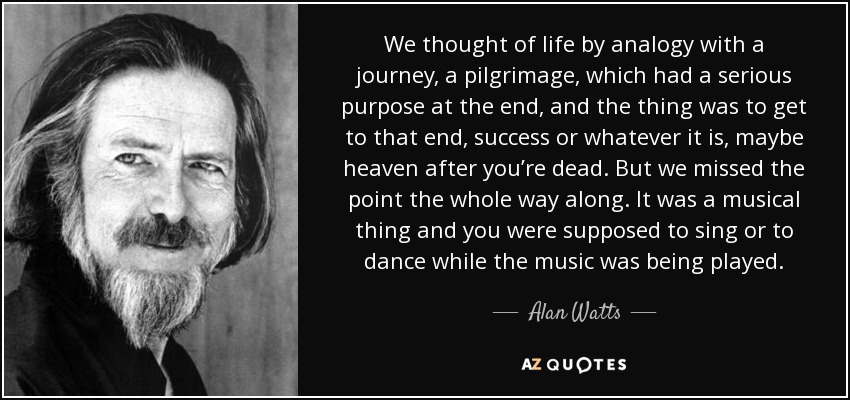
His life is his message
If you want a good life…..
The story of two Farmers:
Once upon a time,.in a small village lived two poor farmers. They had small piece of land on which they worked hard to take care of their own and their family’s needs.
Suddenly, both of them died on the same day. Yamraj (God of Death) took both of them together to God.
God asked them, ‘What was missing in your life?’
One of the farmers said angrily, ‘You gave me nothing and I lived a very painful life. I had to work in the fields like a bull all my life & whatever I earned had to be spent on just feeding myself & my family. I couldn’t wear good clothes or feed my family good food & whenever I was able to make some extra income, someone would come & take away all. I had nothing left with me.’
After listening to him God again asked, ‘What do you want now? What should I make you in your next life?’
The farmer replied, “God, do something so that I never have to give anything to anyone. I only receive money and things from all sides.’
God said, ‘Ok. You can go now. I will give you the life you have asked for.’
He left.
Now, it was the turn of the other farmer. God asked him, ‘What was missing in your life?’
The farmer, with folded hands said ‘God, You have already given me everything. A good family, some land, plenty of food to eat. I and my family never slept hungry.
There was only one shortcoming in my life which I regretted my whole life & still do today. Sometimes, hungry or thirsty people used to come to my door, to ask for food but I was not able to give them anything as I didn’t have enough to give & they had to return from my door, hungry.’
God asked him, ‘What do you want now? What do you want to be in your next life?’
The farmer pleaded with God, ‘God, do something so that no one will ever go away from my door, thirsty or hungry.’
God said, ‘Ok. You can leave now. You will be given what you asked for.’
Both the farmers were born in the same village on the same day. The farmer who asked only to recieve money from all sides but not give anything to anyone – he became a beggar in the village. Now he didn’t have to give anything to anyone. Anyone who passed by him, used to give him money & things.
Moral: It is often seen that, mostly people always like others’ things more & because of this they are not able to live their life well & are never happy. If you want to live a good life, think good. Do not count just the shortcomings of your life, rather be grateful & enjoy what God has given & serve others, you’ll never lack anything & will ways be happy.
On the other hand, the farmer who didn’t ask God for anything except that there would be never a day when anyone has to leave his house thirsty and hungry – became the richest man of that village.
-Osho
( contributed by Mr Balasunder)
Mentality of tolerance builds nations…
THE MAN WHO USED TO URINATE ON MY HEAD WHEN I WAS IN PRISON
Nelson Mandela: “After becoming president, I once asked some members of my close protection to walk with me around the city, to have lunch in one of its restaurants.
We sat in one of the restaurants in the city centre and all asked for food.”
“After a while the waiter brought us our requests, I noticed that there is someone sitting in front of my table waiting for food”
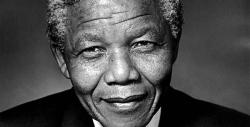
I then said to one of the soldiers: go ask this person to join us with his food and eat with us.
The soldier went to ask the man. The man brought his food and sat next to me while I asked him and started eating.
His hands were constantly shaking until everyone finished their meal and the man left.
The soldier said to me: The man was apparently very ill. His hands were shaking while he ate!”
“No, not at all,” Mandela said.
“This man was the guard of the prison where I was imprisoned.
“Often, after the torture I suffered, I would scream and ask for some water.
“The same man would come every time and urinated on my head. “
“So I found him frightened, trembling, expecting me to reciprocate, at least in the same way, either by torturing him or by imprisoning him as I am now the President of the State of South Africa.”
“But that’s not my character or part of my ethic.”
“The mentality of reprisals destroys states, while the mentality of tolerance builds nations.”
University of Unlearning
“`German scholar: I have come to learn from you.

Born – December 30, 1879, India
Died – April 14, 1950. Tamil Nadu, South India.
Sri Ramana Maharshi said, ‘then you go elsewhere, because here we teach unlearning. Learning is not our way. You go elsewhere. If you are ready to unlearn, be here. If you have come to learn more, then this is not the right place. Then go somewhere else – universities exist for learning. When you come to me, come to unlearn. This is a university for unlearning, university to create no-mind, a university where whatsoever you know will be taken away. All your knowledge has to be dropped so that you become knowing, so you get a perfection, a clarity, so that your eyes are not filled with theses, or theories, with prejudices, concepts; so your eyes have a clarity, an absolute clarity and transparency, so that you can see. The truth is already there. It has always been there.“`
(Contributed by Mr. Balasunder)
Book of the Month – June 2021
The Seven Spiritual Laws of Success by Deepak Chopra

Instead, Deepak Chopra offers a life-altering perspective on the attainment of success: When we understand our true nature and learn to live in harmony with natural law, a sense of well-being, good health, fulfilling relationships, and material abundance spring forth easily and effortlessly.
Deepak Chopra is the bestselling author of numerous books and audio programs that cover every aspect of mind, body, and spirit. His groundbreaking books blend physics and philosophy, the practical and the spiritual, with dynamic results.
The Seven Laws of Success distills the essence of Chopra’s teachings into seven simple, yet powerful, principles that can easily be applied to create success in all areas of your life. Filled with timeless wisdom and practical steps you can apply right away, this is a book you will want to read and refer to again and again.
 ONE TUSK