personal transformation
Emotions: The Hidden Risk Factor for Heart Disease
Dr. Stephen Sinatra

Early in my career, as part of my effort to understand how our emotions affect heart health, I trained as a psychotherapist. I discovered then that our heart is indeed much more than a pump.
We all know the sayings, “you touched my heart,” “you stole my heart,” and “my heart is broken.” The heart is the only organ in the body that carries such emotionally charged meaning. But more importantly, these sayings are not simply images; they can describe real, physical, medical events in the heart. The “heavy heart” that comes with sadness, for example, can actually lead to chest pain.
Our emotions and our stresses are far bigger risk factors for heart disease than we acknowledge them to be. When stressed, the body floods itself with the hormones cortisol and adrenaline. Over time, an overdose of these hormones can lead to symptoms such as heart palpitations, ulcers, stroke, or heart attack. So, although we may tell ourselves that we are not as upset as we think we are, our emotions show themselves in other ways.
Simply put, the body never lies. Do not neglect the emotional risk factors for heart disease. How can you reduce such stressors? Here are 15 ways to keep emotions from putting your heart at risk.
- Explore Your Anger. Anger is the Achilles’ heel of the cardiovascular system—a trigger for serious problems, including a heart attack. Your blood vessels constrict and your blood pressure rises. The electrical currents to your heart become unstable. And if you have arterial plaque, anger is like throwing a match into a can of gasoline. The plaque can rupture, and the resulting clots can kill you.
One of the best ways to keep anger from becoming a risk factor for heart disease is to release it. Find a place of solitude and scream, yell, or cry. Talk to a friend or visit a skilled psychotherapist to work on your anger. Or, try twisting towels, hitting tennis balls, or punching pillows. It also helps to ask yourself why you feel angry. Recognize that you cannot be effective when you are possessed by anger. If you understand why you’re coming to such an emotional point, you’ll be better able to identify and avoid those triggers……….
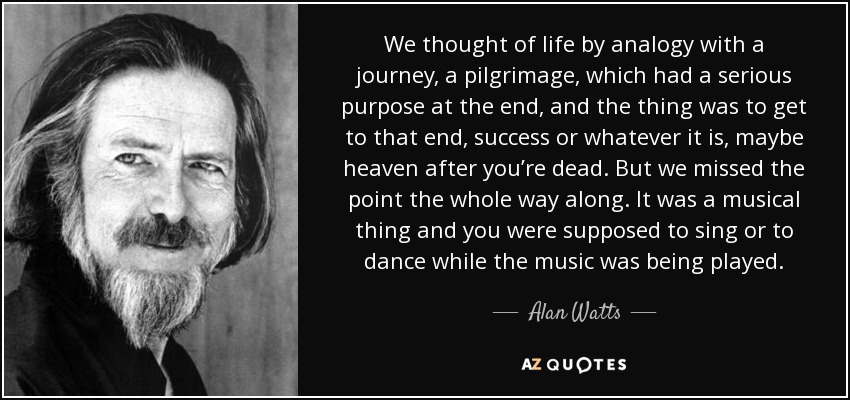
Life is NOT a Journey
Mentality of tolerance builds nations…
THE MAN WHO USED TO URINATE ON MY HEAD WHEN I WAS IN PRISON
Nelson Mandela: “After becoming president, I once asked some members of my close protection to walk with me around the city, to have lunch in one of its restaurants.
We sat in one of the restaurants in the city centre and all asked for food.”
“After a while the waiter brought us our requests, I noticed that there is someone sitting in front of my table waiting for food”
I then said to one of the soldiers: go ask this person to join us with his food and eat with us.
The soldier went to ask the man. The man brought his food and sat next to me while I asked him and started eating.
His hands were constantly shaking until everyone finished their meal and the man left.
The soldier said to me: The man was apparently very ill. His hands were shaking while he ate!”
“No, not at all,” Mandela said.
“This man was the guard of the prison where I was imprisoned.
“Often, after the torture I suffered, I would scream and ask for some water.
“The same man would come every time and urinated on my head. “
“So I found him frightened, trembling, expecting me to reciprocate, at least in the same way, either by torturing him or by imprisoning him as I am now the President of the State of South Africa.”
“But that’s not my character or part of my ethic.”
“The mentality of reprisals destroys states, while the mentality of tolerance builds nations.”
Thought of the Week – 19th July 2021 (3)

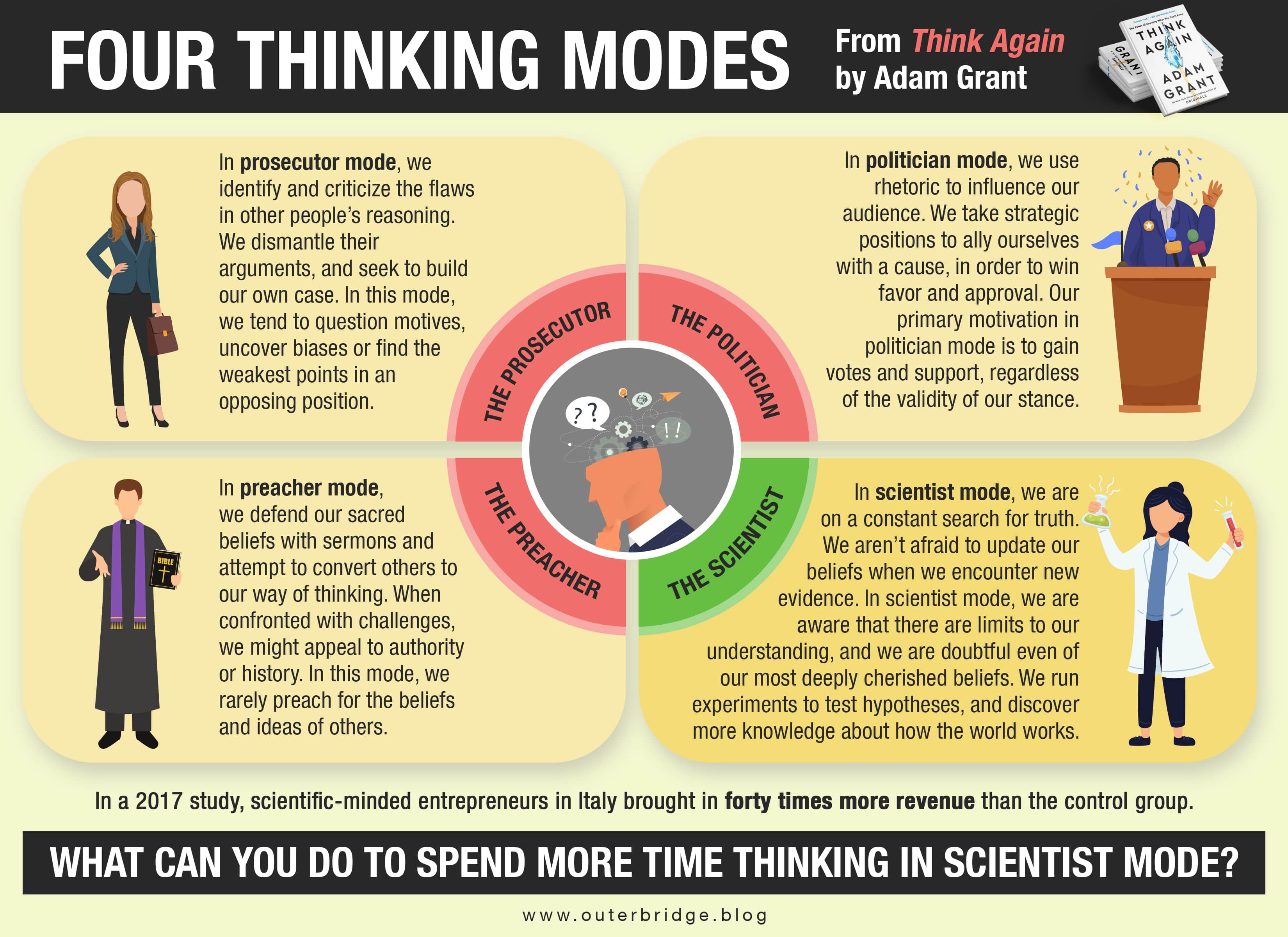
Four Thinking Modes by Adam Grant
| THINK AGAIN — ADAM GRANT4/3/20210 Comments Rating: ★★★★½ Summary: Think Again (Canada/US) explores the power of rethinking in a world where certainty and dogma often spread like wildfire. Much of the time, we hold onto our deeply cherished beliefs and seek out confirming evidence for them. In the process, we settle on beliefs that may be flawed and rarely, if ever, revisit them. When we do so, we act in three main roles: as preachers trying defend our beliefs from questioning, as prosecutors attacking the arguments of the opposition, and as politicians using rhetoric to persuade others to our point of view. However, there is a fourth role that is often neglected: that of a scientist questioning a hypothesis. I co-created an infographic outlining these four modes of thinking. Check it out : |
University of Unlearning
“`German scholar: I have come to learn from you.

Born – December 30, 1879, India
Died – April 14, 1950. Tamil Nadu, South India.
Sri Ramana Maharshi said, ‘then you go elsewhere, because here we teach unlearning. Learning is not our way. You go elsewhere. If you are ready to unlearn, be here. If you have come to learn more, then this is not the right place. Then go somewhere else – universities exist for learning. When you come to me, come to unlearn. This is a university for unlearning, university to create no-mind, a university where whatsoever you know will be taken away. All your knowledge has to be dropped so that you become knowing, so you get a perfection, a clarity, so that your eyes are not filled with theses, or theories, with prejudices, concepts; so your eyes have a clarity, an absolute clarity and transparency, so that you can see. The truth is already there. It has always been there.“`
(Contributed by Mr. Balasunder)
Book of the Month – February 2021 : The Book of Love and Creation by Paul Selig

The Book of Love and Creation simultaneously helps readers develop as spiritual beings within, while growing into increasingly capable, resilient, and confident individuals amid the demands of outer life. Filled with meditations, exercises, psychological insights, and affirmations, The Book of Love and Creation immediately produces change in the life of every dedicated person who approaches it. Perfect for returning readers and newcomers alike, the book is an extraordinary experience in a new body of channeled wisdom that is attracting readers across the world.
Silence is Key
Where you stumble, there your treasure is…
“It seems a farmer was out working his field when his plow caught on something, and it wouldn’t budge. The horse reared up and the farmer cursed. After calming the horse the farmer yanked back on the braces. But the plow still wouldn’t budge. Because he was an impatient man his first reaction was to go into Judger. Had a rock or other obstacle broken his plowshare? That could mean losing at least two days’ work while he hauled the broken parts to the blacksmith! Cursing, he began digging around to free the plow. To his surprise, he discovered that it was caught on an iron ring buried six inches under the ground. After freeing his plow, the farmer got curious. He cleared away some of the dirt and pulled on the iron ring. Off came the lid of an ancient chest. He peeked down inside it. Before him, glittering in the sun, lay a treasure of precious jewels and gold.

This story reminds us that it is often by confronting our toughest obstacles that we find our greatest strengths and possibilities, but sometimes we’ve got to dig deep to find them. Campbell had a phrase for it: Where you stumble, there your treasure is.
To uncover that treasure you’d ask yourself questions like: What could I discover? What haven’t I noticed before? What might be valuable here?”
Change Your Questions, Change Your Life: 12 Powerful Tools for Leadership, Coaching, and Life by Marilee Adams and Marshall Goldsmith
 ONE TUSK