Transformation
How to go deeper in Meditation
Book of the Month – June 2024: Fall in Love with the Problem, not the Solution by Uri Levine
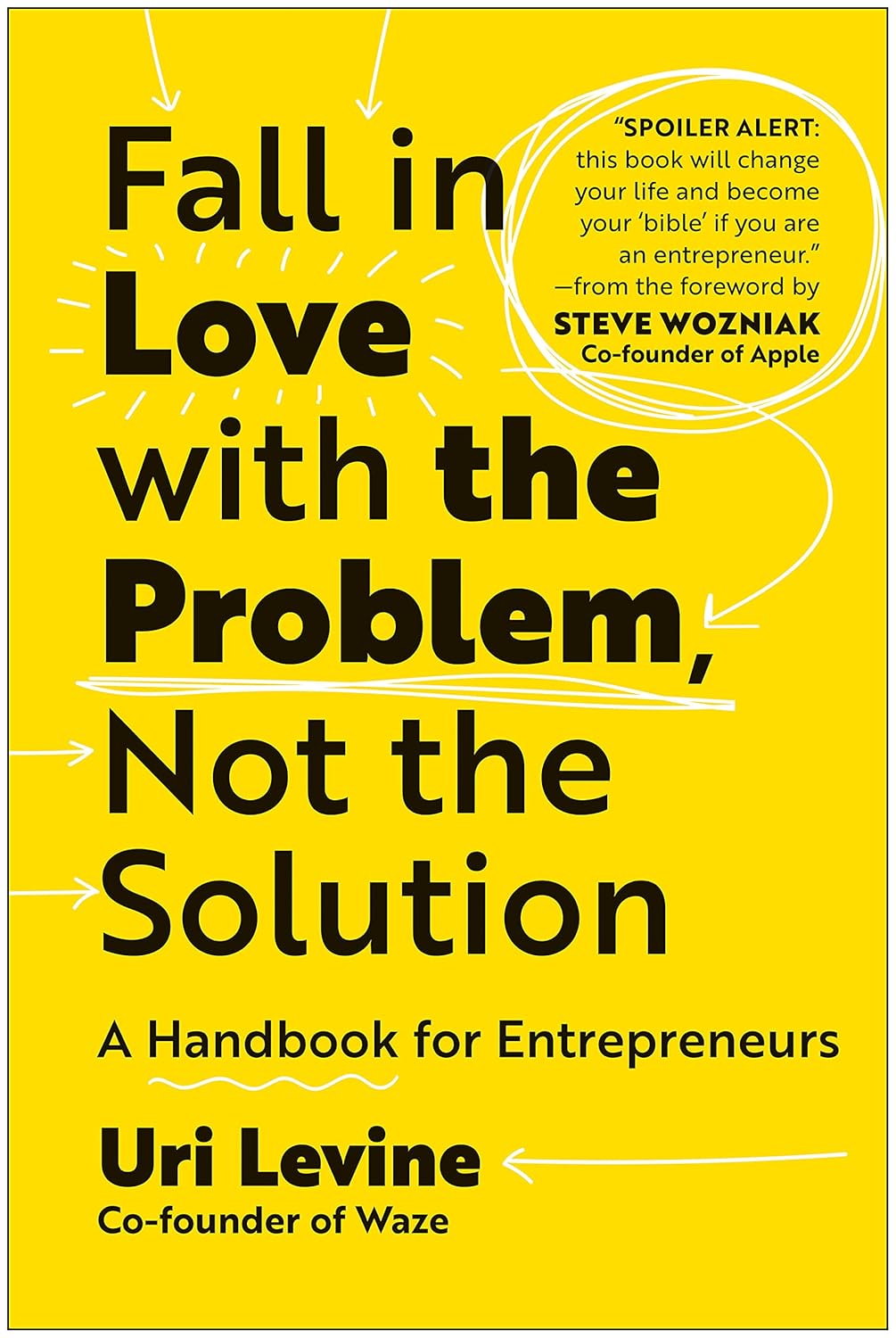
Unicorns—companies that reach a valuation of more than $1 billion—are rare. Uri Levine has built two.
And in Fall in Love with the Problem, Not the Solution, he shows you just how he did it.
As the cofounder of Waze—the world’s leading commuting and navigation app with more than 700 million users to date, and which Google acquired in 2013 for $1.15 billion—Levine is committed to spreading entrepreneurial thinking so that other founders, managers, and employees in the tech space can build their own highly valued companies.
Levine offers an inside look at the creation and sale of Waze and his second unicorn, Moovit, revealing the formula that drove those companies to compete with industry veterans and giants alike. He offers tips on:
- Firing and hiring
- Disrupting “broken” markets
- Raising funding
- Understanding your users
- Reaching product market fit
- Making scale-up decisions
- Going global
- Deciding when to sell
Fall in Love with the Problem, Not the Solution offers mentorship in a book from one of the world’s most successful entrepreneurs, and empowers you to build a successful business by identifying your consumers’ biggest problems and disrupting the inefficient markets that currently serve them.
Continue readingHow to Manifest without trying
WHAT WILL MATTER?
Ready or not, some day it will all come to an end.
There will be no more sunrises, no minutes, hours or days.
All the things you collected, whether treasured or forgotten will pass to someone else.
Your wealth, fame and temporal power will shrivel to irrelevance.
It will not matter what you owned or what you were owed.
Your grudges, resentments, frustrations and jealousies will finally disappear.
So too, your hopes, ambitions, plans and to-do lists will expire.
The wins and losses that once seemed so important will fade away.
It won’t matter where you came from or what side of the tracks you lived on at the end.
It won’t matter whether you were beautiful or brilliant.
Even your gender and skin colour will be irrelevant.

Thought of the Week 13th May 2024(2)
Put Down Those Rocks You’re Carrying

Imagine that as a child you were issued a large backpack to wear at all times. At first you didn’t know what it was for, but then the adults around you started putting rocks in it that you then obediently carried around. After a while you followed their example and began to put rocks in there yourself. Over time, some of the rocks disappeared, but most didn’t, and by now that pack’s really, really heavy.
You often pull out some of the rocks and look at them. They don’t make you happy. In fact they make you miserable. Some at the bottom you never pull out—you might not even remember you have them–but still you carry them. This seems inexplicable. Why would anyone voluntarily bear such a burden?
Unfortunately these rocks are not chunks of shale or granite or sandstone. Those would be easy to get rid of! Instead they are bits of residual resentment, hatred, anger, guilt, and shame from injuries or injustices or mistakes you can’t or won’t or haven’t tried to let go of. The backpack is your mind; the weight of the load burdens not your back but your soul.
What follows are tips for cleaning out that backpack. If the pack’s stuffed full, it’ll take some mental elbow grease to do a good spring cleaning, but trust me, it’s worth it for the sunlight that will pour into your life. After that, there’ll be some ongoing maintenance to keep your pack light and your steps jaunty. Yes, there’ll be surprises. Rocks that you’ll swear you never picked up will somehow get in that backpack, and a few rocks will keep reappearing even after you put them down and down again. Still the effort’s worth it.
So how to get rid of these rocks? The first step is to realize that anger, hatred, resentment, guilt, and shame are not just weight, they’re toxic, poisonous to a healthy life. They cloud your judgement; they sap your attention and energy. They lead to bitterness, depression and despair. If you feed these toxic emotions, the rocks will grow until they’re all you have left. At its most basic, carrying around these rocks is a form of self-harm.
Instead when these emotions arise, acknowledge them, learn from them. Take action if appropriate. And then let them go. This doesn’t mean you should allow people who’ve injured you to do so again. But caution, wisdom, and courage prevent injury better than anger and resentment.
~Karen Lynn Allen
The whole fragment of the book
How to Read a Book by Mortimer J. Adler

Imagine a world where reading isn’t just passing words on a page, but a thrilling puzzle to be cracked, a conversation to be engaged in, and a treasure trove of knowledge to be unearthed.
This is the world promised by Mortimer J. Adler’s seminal work, “How to Read a Book”.
Here are 10 guiding principles of reading from “How to Read a Book” by Mortimer J. Adler:
Principle One: Active Reading
Imagine reading like a detective, not a spectator. Don’t simply let the words flow past you. Actively engage the text:
What is the author’s main point?
What evidence do they use to support their claims?
Are there any logical fallacies or inconsistencies?
Can I connect this to other things I know?
Take notes on key points, arguments, and questions. Highlight significant passages for later reference.
Principle Two: Purposeful Reading
What drives you to pick up a book? Identify your reason:
Enjoyment: Get lost in a story, laugh, or escape reality.
Information: Learn new facts, gain knowledge on a specific topic.
Understanding: Develop a deeper comprehension of complex ideas or philosophies.
Knowing your purpose guides your reading pace, level of analysis, and whether you annotate or simply absorb the story.
Principle Three: Diversity in Reading
Don’t get stuck in a reading rut! Explore different genres, authors, and topics. Reading a variety of books:
-Expands your knowledge base.
-Challenges your existing perspectives.
-Develops different reading skills for different types of texts.
-Think of it like exercising different muscles to become a well-rounded reader.
Principle Four: Syntopic Reading
Don’t read books in isolation. Look for other books on the same subject and compare and contrast them. This allows you to:
-See different perspectives and interpretations of the topic.
-Identify common themes and arguments across different sources.
-Form a more nuanced and informed understanding of the subject.
-It’s like having a conversation with several experts on the same topic.
Principle Five: Annotation as Memory Enhancement
Treat your books like active learning tools. Underline key passages, write notes in the margins, and even create diagrams to visualize complex ideas. This:
-Reinforces your understanding during and after reading.
-Provides a quick reference point for revisiting key points.
-Creates a personalized study guide for future review.
-Turn your books into active learning resources.
Continue readingThought of the Week – 29th April 2024 (4)
Thought of the Week – 29th April 2024 (3)
 ONE TUSK