Bhairav Nath Shukla has been the Manager of Mukti Bhawan for 44 years. He has seen the rich and the poor take refuge in the guesthouse in their final days as they await death and hope to find peace. Shukla hopes with and for them. He sits on the wooden bench in the courtyard, against the red brick wall and shares with me 12 recurring life lessons from the 12000 deaths he has witnessed in his experience as the manager of Mukti Bhawan: Continue reading
Top of Mind
Thought for the Week – 20th March 2017
Thought for the Week – 13th March 2017 (2)

understanding is love’s other name
At the heart of Nhat Hanh’s teachings is the idea that “understanding is love’s other name” — that to love another means to fully understand his or her suffering. (“Suffering” sounds rather dramatic, but in Buddhism it refers to any source of profound dissatisfaction — be it physical or psychoemotional or spiritual.) Understanding, after all, is what everybody needs — but even if we grasp this on a theoretical level, we habitually get too caught in the smallness of our fixations to be able to offer such expansive understanding. He illustrates this mismatch of scales with an apt metaphor:
If you pour a handful of salt into a cup of water, the water becomes undrinkable. But if you pour the salt into a river, people can continue to draw the water to cook, wash, and drink. The river is immense, and it has the capacity to receive, embrace, and transform. When our hearts are small, our understanding and compassion are limited, and we suffer. We can’t accept or tolerate others and their shortcomings, and we demand that they change. But when our hearts expand, these same things don’t make us suffer anymore. We have a lot of understanding and compassion and can embrace others. We accept others as they are, and then they have a chance to transform.
Thought For the Week – 6th March 2017 (2)

( Contributed by Mr. Balasunder)
‘Eppavo Mudintha Karyam’ – Who you are is there from the beginning…..

|
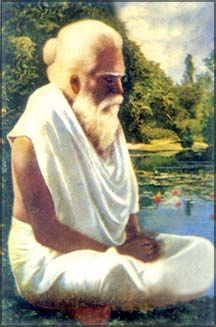
Eppavo Mudintha Karyam: The event was completed long ago. It was all over long ago. Everything has been pre-ordained. Man may like to think that he can determine the course of his life and in a general sense even shape the course of human affairs. It feeds the vanity of man to think that he can shape the future. But man is a mere instrument in the hands of God. It is God alone who controls the past, present and future. Ego-centred man prides in the belief that he has free will when in actuality he is a mere puppet in the hands of an unseen power. One had better accept this fact and surrender oneself to God.
– Yoga Swami
View original post 278 more words
Why is it that certain people seem to naturally inspire confidence, loyalty, and hard work, while others stumble, again and again?
 Why is it that certain people seem to naturally inspire confidence, loyalty, and hard work, while others (who may have just as much vision and smarts) stumble, again and again? It’s a timeless question, and there’s no simple answer. Continue reading
Thought for the week -27th February 2017 (2)

Thought for the Week – 27th February 2017
Success based on Quality of Outcomes rather than Volume
“As long as doctors and hospitals are paid for volume of procedures rather than for quality of outcomes they have little incentive to change.” Continue reading
 ONE TUSK