We are so obsessed with doing that we have no time and no imagination left for being. As a result, men are valued not for what they are but for what they do or what they have – for their usefulness… We have what we seek, it is there all the time, and if we give it time, it will make itself known to us.” ~Thomas Merton
Top of Mind
What are you so Busy About?
When was the last time you made the time to be silent and still? When was the last time you carved out a chunk of time to enjoy the power of solitude to restore, refocus and revitalize your mind, body and spirit?
All of the great wisdom traditions of the world have arrived at the same conclusion: to reconnect with who you really are as a person and to come to know the glory that rests within you, you must find the time to be silent on a regular basis. Sure, you are busy. But as Thoreau said: “It is not enough to be busy, so are the ants. The question is what are you so busy about?”

Experiencing solitude, for even a few minutes a day, will keep you centered on your highest life priorities and help you avoid the neglect that pervades the lives of so many of us. And saying that you don’t have enough time to be silent on a regular basis is a lot like saying you are too busy driving to stop for gas – eventually it will catch up with you.
Robin Sharma from Who Will Cry When you Die?
Emotions: The Hidden Risk Factor for Heart Disease
Dr. Stephen Sinatra

Early in my career, as part of my effort to understand how our emotions affect heart health, I trained as a psychotherapist. I discovered then that our heart is indeed much more than a pump.
We all know the sayings, “you touched my heart,” “you stole my heart,” and “my heart is broken.” The heart is the only organ in the body that carries such emotionally charged meaning. But more importantly, these sayings are not simply images; they can describe real, physical, medical events in the heart. The “heavy heart” that comes with sadness, for example, can actually lead to chest pain.
Our emotions and our stresses are far bigger risk factors for heart disease than we acknowledge them to be. When stressed, the body floods itself with the hormones cortisol and adrenaline. Over time, an overdose of these hormones can lead to symptoms such as heart palpitations, ulcers, stroke, or heart attack. So, although we may tell ourselves that we are not as upset as we think we are, our emotions show themselves in other ways.
Simply put, the body never lies. Do not neglect the emotional risk factors for heart disease. How can you reduce such stressors? Here are 15 ways to keep emotions from putting your heart at risk.
- Explore Your Anger. Anger is the Achilles’ heel of the cardiovascular system—a trigger for serious problems, including a heart attack. Your blood vessels constrict and your blood pressure rises. The electrical currents to your heart become unstable. And if you have arterial plaque, anger is like throwing a match into a can of gasoline. The plaque can rupture, and the resulting clots can kill you.
One of the best ways to keep anger from becoming a risk factor for heart disease is to release it. Find a place of solitude and scream, yell, or cry. Talk to a friend or visit a skilled psychotherapist to work on your anger. Or, try twisting towels, hitting tennis balls, or punching pillows. It also helps to ask yourself why you feel angry. Recognize that you cannot be effective when you are possessed by anger. If you understand why you’re coming to such an emotional point, you’ll be better able to identify and avoid those triggers……….
Thought of the Week – 26th July 2021 (2)
Book of the Month – July 2021: ATOMIC HABITS BY JAMES CLEAR
![Atomic Habits: An Easy & Proven Way to Build Good Habits & Break Bad Ones by [James Clear]](https://m.media-amazon.com/images/I/51PujYOdzLL.jpg)
If you’re having trouble changing your habits, the problem isn’t you. The problem is your system. Bad habits repeat themselves again and again not because you don’t want to change, but because you have the wrong system for change. You do not rise to the level of your goals. You fall to the level of your systems. Here, you’ll get a proven system that can take you to new heights.
Clear is known for his ability to distill complex topics into simple behaviors that can be easily applied to daily life and work. Here, he draws on the most proven ideas from biology, psychology, and neuroscience to create an easy-to-understand guide for making good habits inevitable and bad habits impossible. Along the way, readers will be inspired and entertained with true stories from Olympic gold medalists, award-winning artists, business leaders, life-saving physicians, and star comedians who have used the science of small habits to master their craft and vault to the top of their field.
Learn how to:
* make time for new habits (even when life gets crazy);
* overcome a lack of motivation and willpower;
* design your environment to make success easier;
* get back on track when you fall off course;
…and much more.
Atomic Habits will reshape the way you think about progress and success, and give you the tools and strategies you need to transform your habits–whether you are a team looking to win a championship, an organization hoping to redefine an industry, or simply an individual who wishes to quit smoking, lose weight, reduce stress, or achieve any other goal.
Mentality of tolerance builds nations…
THE MAN WHO USED TO URINATE ON MY HEAD WHEN I WAS IN PRISON
Nelson Mandela: “After becoming president, I once asked some members of my close protection to walk with me around the city, to have lunch in one of its restaurants.
We sat in one of the restaurants in the city centre and all asked for food.”
“After a while the waiter brought us our requests, I noticed that there is someone sitting in front of my table waiting for food”
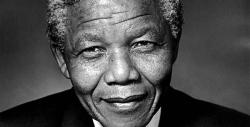
I then said to one of the soldiers: go ask this person to join us with his food and eat with us.
The soldier went to ask the man. The man brought his food and sat next to me while I asked him and started eating.
His hands were constantly shaking until everyone finished their meal and the man left.
The soldier said to me: The man was apparently very ill. His hands were shaking while he ate!”
“No, not at all,” Mandela said.
“This man was the guard of the prison where I was imprisoned.
“Often, after the torture I suffered, I would scream and ask for some water.
“The same man would come every time and urinated on my head. “
“So I found him frightened, trembling, expecting me to reciprocate, at least in the same way, either by torturing him or by imprisoning him as I am now the President of the State of South Africa.”
“But that’s not my character or part of my ethic.”
“The mentality of reprisals destroys states, while the mentality of tolerance builds nations.”
Rethinking Your position
Grant is a Professor of Psychology at The Wharton School of the University of Pennsylvania and the author of five books, including his most recent release, the New York Times bestseller Think Again. He also serves as the host of WorkLife, a TED original podcast.
Wisdom from an exceptional Music Composer in these Extraordinary Times..
Thought of the Week – 12th July 2021 (3)

Thought of the Week – 12th July 2021 (2)

( Contributed by Mr Balasunder)
 ONE TUSK