“Leadership is communicating to another person their worth and potential
so clearly
they are inspired to see it in themselves.“
-Stephen Covey
-Stephen Covey
Clarity propels an organization. Not occasional clarity but pervasive, twenty-four-hour, in-your-face, take-no-prisoners clarity. Most people never perceive that this is lacking in their organization, but 90 percent of the time it is. Just open a few random emails on your company account, activate your brutal-vision, and read. The muddying messages are rampant. If people were brutally honest in their emails, the time we spend sorting through our in-boxes would surely decrease by half.
We are shaped by the people who surround us. Our joys are more pleasurable when they are cherished by our friends, our successes more enjoyable when they are applauded by those whose opinions we care about, our protests are less lonely and our indignation less unsure when shared by our supporters, our hatreds more corrosive when goaded by fellow zealots, our sorrows less burdensome when borne with our family.
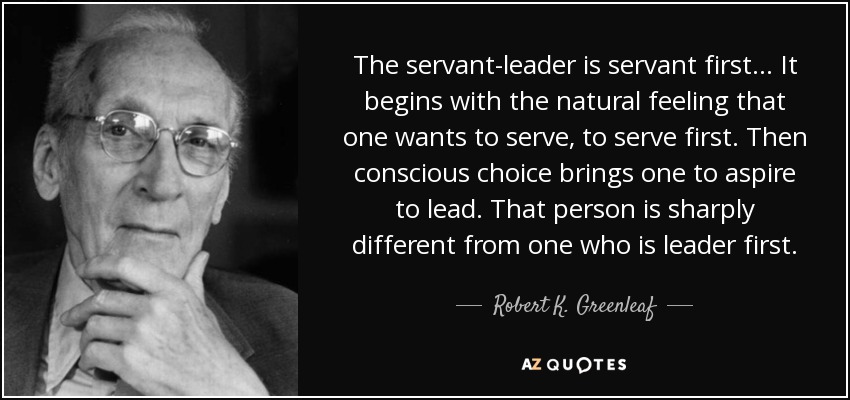 Here are 10 characteristics and traits that distinguishes a servant leader from the more traditional ones.
1. Empathy
A servant leader has the ability to recognize and understand feelings and emotions that are experienced by their team. Such a leader will care for other people and will deeply experience emotions that match what others are feeling. Since they understand others so deeply, their actions are motivated by a genuine desire to help others.
2. Listening
By paying complete attention to what others are saying, servant leaders are able to get a complete understanding of all interpersonal situations that they are dealing with. They use active listening to resolve conflicts, counsel others, and also to impart training.
3. Awareness
Many people in positions of power are blissfully ignorant of their shortcomings, but not the servant leader. They are completely aware of their strengths, weaknesses, values, emotions, and feelings. This self-awareness allows the servant leader to understand personal biases and set them aside while making decisions.
4. Healing
Followers typically desire for a leader who has a sincere interest in fostering their emotional and spiritual well-being. By taking an active role in promoting the mental and emotional strength of their employees, servant leaders typically inspire an exceptional level of trust and faith from others. Continue reading
( Contributed by Prem)
My colleagues and I focus on helping a system develop greater self-knowledge in three critical areas. Continue reading
I am reminded of a story.
An old man, very rich, was puzzled because he had three sons; the problem was that all three sons were born simultaneously, their age was the same. Otherwise,in the East, the eldest son, inherits. The problem for the old man was who was going to inherit,because all these three were of the same age.
He asked a wise man, ”What should I do?
How should I decide who should inherit?” The old wiseman gave him a certain method. The old man went home, he gave one thousand silver pieces toeach son and told them, ”Go to the market, purchase seeds of flowers.”
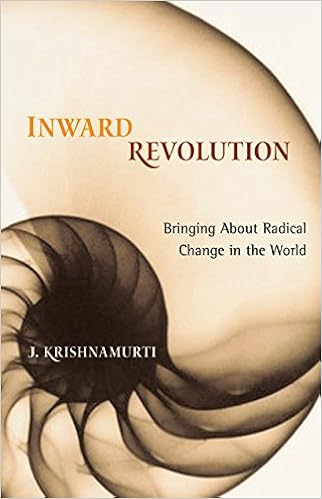
“You can see what is happening. There is violence even though religions have said not to kill, not to go to war, not to hurt another, to be kind, generous, tender, to open your heart to others.
Books have said it, so the books have no value at all. What is relevant is what you are. The fact is that the world is you, not as a theory but in actuality; the world, the community, the society, the culture in which you have been brought up have been built through time by man. You are the result of that, and to bring about a change in the outward structure of the established corrupt order, one must change oneself inwardly completely. This is a logical, sane, observable fact.”
– Inward Revolution: Bringing About Radical Change in the World – J. Krishnamurti Continue reading
 Creating meaningful change, is how I think about leadership, be it personal or professional. It is a simple definition taught to me by a long-ago mentor, one that I find eminently accessible and relevant and immortal and most closely aligned to shibumi. (Shibumi is a Japanese word that means ‘effortless perfection’)
 You can see what is happening. There is violence even though religions have said not to kill, not to go to war, not to hurt another, to be kind, generous, tender, to open your heart to others.
 ONE TUSK