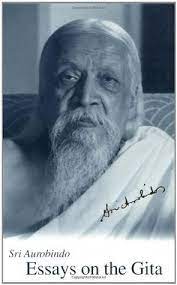
“The peculiarity of the Gita among the great religious books of the world is that it does not stand apart as a work by itself, the fruit of the spiritual life of a creative personality like Christ, Mohammed or Buddha or of an epoch of pure spiritual searching like the Veda and Upanishads, but is given as an episode in an epic history of nations and their wars and men and their deeds and arises out of a critical moment in the soul of one of its leading personages face to face with the crowning action of his life, a work terrible, violent and sanguinary, at the point when he must either recoil from it altogether or carry it through to its inexorable completion…. The teaching of the Gita must therefore be regarded not merely in the light of a general spiritual philosophy or ethical doctrine, but as bearing upon a practical crisis in the application of ethics and spirituality to human life.” – Sri Aurobindo (Essays on the Gita pp.9)
Why Sri Krishna did not save the Pandavas when they played dice with Duryadhana & Shakuni
Since childhood, Uddhava had been close to Krishna, charioting him and serving him in several ways. He never asked for any wish or boon from Sri Krishna. When Krishna was at the verge of completing his life’s mission on earth, he called Uddhava and said, “Dear Uddhava, in this avatar of mine, many people have asked and received boons from me; but you have never asked me for anything. Why don’t you ask for something now?”
Even though Uddhava had never asked anything for himself, he had been carefully observing Krishna since his childhood. He had always wondered about certain contradictions between Krishna’s teachings and actions, and had always wanted to understand the reasons for these apparent or real contradictions.
So he asked Krishna, “I have observed that several things you have done or not done in your life were different from what you have always taught or stood for. I truly wish to understand why — for instance, during the great yuddha, the role you played confounds me to this day. I’m curious and wish to understand. Will you explain?”
Krishna said, “Uddhava, please ask without hesitation.”
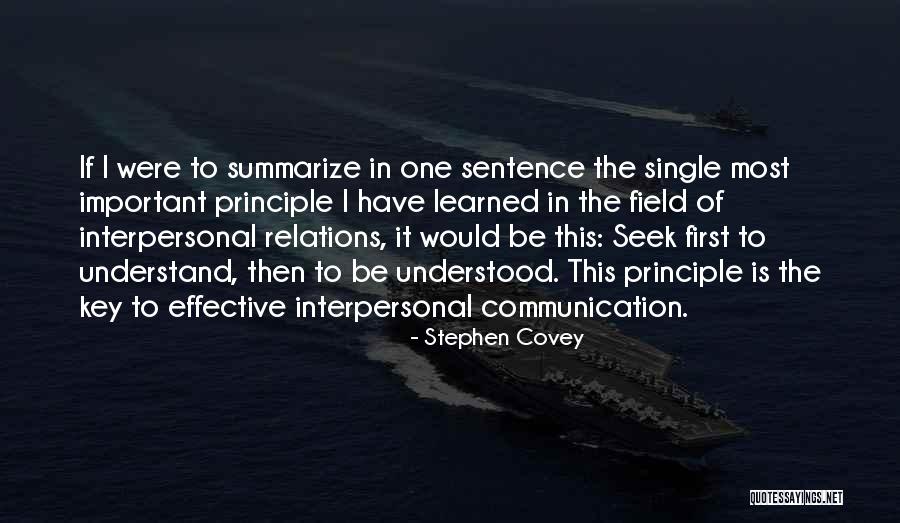
What we often fail to comprehend is that active and assertive listening is THE most important communication skill. In fact, we usually put more effort in how we can get our point across and become more assertive in what we ask and express, than actually realize the significance of our listening skills. We tend to forget that communication is a mutual process of listening to the other and expressing ourselves.
Today our focus will be what prevents us from listening actively and attentively. By recognizing the 12 blocks to listening and realizing when we engage in those, we can subsequently improve our listening skills. This will inevitably bring positive changes in the way we communicate with others.
After all, listening does mean not just hearing with our ears, but actively being mindful and attentive of what is being expressed, so that we first understand it fully. You are what you listen to- and this does not only apply to music!
The 12 Blocks to Active Listening
If you often find yourself in situations that you cannot communicate with someone properly, maybe you are also not listening properly.
Of course it is understandable that we can not always give our full attention to whoever is talking to us- yet understanding what prevents us from doing so is a first step in making necessary adjustments in order to improve our communication. Let’s look at 12 common blocks to listening.
1. Mind Reading
Have you ever caught yourself drifting away from what the other person is saying, because you are already making an assumption in your mind about what they will say?
Although this is to some extent natural and automatic in many conversations, and it may suggest that you understand the other quite well so that you can already guess what they’re about to say, mind reading can become an obstacle in your communication with others.
The reason for this is, the more time you invest in trying to figure out what will be said next, the less involved you are with the present moment and the other person.
After all, no matter how well you know and understand your conversational partner, you are not really in their head- so it is beneficial to actually listen to them rather than presuming you know their next sentence before they utter it.
2. Rehearsing
We can all be guilty of this occasionally; rehearsing means preparing what you will respond next, before your partner has finished talking.
This can often be accompanied by interrupting the other, to say what popped in your mind- which can take a negative turn quite easily, because interrupting is regarded as quite offensive and aggressive and can trigger a defensive attitude of the other person.
Then your focus is on constructing your next argument, not on the person talking to you. Consequently, you focus on yourself and not the other- but listening is all about the other.
It can therefore be worthwhile to pay close attention to them for a bit- it won’t be long until you also have a chance to speak. In addition, the more attentively you listen, the better you will absorb and understand the other’s message- so the more authentic you can be in your response.
3. Filtering
Filtering means having selective attention only to certain types of information, and letting your mind drift away otherwise.
We tend to use filtering when we want to ensure we are not threatened, or when we expect or wish to hear specific things from the other.
For instance, if you feel you are in danger if the other becomes upset, your attention may be more tuned to cues of increased emotion of the other. If the threatening cue is not present, then you can be distracted by your own thoughts and lose concentration.
Understandably, this is a block to effective communication because you do not receive the whole message of whatever the other wants to say- only fragments of it. You basically hear only what you want to hear.
4. Judging
Judging means having a negative opinion that is already firmly established about the other person, or making negative criticism in your mind about what they are saying.
By making judgements or assessing that the other person is not worth listening to, you close yourself from actually hearing what they have to say. Being open and flexible is always an advantage in communication.
5. Daydreaming
Something the other just said triggered a memory, image or thought in your mind- and then you got carried away on your train of thought.
You know how it goes, one thought let to another, and another, and off you go! Suddenly you are disconnected from your partner, lost in your own mind, drifting away. Or you simply lost interest and therefore concentration.
Often when you return to the conversation, you have absolutely no idea of what has been said so far. You may feel confused or awkward. This can be very embarrassing in some occasions, especially when you ask a question about something that has already been expressed while you were off somewhere far. It is quite obvious that such a thing is disrespectful to the other person.
When an individual daringly meets life he cannot expect all the time , happy situations, favourable circumstances and a conducive arrangement of chances in his field of activity. Ordinarily , a weak man suddenly feels dejected and is tempted to leave his field of work when it is only half done. Many lose their chances of achieving the highest and desert the field of action almost at the moment when, perhaps, victory is round the corner. In order to ‘stick to his guns’ man needs a secret energy to nurture and nourish his exhausted and fatigued morale, and this sacred energy welling up in his well integrated personality is ‘fortitude’.
“When we decide, we’re always worrying- ‘did I think this over long enough? did I take enough data into consideration?’- and if you think it through you find that you never could take enough data into consideration. The data for a decision in any given situation is infinite. So what you do is: you go through the motions of thinking about what you will do about this, and then when the time comes to act you make a snap judgment. But we fortunately forget the variables that could have interfered with this coming out right. It’s amazing how often it works.” –Alan Watts
Sri Ramana Maharshi – Venkataraman Iyer. Born – December 30, 1879, India Died – April 14, 1950. Tamil Nadu, South India.
Sri Ramana Maharshi said, ‘then you go elsewhere, because here we teach unlearning. Learning is not our way. You go elsewhere. If you are ready to unlearn, be here. If you have come to learn more, then this is not the right place. Then go somewhere else – universities exist for learning. When you come to me, come to unlearn. This is a university for unlearning, university to create no-mind, a university where whatsoever you know will be taken away.All your knowledge has to be dropped so that you become knowing, so you get a perfection, a clarity, so that your eyes are not filled with theses, or theories, with prejudices, concepts; so your eyes have a clarity, an absolute clarity and transparency, so that you can see. The truth is already there. It has always been there.“`



 ONE TUSK