A Neighbour , a Pilgrim, a Pope

A Neighbour , a Pilgrim, a Pope:
In memory of Pope Francis (1936–2025)
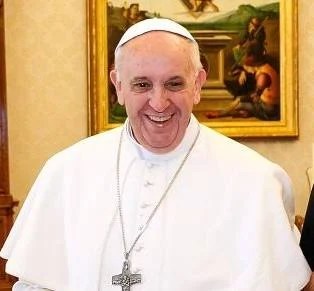
Today, the world bids farewell to a gentle giant of spirit.

Pope Francis—the first non-European, Latin American, and Jesuit Pope in the history of the Church—has left this world. His departure, so soon after the sacred silence of Holy Week, feels like the soft closing of a holy chapter.

As a fellow pilgrim born in Buenos Aires, I cannot help but feel this loss in a personal way. As a child, he lived only a few blocks from where I grew up. We were neighbors—one generation apart.

We even supported the same football team: San Lorenzo. Something as simple as that makes the memory even warmer—two believers, two neighbors, two hinchas sharing a thread of belonging beyond doctrine.

And though we never met, I have long considered him kindred.

While I walk the path of Gaudiya Vaishnavism, I do not feel this in opposition to the spirit of Christianity. In fact, I often say—truthfully and openly—that, in essence, I consider myself a Christian too. How could I not be touched by the life and teachings of Jesus, the wounded healer, the teacher who knelt, the lover who loved unto death?

Today, as I write these words, our ashram in North Carolina welcomes a dear friend: Father Cassian, a Catholic priest and monk, who will stay with us for some time. His presence feels especially poignant today, as we mourn and honor one of the most transformative figures in recent Christian history.

Pope Francis dared to break boundaries—geographical, social, and theological. He championed the poor with tenderness and ferocity. He called for an integral ecology, where care for creation is inseparable from care for the vulnerable. His encyclicals Laudato Si’ and Fratelli Tutti were not merely Catholic texts, but universal appeals to conscience, reminding us that the Earth is not only our common home—it is sacred.

He reached toward those whom others overlooked: the divorced, the queer, the imprisoned, the forgotten. He believed that no one stands outside the circle of God’s mercy. And though his efforts were often misunderstood—by conservatives and progressives alike—he kept walking, one foot in the Gospel, the other in the dirt of our time.

He simplified the papacy. He renounced palatial opulence. He cooked his own meals. He asked us to pray for him, always. And he wept when he spoke of war, refugees, or ecological collapse—not as a politician, but as a father. As a brother of humanity.

Of course, like all great souls, he was not without controversy. While I may not agree with every statement he made or stance he took, I firmly believe in honoring the whole of a life, not its isolated parts. I believe in seeing people not merely for their past, nor even their present, but for their luminous future in God’s grace.

To my Christian brothers and sisters: my heart is with you. This is a sacred day of mourning, of reflection, and also of thanksgiving—for a life that mirrored the Beatitudes more than the headlines. May the same Spirit that breathed through him breathe now into your hearts, offering comfort and conviction.

And to those in my own bhakti community: may we dare to learn from such lives. May we embody that same courage to stand with the marginalized, to speak for the voiceless, to see the sacred in soil and in stranger. May we remember that true religion is not performance, but love in action.

Rest well, dear neighbor.
Rest well, holy pilgrim.

Your feet have kissed many roads—and now they’ve returned Home.

🙏- Swami Padmanabha

Ageing is not for the weak

“Aging is not for the weak. One day you wake up and realize that your youth is gone, but along with it, so go insecurity, haste, and the need to please… You learn to walk more slowly, but with greater certainty. You say goodbye without fear, and you cherish those who stay. Aging means letting go, it means accepting, it means discovering that beauty was never in our skin… but in the story we carry inside us.”
– Meryl Streep

This is a beautiful reflection on aging that touches on several profound truths. The passage eloquently captures how aging brings not just physical changes, but also emotional and spiritual growth – a kind of wisdom that comes from life experience.

I particularly appreciate how it reframes aging as a process of gaining rather than just losing. While youth fades, the text suggests we gain valuable traits like:

  • Self-assurance that replaces insecurity
  • Patience that replaces haste
  • Authenticity that replaces people-pleasing
  • Wisdom in relationships – both in letting go and cherishing
  • A deeper understanding of beauty as something internal rather than external

The metaphor of walking “more slowly, but with greater certainty” is especially powerful – it captures how aging can bring a kind of confident deliberateness that youth often lacks.

Would you say this resonates with your own experiences or observations about aging? I am curious know how this perspective compares with common cultural narratives about getting older.

– One Tusk

Book of the Month February 2025 – Values over Valuables by Harmon Kong

wealth management, family values, integrity with money, success, morals, legacy, raising kids

In Values over Valuables, Harmon Kong, a seasoned wealth manager with decades of experience in helping families secure their financial futures, delves into the importance of passing on meaningful values rather than just material wealth. He highlights how families can avoid conflicts and build a legacy rooted in shared values and open communication. Allowing families to grow together and strengthen their bonds through stories, guidance and actionable items for families to do.

Whether you have little or a lot, Kong provides practical guidance for all families on preparing to not only manage money responsibly but also to uphold the family’s guiding principles, in some cases helping families redefine what wealth means to them. By prioritizing core values over financial details, families can achieve wealth beyond measure and ensure their legacy has a lasting, significant impact.

In this book you will discover how to:

  • Prevent dysfunctional dynamics with improved communication and aligned values.
  • Conduct family meetings that can be used to discuss goals, make plans, and foster unity around a shared mission.
  • Leave a positive and intentional impact on the world.
  • Discover a greater purpose beyond wealth accumulation.

Value over Valuables equips families with the tools to have conversations that matter, align around shared values, and use their wealth as a means to support a positive, multi-generational legacy. Are you wanting more from your legacy?

A Refreshing Take on Financial Wisdom

This thoughtful guide offers a unique perspective on managing money that goes beyond the typical financial advice. The author skillfully weaves personal experiences with practical insights, making complex financial concepts easily digestible. The narrative flows smoothly as it challenges conventional thinking about wealth and success, encouraging readers to align their financial decisions with their core values. The writing style is engaging and conversational, making it feel like a chat with a knowledgeable friend rather than a lecture from a financial expert. What stands out is the balanced approach to wealth creation while maintaining personal integrity and well-being. The practical examples and actionable strategies are particularly helpful for anyone looking to make meaningful changes in their relationship with money. While some concepts might seem familiar, the fresh perspective and genuine approach make this an enlightening read that I’d happily recommend to others seeking financial guidance with a conscience.

-Matt