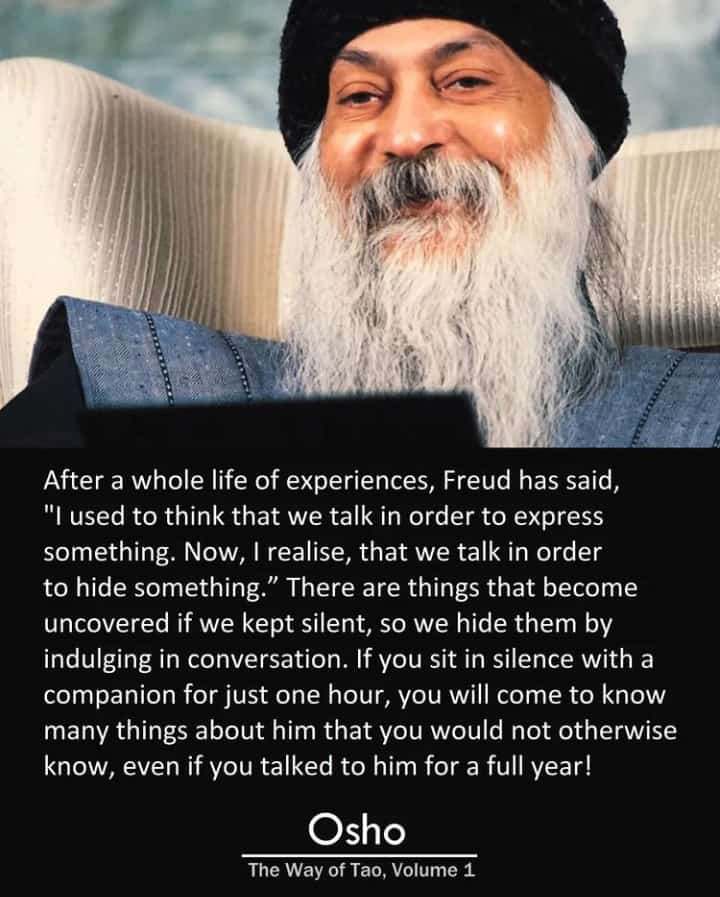
Be Like Cat

“When a cat falls out of a tree, it lets go of itself. The cat becomes completely relaxed, and lands lightly on the ground. But if a cat were about to fall out of a tree and suddenly make up its mind that it didn’t want to fall, it would become tense and rigid, and would be just a bag of broken bones upon landing.In the same way, it is the philosophy of the Tao that we are all falling off a tree, at every moment of our lives. As a matter of fact, the moment we were born we were kicked off a precipice and we are falling, and there is nothing that can stop it. So instead of living in a state of chronic tension, and clinging to all sorts of things that are actually falling with us because the whole world is impermanent, be like a cat.”

– What is Tao?, Alan Watts

If you can understand that everyone has come to learn….


You’re actually above the other only in your own idealization of your own behavior. You are not above them, they are not below you. They are having a different encounter with themselves, and perhaps learning through it, and perhaps giving you the opportunity to learn as well. If you assume that someone is not where they are supposed to be, you have decided for them based upon what you think they should be, or perhaps where or how they should behave based upon your idealisation of behaviour…..

This does not make them wrong. Do you understand this? It doesn’t make you wrong, either, but it certainly doesn’t make you right……

If you can understand that everyone has come to learn—how they learn their lessons is in some ways decided by them at a higher level—you learn not to judge.

You don’t have to enable, you don’t have to agree….

Do you understand this, yes?

– Paul Selig

Enlightenment

“Enlightenment is not something that occurs in the future, after 50 years of sitting cross-legged and saying “OM.” It is right here, in this instant. The reason you’re not experiencing this state of total peace and timelessness is because it is being resisted. It is being resisted because you are trying to control the moment. If you let go of trying to control your experience of the moment, and if you constantly surrender it like a tone of music, then you live on the crest of this exact always-ness. Experience arises like a note of music. The minute you hear a note, it’s already passing away. The instant you’ve heard it, it’s already dissolving. So every single moment is dissolving as it arises. Let go of anticipating the next moment, trying to control it, trying to hang on to the moment that has just passed. Let go clinging to what has just occurred. Let go trying to control what you think is about to occur. Then you live in an infinite space of non-time and non-event. There is an infinite peace beyond description. And you are home.”

David Hawkins from Letting Go

The Flow of Abundance

The flow of abundance can get blocked at any one of six steps:

  1. Clarify your purpose. Have a clear sense of what your life is about and what you value most.
  2. Look for lessons in your areas of shortage. The aspects of your life where there is a lack exist to teach you something.
  3. Learn to be grateful for what you do have. Move beyond distorted perceptions and see clearly the parts of your life where you are greatly blessed.
  4. Give what you can. By joyfully and freely giving, you redefine yourself as someone whose life is abundant.
  5. Expect and accept the good that comes to you. Be alert to the necessary resources in whatever form they may come—expected or unexpected.
  6. Giving and receiving – build community. Be open to building or reinforcing interpersonal relations based on mutual care.

Look over the list of six points. Which one of them seems weakest in your life? That is, which one is most in need of further application?
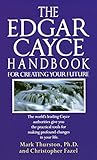
The Edgar Cayce Handbook for Creating Your Future

The real ‘You’ Comes and Goes…..

“You cannot catch hold of it, nor can you get rid of it. In not being able to get it, you get it. When you speak it is silent. When you are silent it speaks.”

Zen Poem
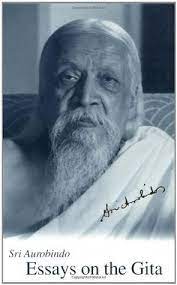
Book of the Month – September 2021 : Essays on the Gita by Sri Aurobindo

“The peculiarity of the Gita among the great religious books of the world is that it does not stand apart as a work by itself, the fruit of the spiritual life of a creative personality like Christ, Mohammed or Buddha or of an epoch of pure spiritual searching like the Veda and Upanishads, but is given as an episode in an epic history of nations and their wars and men and their deeds and arises out of a critical moment in the soul of one of its leading personages face to face with the crowning action of his life, a work terrible, violent and sanguinary, at the point when he must either recoil from it altogether or carry it through to its inexorable completion…. The teaching of the Gita must therefore be regarded not merely in the light of a general spiritual philosophy or ethical doctrine, but as bearing upon a practical crisis in the application of ethics and spirituality to human life.” – Sri Aurobindo (Essays on the Gita pp.9)

Continue reading

No Death No Fear

image
Thích Nhất Hạnh

“The day my mother died I wrote in my journal, “A serious misfortune of my life has arrived.” I suffered for more than one year after the passing away of my mother. But one night, in the highlands of Vietnam, I was sleeping in the hut in my hermitage. I dreamed of my mother. I saw myself sitting with her, and we were having a wonderful talk. She looked young and beautiful, her hair flowing down. It was so pleasant to sit there and talk to her as if she had never died. When I woke up it was about two in the morning, and I felt very strongly that I had never lost my mother. The impression that my mother was still with me was very clear. I understood then that the idea of having lost my mother was just an idea. It was obvious in that moment that my mother is always alive in me.

Continue reading

Become an instrument only, and my intervention will be constant….. 

Why Sri Krishna did not save the Pandavas when they played dice with Duryadhana & Shakuni

Since childhood, Uddhava had been close to Krishna, charioting him and serving him in several ways. He never asked for any wish or boon from Sri Krishna. When Krishna was at the verge of completing his life’s mission on earth, he called Uddhava and said, “Dear Uddhava, in this avatar of mine, many people have asked and received boons from me; but you have never asked me for anything. Why don’t you ask for something now?” 

Even though Uddhava had never asked anything for himself, he had been carefully observing Krishna since his childhood. He had always wondered about certain contradictions between Krishna’s teachings and actions, and had always wanted to understand the reasons for these apparent or real contradictions.

So he asked Krishna, “I have observed that several things you have done or not done in your life were different from what you have always taught or stood for. I truly wish to understand why —  for instance, during the great yuddha,  the role you played confounds me to this day. I’m curious and wish to understand. Will you explain?” 

Krishna said, “Uddhava, please ask without hesitation.” 

Continue reading