( contributed by Prem)
Giving rather than asking ….
( contributed by Prem)
( contributed by Prem)
“As the world is lifted, as a new template is claimed, what you know of, what you have believed would always be there, must be reckoned with. And a reckoning, a facing of oneself and one’s creations, must indeed extend to the manifest world and what humanity has claimed in a need to control, in a need to justify greed or authority over others. And the walls will tremble, yes, but they are the walls of separation. And when they fall, they may be re-known in a higher way.


My colleagues and I focus on helping a system develop greater self-knowledge in three critical areas. Continue reading
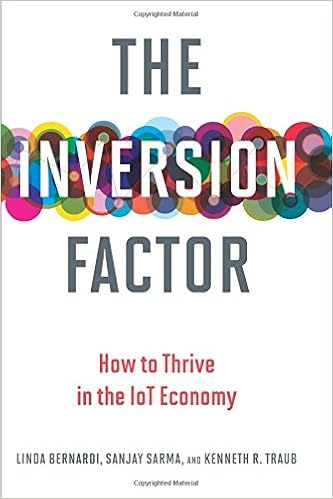
Why companies need to move away from a “product first” orientation to pursuing innovation based on customer need.
In the past, companies found success with a product-first orientation; they made a thing that did a thing. TheInversion Factor explains why the companies of today and tomorrow will have to abandon the product-first orientation. Rather than asking “How do the products we make meet customer needs?” companies should ask “How can technology help us reimagine and fill a need?” Zipcar, for example, instead of developing another vehicle for moving people from point A to point B, reimagined how people interacted with vehicles. Zipcar inverted the traditional car company mission.
The authors explain how the introduction of “smart” objects connected by the Internet of Things signals fundamental changes for business. The IoT, where real and digital coexist, is powering new ways to meet human needs. Companies that know this include giants like Amazon, Airbnb, Uber, Google, Tesla, and Apple, as well as less famous companies like Tile, Visenti, and Augury. The Inversion Factor offers a roadmap for businesses that want to follow in their footsteps.
The authors chart the evolution of three IoTs―the Internet of Things (devices connected to the Internet), the Intelligence of Things (devices that host software applications), and the Innovation of Things (devices that become experiences). Finally, they offer a blueprint for businesses making the transition to inversion and interviews with leaders of major companies and game-changing startups.
I am reminded of a story.
An old man, very rich, was puzzled because he had three sons; the problem was that all three sons were born simultaneously, their age was the same. Otherwise,in the East, the eldest son, inherits. The problem for the old man was who was going to inherit,because all these three were of the same age.
He asked a wise man, ”What should I do?
How should I decide who should inherit?” The old wiseman gave him a certain method. The old man went home, he gave one thousand silver pieces toeach son and told them, ”Go to the market, purchase seeds of flowers.”
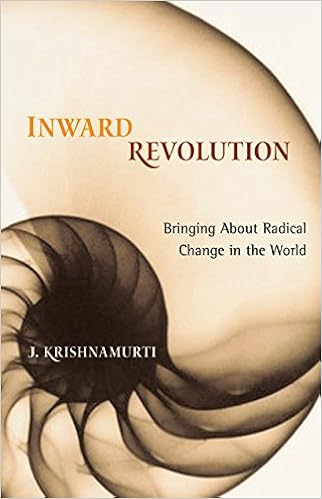
“You can see what is happening. There is violence even though religions have said not to kill, not to go to war, not to hurt another, to be kind, generous, tender, to open your heart to others.
Books have said it, so the books have no value at all. What is relevant is what you are. The fact is that the world is you, not as a theory but in actuality; the world, the community, the society, the culture in which you have been brought up have been built through time by man. You are the result of that, and to bring about a change in the outward structure of the established corrupt order, one must change oneself inwardly completely. This is a logical, sane, observable fact.”
– Inward Revolution: Bringing About Radical Change in the World – J. Krishnamurti Continue reading
 You can see what is happening. There is violence even though religions have said not to kill, not to go to war, not to hurt another, to be kind, generous, tender, to open your heart to others.

 ONE TUSK