Ramana Maharishi
Living the Inspiration of Sri Ramana Maharshi…
Maalok: Ramana Maharshi has had a lasting influence on your life. For those of us who don’t know much about the Maharshi, could you please share some of the salient aspects of his life that have influenced you deeply.
David: About two or three times a year someone asks me this question, ‘Summarise Ramana Maharshi’s life and teachings in a few words for people who know little or nothing about him’. It’s always hard to know where to start with a question like this.
Let me say first that Ramana Maharshi was one of the most highly regarded and widely respected spiritual figures that twentieth-century India produced. I can’t think of any other candidate who is as persistently held out to be an example of all that is best in the Hindu spiritual tradition. Everyone reveres him as the perfect example of what a true saint and sage ought to be.
How did this come about? While he was still in his teens Sri Ramana underwent a remarkable, spontaneous experience in which his individuality died, leaving him in a state in which he found his true identity to be the Self, the immanent and transcendent substratum. It was a permanent awakening that was truly remarkable because he had not previously had any interest in spiritual matters. He left his family home a few weeks later, without telling anyone where he was going, and spent the remainder of his life at the foot of Arunachala, a holy mountain and pilgrimage centre that is about 120 miles south west of Chennai.
After a few years there – a period in which he was largely oblivious to the world and his body – he began to attract devotees because there was a spiritual radiance emanating from him that many people around him experienced as peace or happiness. This, I think, is the secret of his subsequent fame and popularity. He didn’t get a reputation for being a great sage because of what he did or said. It came about because people, who arrived at his ashram with all kinds of questions and doubts, suddenly found themselves becoming quiet, peaceful and happy in his presence. There was a continuous, benign flow of energy coming off him that somehow evaporated the mental anxieties and busy minds of the people who came to see him. He didn’t ask people to come. People just came of their own accord. A 19th century American author once wrote that if you invent a better mousetrap, even if you try to hide yourself in the woods, people will beat a path to your door. People beat a path to Sri Ramana’s door – for many years he lived in very inaccessible places – because he had something far better than an improved mousetrap to offer; he had a natural ability to induce peace in the people around him.
Let me expand on this because this is the key to understanding both his state and the effect he had on other people. When he had his final experience at the age of sixteen, his mind, his sense of being an individual person, vanished forever, leaving him in a state of unassailable peace. He realised and understood that this was not some new experience that was mediated by and through his ‘I’, his sense of being an individual person. It was, instead, his natural state, something that is there all the time, but which is only experienced when the mind and its perpetual busy-ness is absent. By abiding in this natural and effortless state of inner silence he somehow charged up the atmosphere around him with a healing, quietening energy. People who came to see him spontaneously became happy, peaceful and quiet. Why? Because Sri Ramana himself was effortlessly broadcasting his own experience of happiness, peace and quietude in such a way that those people who were around him got an inner taste, an inner flavor of this natural state that is inherent to all of us. I should say that this power was not restricted to his physical vicinity, although it did seem to be stronger there. People who merely thought about him wherever they happened to be discovered that they could experience something of this peace simply through having this mental contact with him.
So, having given that background, I can now answer the question: ‘Who was Ramana Maharshi and what were his teachings?’
Sri Ramana Maharshi was a living embodiment of peace and happiness and his ‘teachings’ were the emanations of that state which helped other people to find and experience their own inner happiness and peace.
If all this sounds a little abstract, let me tell you a story that was passed on to me by Arthur Osborne’s daughter. In the 1940s their house was a kind of dormitory for all the stray foreigners who couldn’t find anywhere else to stay near Sri Ramana’s ashram. A miserable, crabby women appeared one evening, having been sent by the ashram. They put her up, gave her breakfast and sent her off to see Sri Ramana the next morning. She came back at lunchtime looking absolutely radiant. She was glowing with happiness. The whole family was waiting to hear the story of what happened, but she never said anything about her visit to the ashram. Everyone in the house was expecting some dramatic story: ‘He looked at me and this happened,’ or ‘I asked a question and then I had this great experience’. As the lunch plates were being cleared away, her hosts could not contain their curiosity any longer.
‘What happened?’ asked one of them. ‘What did Bhagavan do to you? What did he say to you?’
The woman looked most surprised. ‘He didn’t do anything. He didn’t say anything to me. I just sat there for the whole morning and then came back for lunch.’
She had been just one new person sitting in a crowd of people, but the power coming off Sri Ramana had been enough to wash away a lifetime of depression, leaving her with a taste of what lay underneath it: her own inherent, natural happiness and peace.
Sri Ramana knew that transformations such as these were going on around him all the time, but he never accepted responsibility for them. He would never say, ‘I transformed this woman’. When he was asked about the effect he was having on people, he would sometimes say that by continuously abiding in his own natural state of peace, a sannidhi, a powerful presence, was somehow created that automatically took care of the mental problems of the people who visited him. By abiding in silence as silence, this energy field was created, a field that miraculously transformed the people around him.
Your original question was, ‘Why has Ramana Maharshi influenced me so much?’ The answer is, ‘I came into his sannidhi and through its catalytic activity I discovered my own peace, my own happiness.’
– David Godman
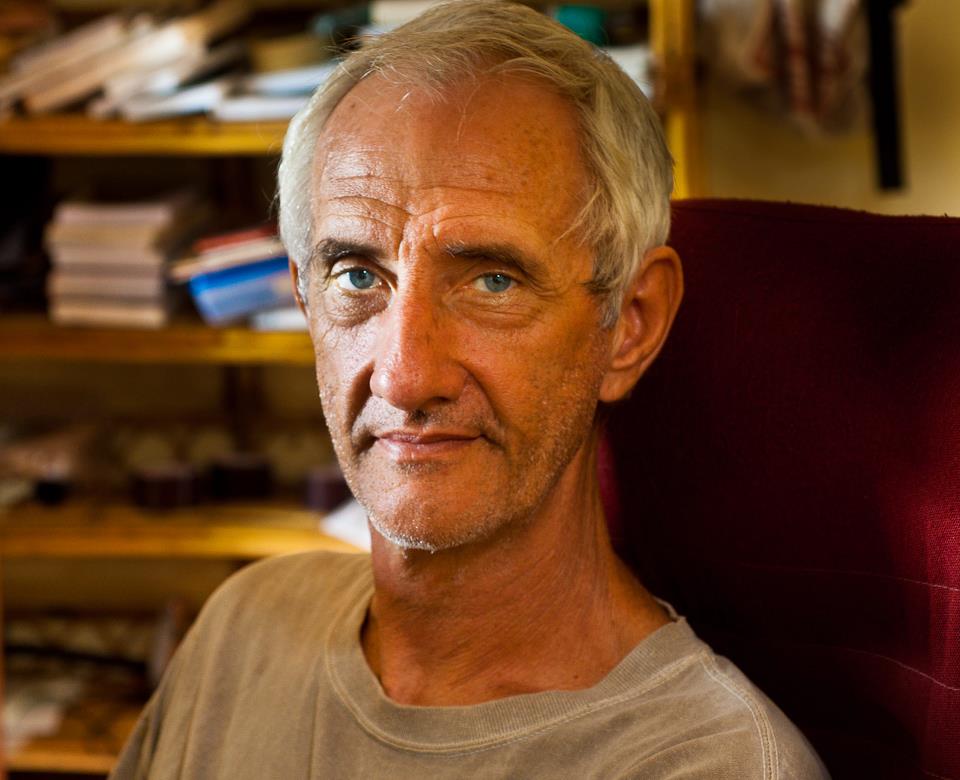
David Godman has lived in India since 1976, mostly in Tiruvannamalai, Tamil Nadu. He spent his time there studying and practicing the teachings of Sri Ramana Maharshi. His anthology of Ramana
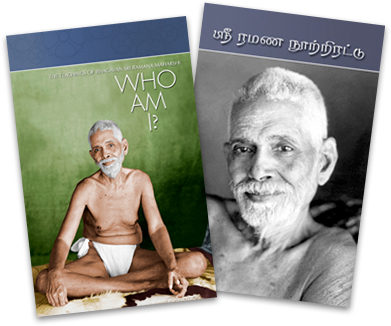
Who Am I ? – The teachings of Ramana Maharishi
( Contributed by Mr. Goutham)
University of Unlearning
“`German scholar: I have come to learn from you.

Born – December 30, 1879, India
Died – April 14, 1950. Tamil Nadu, South India.
Sri Ramana Maharshi said, ‘then you go elsewhere, because here we teach unlearning. Learning is not our way. You go elsewhere. If you are ready to unlearn, be here. If you have come to learn more, then this is not the right place. Then go somewhere else – universities exist for learning. When you come to me, come to unlearn. This is a university for unlearning, university to create no-mind, a university where whatsoever you know will be taken away. All your knowledge has to be dropped so that you become knowing, so you get a perfection, a clarity, so that your eyes are not filled with theses, or theories, with prejudices, concepts; so your eyes have a clarity, an absolute clarity and transparency, so that you can see. The truth is already there. It has always been there.“`
(Contributed by Mr. Balasunder)
Correcting oneself is correcting the whole world
Unless a person firmly adheres to the dictum ‘That which deserves to be reformed is my own mind,’ by turning Selfwards and correcting himself, his mind will get defiled more and more by paying attention exclusively to the defects of others….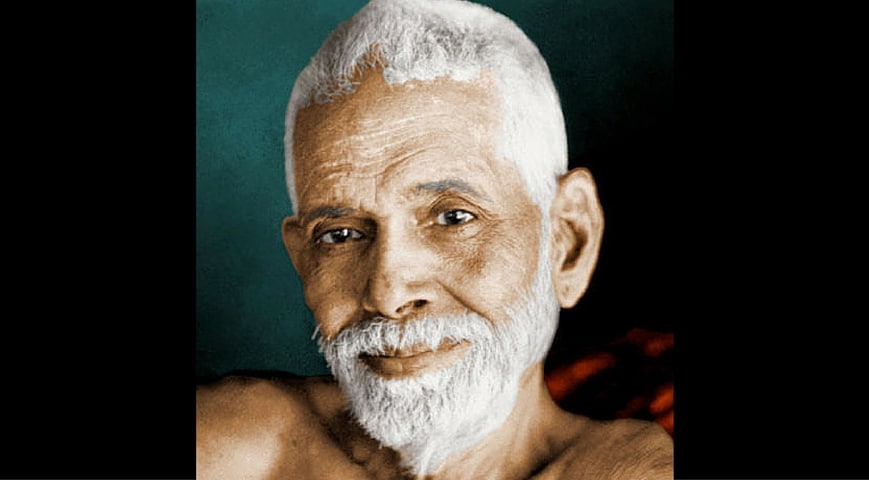
The Only Spiritual Life You Need Is Not To React!
 “The only spiritual life you need is not to react.” To be calm is the greatest asset in the world. It’s the greatest siddhi, the greatest power you can have. If you can only learn to be calm you will solve every problem. This is something you must remember. When you are perfectly calm, time stops. There is no time, karma stops, samskaras stop. Everything becomes null and void. Continue reading
Book Recommendation – Conscious Immortality by Paul Brunton and Munagala Venkataramiah
![Conscious Immortality by [Brunton, Paul, Venkataramiah, Munagala]](https://images-na.ssl-images-amazon.com/images/I/519XwW8Mz4L.jpg)
“So long as there is the sense of separation, there will be afflicting thoughts. If the original source is regained and the sense of separation is ended, there is peace. Consider what happens when a stone is thrown up. It leaves its source, is propelled up, tries to come down and is always in motion until it regains its source where it is at rest. So also the waters of the ocean evaporate, form clouds which are moved by winds, condense into water, and fall as rain, and the waters roll down the hill tops in streams and rivers until they reach their original source, the ocean, reaching which they are at peace. Thus you see where there is a sense of separateness from the source, there is agitation and movement until the sense of separateness is lost. So it is with yourself. Now that you identify yourself with the body, you think that you are separate. You must regain your source before this false identity ceases and you are happy. Gold is not an ornament but the ornament is nothing but gold. Whatever shapes the ornament may assume and however different the shapes of the ornaments are, there is only one reality, i.e. gold. So also with the bodies and the Self. The reality is the Self. To identify oneself with the body and yet to seek happiness, is like attempting to ford a lake on the back of an alligator. The body identity is due to extroversion and the wandering of the mind. To continue in that state will only keep one in an endless tangle and there will be no peace.”
– Ramana Maharishi
 ONE TUSK