High Agency: The Trait That Separates Doers From Waiters

What Is High Agency?

High Agency is the difference between people who wait and people who make things happen.

It’s not about talent, resources, or luck. It’s about how you respond when someone says: “That can’t be done.”

High Agency people ask: “How can I make this happen?”
Low Agency people say: “I tried, but they said no.”

The Wright brothers exemplified this perfectly. When The New York Times declared humans wouldn’t fly for a million years, two bicycle makers taught themselves aerodynamics, built their own wind tunnel, and were flying four years later.

No degrees. No funding. No permission. Just relentless problem-solving.

The Science Behind Agency

High Agency isn’t just motivational speak—it’s grounded in decades of psychological research.

Self-Efficacy Research: Albert Bandura’s landmark work shows that believing you can affect outcomes is foundational to motivation and performance.[^1] Nine large-scale meta-analyses confirm that self-efficacy beliefs significantly predict workplace motivation and performance.[^2] People with high self-efficacy view challenges as problems to master, not threats to avoid.[^3]

Growth Mindset: Carol Dweck’s research demonstrates that people who believe abilities can be developed (growth mindset) outperform those who view abilities as fixed.[^4] Students taught they could “grow their brains” showed marked academic improvement,[^5] and in workplace studies, growth mindset cultures show higher innovation and employee engagement.[^6]

Related Concepts: High Agency overlaps with what psychologists call “proactivity” (acting in advance rather than reacting), “grit” (perseverance toward long-term goals), and “perceived control” (believing you can achieve desired outcomes).[^7]

The research is clear: Agency is both measurable and developable.

Photo by Jeremy Bishop on Unsplash

Why This Matters Now

Traditional skills are table stakes. Agency is the differentiator.

Two people with identical technical skills deliver radically different results. The one with High Agency:

  • Creates opportunities others don’t see
  • Navigates obstacles that stop peers
  • Delivers despite imperfect conditions
  • Generates 10x impact with the same resources

In a world of rapid change and ambiguous problems, the ability to figure things out without explicit instructions is the most valuable skill you can have.

Continue reading

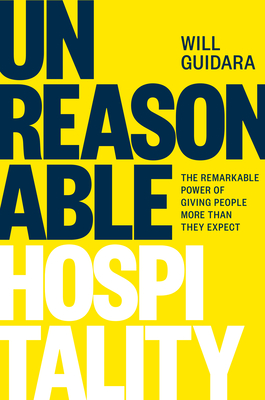
Book of the Month – May 2025: Unreasonable Hospitality. By Will Guidara

Will Guidara’s Unreasonable Hospitality is nothing short of extraordinary. Our internal company book club recently read it, and it has already sparked dozens of changes in how we approach our work. This book is a masterclass on hospitality, and its lessons go far beyond the restaurant industry. Whether you’re running a business, managing a team, or simply looking for ways to create more meaningful connections, Guidara’s insights are truly game-changing.

Guidara’s storytelling is as captivating as it is inspiring, with unforgettable examples of what happens when you go above and beyond for others. From turning a canceled vacation into a beach-themed dining experience to making snowfall magical for a family, the stories in this book demonstrate how far a little creativity and intentionality can go in transforming ordinary moments into extraordinary ones. What’s even more impactful is how these lessons apply internally—Guidara’s emphasis on recognizing and uplifting team members is a blueprint for building a positive, high-performing culture.

Book of the Month – October 2024 : Money Master the Game – Tony Robins

“The secret to wealth is simple: Find a way to do more for others than anyone else does. Become more valuable. Do more. Give more. Be more. Serve more. And you will have the opportunity to earn more”

Tony Robbins has coached and inspired more than 50 million people from over 100 countries. More than 4 million people have attended his live events. Oprah Winfrey calls him super-human. Now for the first time – in his first book in two decades – he’s turned to the topic that vexes us all: How to secure financial freedom for ourselves and our families. 

Based on extensive research and one-on-one interviews with more than 50 of the most legendary financial experts in the world – from Carl Icahn and Warren Buffett, to Ray Dalio and Steve Forbes – Tony Robbins has created a simple 7-step blueprint that anyone can use for financial freedom.

Robbins has a brilliant way of using metaphor and story to illustrate even the most complex financial concepts – making them simple and actionable. With expert advice on our most important financial decisions, Robbins is an advocate for the reader, dispelling the myths that often rob people of their financial dreams.

Tony Robbins walks readers of every income level through the steps to become financially free by creating a lifetime income plan. This book delivers invaluable information and essential practices for getting your financial house in order.

Continue reading

How to Read a Book by Mortimer J. Adler

May be an image of text that says "make FADIMAN you nestolgic for for slower, suggestions FADIMA MANNE S will "Adler and Yan Doren's more cornest, loss triviel time. HOW TO READ A O GUIDE INTELLIGENT THE CLASSIC READING to ADLER and DOREN MORTIMER J. CHARLES"

Imagine a world where reading isn’t just passing words on a page, but a thrilling puzzle to be cracked, a conversation to be engaged in, and a treasure trove of knowledge to be unearthed.

This is the world promised by Mortimer J. Adler’s seminal work, “How to Read a Book”.

Here are 10 guiding principles of reading from “How to Read a Book” by Mortimer J. Adler:

Principle One: Active Reading

Imagine reading like a detective, not a spectator. Don’t simply let the words flow past you. Actively engage the text:

What is the author’s main point?

What evidence do they use to support their claims?

Are there any logical fallacies or inconsistencies?

Can I connect this to other things I know?

Take notes on key points, arguments, and questions. Highlight significant passages for later reference.

Principle Two: Purposeful Reading

What drives you to pick up a book? Identify your reason:

Enjoyment: Get lost in a story, laugh, or escape reality.

Information: Learn new facts, gain knowledge on a specific topic.

Understanding: Develop a deeper comprehension of complex ideas or philosophies.

Knowing your purpose guides your reading pace, level of analysis, and whether you annotate or simply absorb the story.

Principle Three: Diversity in Reading

Don’t get stuck in a reading rut! Explore different genres, authors, and topics. Reading a variety of books:

-Expands your knowledge base.

-Challenges your existing perspectives.

-Develops different reading skills for different types of texts.

-Think of it like exercising different muscles to become a well-rounded reader.

Principle Four: Syntopic Reading

Don’t read books in isolation. Look for other books on the same subject and compare and contrast them. This allows you to:

-See different perspectives and interpretations of the topic.

-Identify common themes and arguments across different sources.

-Form a more nuanced and informed understanding of the subject.

-It’s like having a conversation with several experts on the same topic.

Principle Five: Annotation as Memory Enhancement

Treat your books like active learning tools. Underline key passages, write notes in the margins, and even create diagrams to visualize complex ideas. This:

-Reinforces your understanding during and after reading.

-Provides a quick reference point for revisiting key points.

-Creates a personalized study guide for future review.

-Turn your books into active learning resources.

Continue reading

25 Things About Life I Wish I Had Known 10 Years Ago

We might learn things quickly, but we often forget things at the same rate—and sometimes we need to remind ourselves of the things we’ve learned.

Here are 25 of those reminders that others taught me.

1. Struggle Is Good

Never say “I can’t take it anymore.” Say “Bring it on!”

2. Don’t Complain

Complaining is the biggest waste of time there is. Either do something about it, and if you can’t, shut up about it.

3. Spend Time With People You Love

That’s your family and best friends. If you don’t have a family, create one. Most people in life are only visitors. Family is for life.

4. Don’t Start A Relationship If You’re Not In Love

I’ve done this more than once. You kind of like someone and think: “We might as well give it a shot.” Not a good idea. You’re either in love, or you are not. Don’t fool yourself. It’s not fair to you and the other person.

5. Exercise Daily

I didn’t get this until recently. A healthy body is where you have to start everything in life. If you can’t build a healthy and strong body, what CAN you build in life?

6. Keep A Journal

No, keeping a journal is not for children. It helps you to become a better thinker and writer. “I don’t want to be a writer” you might think. Well, how many emails and texts do you send a day? Everybody is a writer.

7. Be Grateful

Say ‘thank you’ to everyone and everything. “Thank you for this beautiful day.” “Thankyou for your email.” “Thank you for being there for me.”

8. Don’t Care About What People Think

We all die in the end, do you really think it matters what people think of you?

9. Take More Risks

Don’t be such a wimp.

10. Pick An Industry, Not A Job

If you want to become good at something, you need to spend years and years doing that. You can’t do that if you hop from industry to industry. Pick an industry you love and start at the bottom. You will find the perfect role for you eventually.

11. Lead The Way

When you find yourself in a situation where everyone looks at each other, it’s time for you to lead. You‘re a leader when you decide to become one. There’s no initiation or a title. Just a decision.

12. Money Is Not The Most Important Thing

You have to train yourself not to care about money and focus on providing value instead. Also, don’t become too dependent on the stuff you own — otherwise, the stuff will own you.

Continue reading