healing
Thought of the Week – 24th April 2017
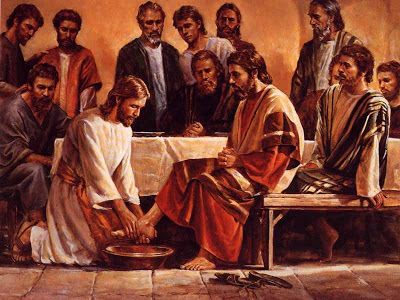 “Who was the greatest: He who made the worlds or He who washed His disciples’ feet?”
– Edgar Cayce
Our challenge is to see the seed or opportunity buried in the soil of conflict – Lofty Thoughts?
 In the well-known story about the three bricklayers, working side by side, each is asked what he is doing. The first replies, “I am laying bricks.” The second says, “I am constructing a wall.” But the third answers, “I am building a cathedral.” To lead through conflict, we face the challenge of holding a vision of the cathedral, a vision of what is possible. Our challenge is to see the seed or opportunity buried in the soil of conflict. Of course, sometimes the conflict is so entrenched and bitter that we feel helpless. Overwhelmed by grief, sorrow, or rage, we wonder if there will ever be any progress at all. But even in the most tragic circumstances, the seed of opportunity often lies just beneath the surface.
 Malala Yousafzai becomes the youngest person to address the Parliament of Canada
Soul Mate

“Only once in your life, I truly believe, you find someone who can completely turn your world around. You tell them things that you’ve never shared with another soul and they absorb everything you say and actually want to hear more. You share hopes for the future, dreams that will never come true, goals that were never achieved and the many disappointments life has thrown at you. When something wonderful happens, you can’t wait to tell them about it, knowing they will share in your excitement. They are not embarrassed to cry with you when you are hurting or laugh with you when you make a fool of yourself. Continue reading
12 Life Lessons from a Man Who’s Seen 12000 Deaths
Bhairav Nath Shukla has been the Manager of Mukti Bhawan for 44 years. He has seen the rich and the poor take refuge in the guesthouse in their final days as they await death and hope to find peace. Shukla hopes with and for them. He sits on the wooden bench in the courtyard, against the red brick wall and shares with me 12 recurring life lessons from the 12000 deaths he has witnessed in his experience as the manager of Mukti Bhawan: Continue reading
understanding is love’s other name
At the heart of Nhat Hanh’s teachings is the idea that “understanding is love’s other name” — that to love another means to fully understand his or her suffering. (“Suffering” sounds rather dramatic, but in Buddhism it refers to any source of profound dissatisfaction — be it physical or psychoemotional or spiritual.) Understanding, after all, is what everybody needs — but even if we grasp this on a theoretical level, we habitually get too caught in the smallness of our fixations to be able to offer such expansive understanding. He illustrates this mismatch of scales with an apt metaphor:
If you pour a handful of salt into a cup of water, the water becomes undrinkable. But if you pour the salt into a river, people can continue to draw the water to cook, wash, and drink. The river is immense, and it has the capacity to receive, embrace, and transform. When our hearts are small, our understanding and compassion are limited, and we suffer. We can’t accept or tolerate others and their shortcomings, and we demand that they change. But when our hearts expand, these same things don’t make us suffer anymore. We have a lot of understanding and compassion and can embrace others. We accept others as they are, and then they have a chance to transform.
No More Heart Attacks
When people need help, you can’t simply run away, no?
 “You see, when people need help, you can’t simply run away, no?” says Dr. V. “You say, I will help you, and then you do what you can.
Continue reading
Healing
 If one can love then all one´s wounds disappear. Then one becomes whole – and to be whole is to be holy. Continue reading
 ONE TUSK