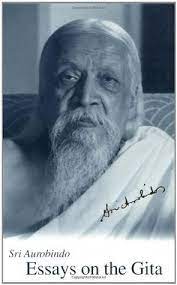
“The peculiarity of the Gita among the great religious books of the world is that it does not stand apart as a work by itself, the fruit of the spiritual life of a creative personality like Christ, Mohammed or Buddha or of an epoch of pure spiritual searching like the Veda and Upanishads, but is given as an episode in an epic history of nations and their wars and men and their deeds and arises out of a critical moment in the soul of one of its leading personages face to face with the crowning action of his life, a work terrible, violent and sanguinary, at the point when he must either recoil from it altogether or carry it through to its inexorable completion…. The teaching of the Gita must therefore be regarded not merely in the light of a general spiritual philosophy or ethical doctrine, but as bearing upon a practical crisis in the application of ethics and spirituality to human life.” – Sri Aurobindo (Essays on the Gita pp.9)
Continue readingaurobindo
Trinity in Unity – Self Realisation, Selfless Action and Devotion
The first step is Karmayoga, the selfless sacrifice of works, and here the Gita’s insistence is on action. The second is Jnanayoga, the self-realisation and knowledge of the true nature of the self and the world; and here the insistence is on knowledge; but the sacrifice of works continues and the path of Works becomes one with but does not disappear into the path of Knowledge.
as the individual advances spiritually, he finds himself more and more united with the collective…
“It is wrong to demand that the individual subordinate himself to the collectivity or merge in it because it is by its most advanced individuals that the collectivity progresses and they can really advance only if they are free. But it is true that as the individual advances spiritually, he finds himself more and more united with the collectivity and All.” Continue reading
path to transformation is specific to each person…
Sri Aurobindo and the Mother did not codify a set of techniques in their teachings. Maintaining that the path to transformation is specific to each person, they instead emphasized an ecumenical approach comprising skillful aspiration, rejection, and surrender as means to progress. Continue reading
A Dream
There should be somewhere upon earth a place that no nation could claim as its sole property, a place where all human beings of goodwill, sincere in their aspiration, could live freely as citizens of the world, obeying one single authority, that of the supreme Truth; a place of peace, concord, harmony, where all the fighting instincts of man would be used exclusively to conquer the causes of his suffering and misery, to surmount his weakness and ignorance, to triumph over his limitations and incapacities; a place where the needs of the spirit and the care for progress would get precedence over the satisfaction of desires and passions, the seeking for pleasures and material enjoyments. Continue reading
