 Whenever we are ill, we need to search our hearts to see who it is we need to forgive. The Course in Miracles says that “all disease comes from a state of unforgiveness,” and that “whenever we are ill, we need to look around to see who it is that we need to forgive.”
Thought of the week – 5th November 2018
Only way to change others — Change ourselves first

 Look for a moment at someone in your life who bothers you. Describe three things about this person that you don’t like, things that you want him or her to change. Now, look deeply inside of you and ask yourself, “Where am I like that, and when do I do the same things?” Close your eyes and give yourself the time to do this. Then ask yourself if you ARE WILLING TO CHANGE.
View original post 323 more words
Forget the 80 Million, Start with One
Book Recommendation – Mindset – The new psychology of success by Carol S. Dweck
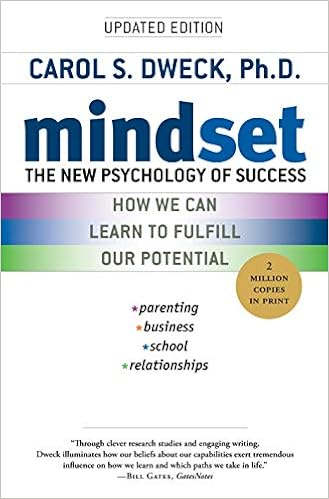 After decades of research, world-renowned Stanford University psychologist Carol S. Dweck, Ph.D., discovered a simple but groundbreaking idea: the power of mindset. In this brilliant book, she shows how success in school, work, sports, the arts, and almost every area of human endeavor can be dramatically influenced by how we think about our talents and abilities. People with a fixed mindset — those who believe that abilities are fixed — are less likely to flourish than those with a growth mindset — those who believe that abilities can be developed. Mindset reveals how great parents, teachers, managers, and athletes can put this idea to use to foster outstanding accomplishment.
Book Recommendation – The Inversion Factor: How to Thrive in the IoT Economy
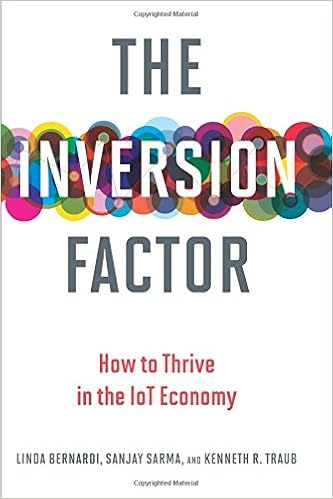
Why companies need to move away from a “product first” orientation to pursuing innovation based on customer need.
In the past, companies found success with a product-first orientation; they made a thing that did a thing. TheInversion Factor explains why the companies of today and tomorrow will have to abandon the product-first orientation. Rather than asking “How do the products we make meet customer needs?” companies should ask “How can technology help us reimagine and fill a need?” Zipcar, for example, instead of developing another vehicle for moving people from point A to point B, reimagined how people interacted with vehicles. Zipcar inverted the traditional car company mission.
The authors explain how the introduction of “smart” objects connected by the Internet of Things signals fundamental changes for business. The IoT, where real and digital coexist, is powering new ways to meet human needs. Companies that know this include giants like Amazon, Airbnb, Uber, Google, Tesla, and Apple, as well as less famous companies like Tile, Visenti, and Augury. The Inversion Factor offers a roadmap for businesses that want to follow in their footsteps.
The authors chart the evolution of three IoTs―the Internet of Things (devices connected to the Internet), the Intelligence of Things (devices that host software applications), and the Innovation of Things (devices that become experiences). Finally, they offer a blueprint for businesses making the transition to inversion and interviews with leaders of major companies and game-changing startups.
To be happy with your own non-upgraded existence, would not be good for business.
“THE WORLD IS increasingly designed to depress us. Happiness isn’t very good for the economy. If we were happy with what we had, why would we need more? Continue reading

Thought for the Week – 29th October 2018
Try cultivating your own unimportance

Try cultivating your own unimportance. The most successful, interesting people are the ones who don’t take themselves seriously at all. They’re amused by themselves, recognizing that life is an adventure with many unexpected twists and turns and cliff-hangers.

 ONE TUSK