When asked about his biography for the sake of publishing this book, Kiran Baba immediately gave us a straightforward answer:
“I have no biography. This body has a biography but this is not very important. Why insist on that? You can give your reflections about how it was when you met me and what you have seen here. That much you can share, but there is no need of describing what kind of dreams I was into, what kind of dreams I carried, now that the person to whom you are talking has no history, has no past and has no future. This person is just living into this moment and this is the expression of life. It is like a beautiful flower. You don’t have to ask anything to a flower. You enjoy the beauty and the fragrance of the flower, and that is enough.
If you ask me, I am a businessman, I go to the factory, I am a husband to my wife, I am a grandfather and father to my children, and that is it, that is all!
Where do thoughts come from? A questioner engages Rupert in a discussion about the consciousness-only model, the origin of thoughts, the nature of the mind and how we can go beyone the limitations of the mind.
Rupert explains that in the consciousness only model infinite consciousness is the medium within which literally everything arises. Thoughts may be conditioned from individual experiences that we have like a toothache, by events that take place outside your mind like the coronavirus or your own past conditioning through experiences you had as a child. The more we explore our experience the more we realize that the self of each of us, is the self of infinite awareness.
And at some point the personal thoughts and feelings tend to die down because there is no longer a clearly defined personal self or ego for them to revolve around. The mind expands until it loses its limitations and is recognized to be one with infinite consciousness or, in religious language, with God’s presence.
To be clear: I’m not saying you should ask pointed questions that put others on the spot, like “How can you deliver 10% higher productivity?” or “Are you missing anything here?” The kind of questions leaders need to ask are those that invite people to come together to explore major new opportunities that your organization hasn’t identified yet. Here are some examples:
What is a game-changing opportunity that could create much more value than we have delivered in the past?
What are emerging unmet needs of our customers that could provide the foundation for an entirely new business?
How could we leverage the resources of third parties to address a broader range of the needs of our customers?
How can we move from standardized, mass-market products and services to personalizing our products and services to the specific needs of each customer?
How can we develop supply networks that would be more flexible in responding to unanticipated disruptions in production or logistics?
How could we harness sensor technology to create more visibility into how our customers are using our products and use this information to deliver more value and deepen trust with our customers?
Focusing your questions on these kinds of new and big opportunities rather than on the existing activities of the organization can also help you to sidestep your fear that questioning will be seen as a sign of weakness, since there’s no way you could be expected to know the answers.
These broader questions also communicate that you have a sense of ambition, that you want to take the organization way beyond where it is today. And you can bolster your credibility by providing evidence of those long-term trends that underlie your question – for example, emerging technologies that are likely to offer new opportunities, or demographic shifts that will create some significant unmet needs among your customers.
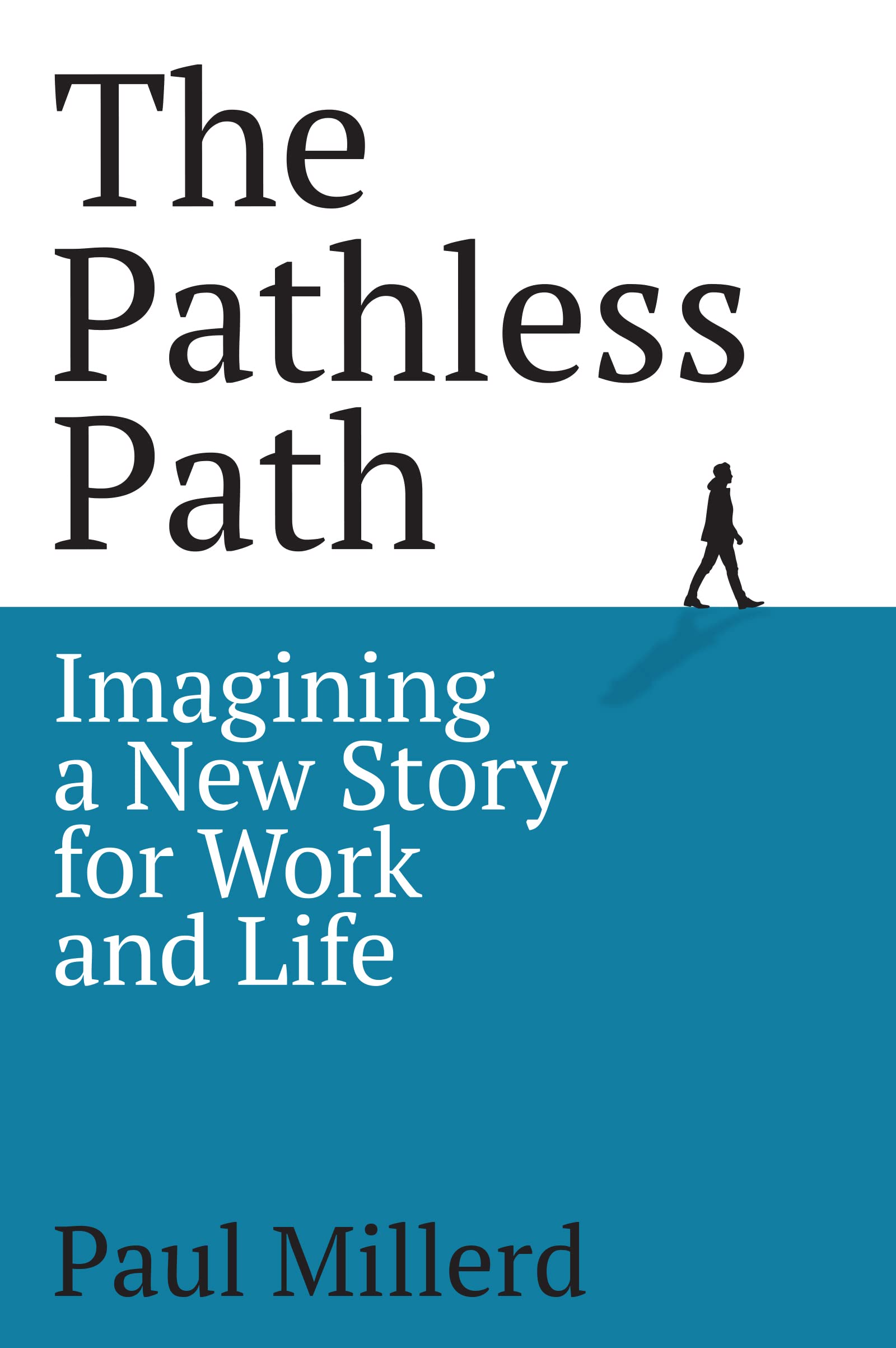
The Pathless Path is not a how-to book filled with “hacks”; instead, it is a vulnerable account of Paul’s journey from leaving a path centered around getting ahead and towards another, one focused on doing work that matters. This book is an ideal companion for people considering leaving their jobs, embarking on a new path, dealing with the uncertainty of an unconventional path, or searching for better models for thinking about work in a fast-changing world.
” On the pathless path, retirement is neither a destination nor a financial calculation, but a continuation of a life well-lived. This shifts attention from focusing on saving for the future to understanding how you want to live in the present.”
“The pathless path has been my way to release myself from the achievement narrative that I had been unconsciously following. I was able to shift away from a life built on getting ahead and towards one focused on coming alive. I was able to grapple with the hard questions of life, the ones we try so hard to ignore. And I was able to keep moving when I realized that the hardest questions often don’t have answers.”
Reader feedback:
“It’s a rare book in that it is tangentially about careers and being more focused and productive, but unlike almost every other book I have read about these topics, I finished this one and felt better about myself and my career.”
“The themes are timeless. The content is expertly written. The advice is refreshingly non-prescriptive.”
“If you have questioned your own path, or a nagging lack of intention in your choices you need this book. If you have felt a gradual loss of agency in your direction you need this book. You are in the grip of an invisible script that was not written for you.” – Kris Abdelmessih
“The writing is fantastic – Paul’s writing is approachably poetic; a quick read that weaves together his own experience moving from a ‘default path’ overachiever to a ‘pathless path’ seeker of passion and curiosity, deep research into the history of work and collections of perspectives from years of podcasting, friendship, conferences, and meetings with other ‘alternative path’ life-livers.”

 ONE TUSK