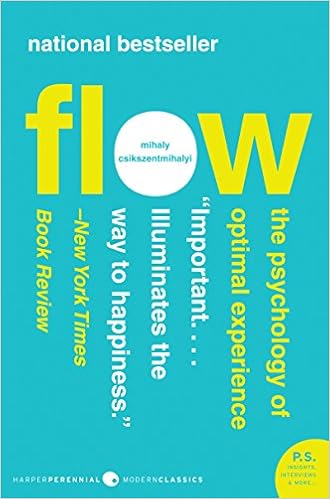
Book of the Month – December 2021
Do you think a leaf that falls to the ground is afraid of death? Do you think a bird lives in fear of dying? It meets death when death comes; but it is not concerned about death, it is much too occupied with living, with catching insects, building a nest, singing a song, flying for the very joy of flying. Have you ever watched birds soaring high up in the air without a beat of their wings, being carried along by the wind? How endlessly they seem to enjoy themselves! They are not concerned about death. If death comes, it is all right, they are finished. There is no concern about what is going to happen; they are living from moment to moment, are they not? It is we human beings who are always concerned about death – because we are not living. That is the trouble: we are dying, we are not living.

J Krishnamuthi – Think on These Things Chapter 17

“We would like to say one last thing about cherishing. What you cherish is something that you are aligned to, in one way or another. What you cherish, you hold. Can you imagine, for a moment, if you were the thing to be cherished, exactly as you are, in this moment in time, exactly as you stand before yourself? May you still be treasured, may you be cherished, may you be known in love. If you will allow us now, we will surround you in love and we will open your frequency to a whisper: You are loved, regardless of what you have been taught, how you have been treated, how you have treated yourself. You are deeply loved as are all men, as are all women, as are all. Simply allow, right now, the self to receive and to be still and know. I know who you are, I know what you are, I know how you serve. And I am one with the power that I am with in frequency, in love, and in my own worth.”
– The Book of Knowing and Worth: A Channeled Text by Paul Selig

The flow of abundance can get blocked at any one of six steps:
Look over the list of six points. Which one of them seems weakest in your life? That is, which one is most in need of further application?
 The Edgar Cayce Handbook for Creating Your Future
“You cannot catch hold of it, nor can you get rid of it. In not being able to get it, you get it. When you speak it is silent. When you are silent it speaks.”
Zen Poem

You can’t make radical changes in the pattern of your life until you begin to see yourself exactly as you are now. As soon as you do that, changes will flow naturally. You don’t have to force anything, struggle, or obey rules dictated to you by some authority. It is automatic; you just change. But arriving at that initial insight is quite a task. You have to see who you are and how you are without illusion, judgment, or resistance of any kind. You have to see your place in society and your function as a social being. You have to see your duties and obligations to your fellow human beings, and above all, your responsibility to yourself as an individual living with other individuals. And finally, you have to see all of that clearly as a single unit, an irreducible whole of interrelationship. It sounds complex, but it can occur in a single instant. Mental cultivation through meditation is without rival in helping you achieve this sort of understanding and serene happiness.

Mindfulness in Plain English: 20th Anniversary Edition by Henepola Gunaratana
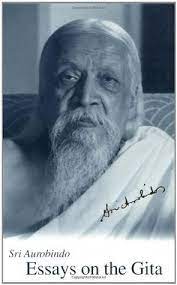
“The peculiarity of the Gita among the great religious books of the world is that it does not stand apart as a work by itself, the fruit of the spiritual life of a creative personality like Christ, Mohammed or Buddha or of an epoch of pure spiritual searching like the Veda and Upanishads, but is given as an episode in an epic history of nations and their wars and men and their deeds and arises out of a critical moment in the soul of one of its leading personages face to face with the crowning action of his life, a work terrible, violent and sanguinary, at the point when he must either recoil from it altogether or carry it through to its inexorable completion…. The teaching of the Gita must therefore be regarded not merely in the light of a general spiritual philosophy or ethical doctrine, but as bearing upon a practical crisis in the application of ethics and spirituality to human life.” – Sri Aurobindo (Essays on the Gita pp.9)
Continue reading
“The day my mother died I wrote in my journal, “A serious misfortune of my life has arrived.” I suffered for more than one year after the passing away of my mother. But one night, in the highlands of Vietnam, I was sleeping in the hut in my hermitage. I dreamed of my mother. I saw myself sitting with her, and we were having a wonderful talk. She looked young and beautiful, her hair flowing down. It was so pleasant to sit there and talk to her as if she had never died. When I woke up it was about two in the morning, and I felt very strongly that I had never lost my mother. The impression that my mother was still with me was very clear. I understood then that the idea of having lost my mother was just an idea. It was obvious in that moment that my mother is always alive in me.
Continue readingWhy Sri Krishna did not save the Pandavas when they played dice with Duryadhana & Shakuni
Since childhood, Uddhava had been close to Krishna, charioting him and serving him in several ways. He never asked for any wish or boon from Sri Krishna. When Krishna was at the verge of completing his life’s mission on earth, he called Uddhava and said, “Dear Uddhava, in this avatar of mine, many people have asked and received boons from me; but you have never asked me for anything. Why don’t you ask for something now?”
Even though Uddhava had never asked anything for himself, he had been carefully observing Krishna since his childhood. He had always wondered about certain contradictions between Krishna’s teachings and actions, and had always wanted to understand the reasons for these apparent or real contradictions.
So he asked Krishna, “I have observed that several things you have done or not done in your life were different from what you have always taught or stood for. I truly wish to understand why — for instance, during the great yuddha, the role you played confounds me to this day. I’m curious and wish to understand. Will you explain?”
Krishna said, “Uddhava, please ask without hesitation.”
Continue reading
– Sufi Story
(Contributed by Mr. Balasunder)
 ONE TUSK