The Fog Between Us: Why Healing Changes Everything
Ever notice how sometimes people don’t really hear you? They’re listening—but to their own wounds instead of your words.
When we’re unhealed, we’re not responding to what’s actually happening. We’re reacting to what happened before. Someone raises their voice and suddenly it’s that old argument all over again. A partner steps back and you’re drowning in ancient abandonment. A boundary gets set and you’re five years old, feeling rejected all over again.
Healing isn’t about being perfect or having everything figured out. It’s simpler—and harder—than that. It’s about awareness. It’s learning to hit pause between what triggers you and how you respond.
It’s asking: Is this about now, or about then?
When we heal enough to separate our past from our present, something shifts. You start hearing what people actually say instead of what your fear translates it into. You see situations clearly instead of through the fog of old wounds.
Better relationships don’t start with finding better people. They start with becoming the person who can actually see them.
Your present is waiting to stop paying for your past.
“You have a right to perform your prescribed duty, but you are not entitled to the fruits of action.” This teaching from the Bhagavad Gita has echoed through centuries, guiding seekers toward spiritual liberation. Yet this wisdom is not exclusively Eastern, nor exclusively ancient. Unconditional love—understood not as fleeting sentiment but as disciplined commitment—teaches the very same truth in the language of the heart.
These two concepts, separated by culture and expression, reveal a profound convergence: both are disciplines of the will that transcend the ego’s demand for return. Both offer liberation from the bondage of expectation. And both invite us into a radically different way of being in the world.
Part I: The Bhagavad Gita’s Karma Yoga
The Teaching
In Chapter 2, Verse 47 of the Bhagavad Gita, Sri Krishna offers Arjuna foundational guidance for right living:
“You have a right to perform your prescribed duty, but you are not entitled to the fruits of action. Never consider yourself to be the cause of the results of your activities, and never be attached to not doing your duty.”[1]
This is the essence of Karma Yoga—the yoga of action without attachment.
Three Essential Instructions
Krishna’s teaching in this verse contains three interconnected insights:
1. You Have the Right to Action, Not to Results
The Gita distinguishes between what lies within our control and what does not. We have dominion over our effort, our choices, and our dedication to duty. We do not control whether success arrives, whether our work is recognized, or whether others benefit as we hoped. This is not pessimism; it is clarity. As one commentator notes, “We have the right to do our duty, but the results are not dependent only upon our efforts.”[2] The farmer plants the seed with full dedication; the harvest depends on rain, soil, and countless factors beyond his control. The soldier fights with complete commitment; victory belongs to generals and circumstances.
2. Do Not Consider Yourself the Sole Doer
Krishna teaches that the ego’s claim to authorship is a delusion. Our actions arise from a complex interplay of body, mind, abilities, circumstances, and the workings of nature itself. To claim credit for success is to misunderstand reality. As the Gita reflects, “we are not the proprietors of our accomplishments; we are instruments through which the universe expresses itself.”[3] This recognition is humbling, but it is also liberating. When you release the pride of doership, you also release the shame of failure.
3. Do Not Withdraw from Duty Through Inaction
Krishna warns against a common misunderstanding: the belief that non-attachment means non-involvement. Some interpret his teaching as justification for passivity—why act if the fruits are not mine? Krishna’s response is clear. Inaction is not the alternative to attachment; it is another form of attachment, rooted in fear and aversion. The path is neither frenzied attachment nor apathetic withdrawal, but engaged participation without clinging.
The Fruit of Karma Yoga
What emerges from this practice? Inner peace. A steadiness of mind that neither trembles at failure nor grasps at success. The Gita teaches that this equanimity is the true fruit—not external victory, but internal freedom. “By being free from the desire for the fruits of work, the mind is liberated and achieves stability.”[4]
More than this: action performed without attachment naturally becomes purifying. Freed from the distortion of ego-grasping, it aligns with dharma—cosmic order and one’s true nature. The Karma Yogi becomes an instrument of something larger than personal will.
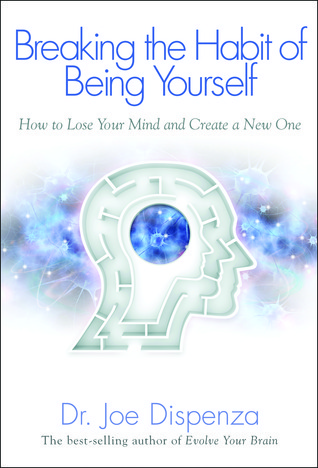
You are not doomed by your genes and hardwired to be a certain way for the rest of your life. A new science is emerging that empowers all human beings to create the reality they choose. In Breaking the Habit of Being Yourself, renowned author, speaker, researcher, and chiropractor Dr. Joe Dispenza combines the fields of quantum physics, neuroscience, brain chemistry, biology, and genetics to show you what is truly possible. Not only will you be given the necessary knowledge to change any aspect of yourself, you will be taught the step-by-step tools to apply what you learn in order to make measurable changes in any area of your life. Dr. Joe demystifies ancient understandings and bridges the gap between science and spirituality. Through his powerful workshops and lectures, thousands of people in 25 different countries have used these principles to change from the inside out. Once you break the habit of being yourself and truly change your mind, your life will never be the same!
So, returning to a critical question, what makes a person resilient to Alzheimer’s? One factor is referred to as “cognitive reserve,” … The greater the amount of knowledge one has amassed and learned, for example through higher education, the greater the number of synapses in one’s brain. Since the degree of dementia in Alzheimer’s patients correlates most closely with loss of synapses, the more synapses you have, the more you can lose before problems set in. Thus, continuing to learn new things is very important as we age. When planning for your retirement, think just as much about your cognitive reserve as about your financial reserve.
The following recommendations have been shown to have the most useful effects on risk reduction—you’ll recognize them from our general advice for a healing lifestyle, although they are more specific here:
Ready or not, some day it will all come to an end. There will be no more sunrises, no minutes, hours or days. All the things you collected, whether treasured or forgotten will pass to someone else. Your wealth, fame and temporal power will shrivel to irrelevance. It will not matter what you owned or what you were owed.
Your grudges, resentments, frustrations and jealousies will finally disappear. So too, your hopes, ambitions, plans and to-do lists will expire. The wins and losses that once seemed so important will fade away.
It won’t matter where you came from or what side of the tracks you lived on at the end. It won’t matter whether you were beautiful or brilliant. Even your gender and skin colour will be irrelevant.





 ONE TUSK