contributed by Rehana
Empowering your Mental Health
contributed by Rehana
contributed by Rehana
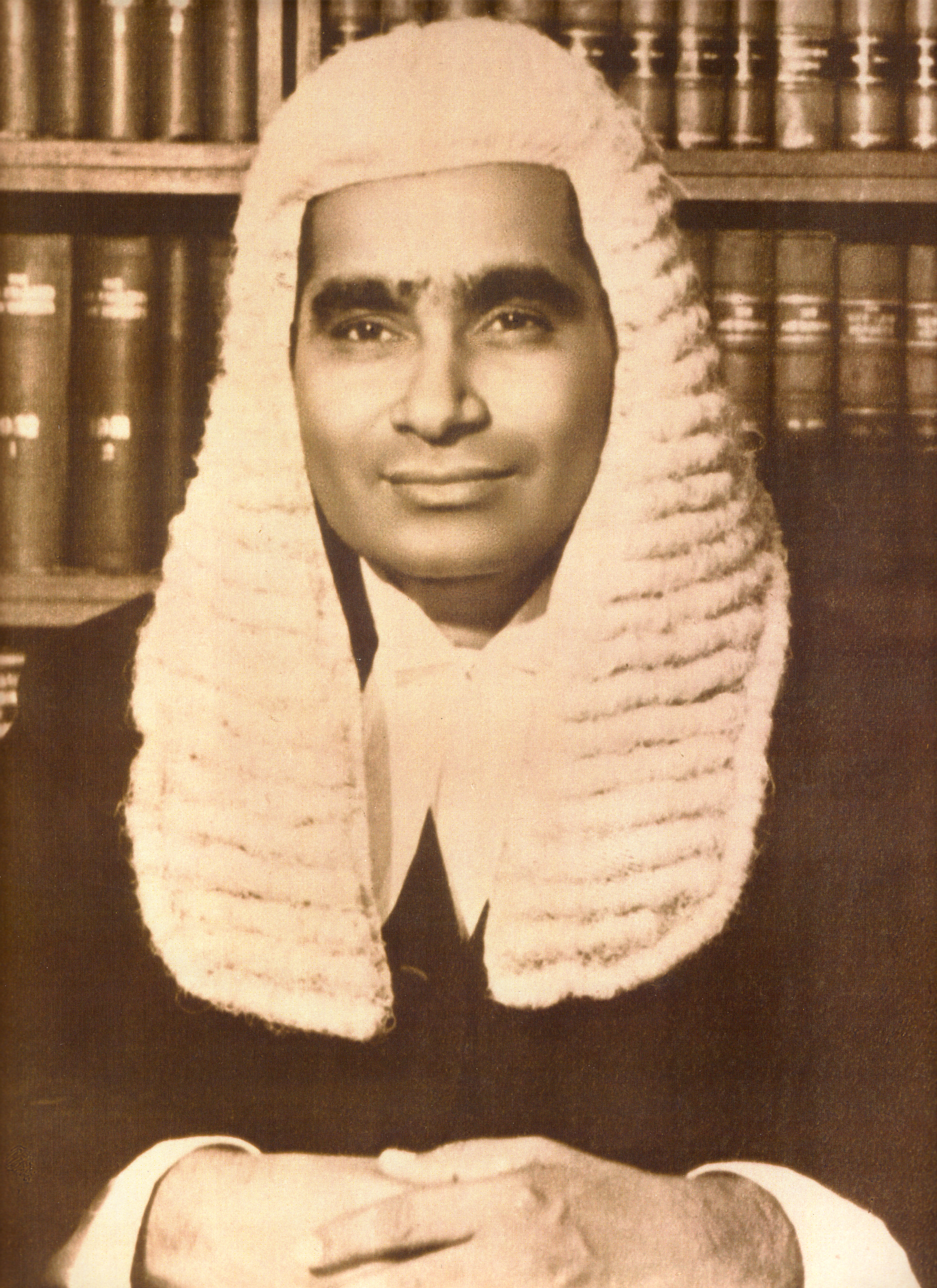
In the annals of Sri Lankan legal history, few figures command as much respect and admiration as S. Nadesan QC—a lawyer, judge’s counselor, human rights champion, and senator who lived by the principle that principle matters more than personal triumph. Though he passed away on December 21, 1986, his legacy continues to inspire lawyers and human rights activists across generations.
Born on February 11, 1904, in Anaicottai, Jaffna, Somasundaram Nadesan’s early life hinted at the unconventional path he would take. A scholarship student at Royal College, Colombo, he abandoned his university studies—failing his Physics Practical exam—to pursue teaching, then law. His detour, however, was not a failure but a redirection toward his true calling.
Nadesan was admitted to the Bar in 1931 with no established connections in the legal profession. What he lacked in networks, he made up for in determination. A fortuitous case representing a chettiar in the Court of Requests became his breakthrough. His skillful handling of the case impressed the business community, and soon he had established a thriving practice through sheer merit and hard work.
Even before his legal career began in earnest, Nadesan was shaping his philosophy. A founding member of the Jaffna Youth Congress (JYC) in 1924, he championed radical ideas—calling for poorna swaraj (complete independence) when southern political leaders were still content with dominion status. The JYC stood for a united, secular Ceylon committed to universal values and the elimination of caste barriers. This idealism would permeate everything Nadesan did as a lawyer.
Throughout his career, Nadesan developed formidable expertise spanning criminal law, civil law, constitutional law, labour law, human rights, and defamation. But it was not merely technical brilliance that set him apart—it was his incorruptible commitment to justice.
When trade unions faced industrial disputes, they turned to Nadesan. He represented them regularly, never accepting payment. It was, as one colleague noted, a genuine labour of love. Similarly, he took on cases defending sedition charges against trade unionists, challenging government overreach, and defending the fundamental rights of minorities.
In 1943, Nadesan secured the acquittal of Abdul Aziz, a trade unionist facing sedition charges, despite facing a hostile bench. His argument—that criticism of government anti-Indian policies did not constitute treason—demonstrated a lawyer unafraid to challenge authority when justice demanded it.
The Peter Pillai Foundation honored him in 1983 for his contributions to human rights and social justice. In his acceptance speech, Nadesan encapsulated his philosophy:
“The Rule of Law is the foundation of democracy. Democracy is a moral concept. It is something which is pledged to the defence of truth and justice. If we compromise with evil, with injustice, with untruth, we may gain a temporary advantage, but permanent danger will result.”
Nadesan’s career was marked by several landmark judgments that shaped constitutional jurisprudence:
Kodakan Pillai v. Mudanayake challenged the disenfranchisement of Indian Tamils under new citizenship laws. Nadesan successfully argued that the legislation violated the “solemn balance of rights” in the Soulbury Constitution protecting minorities—though the Privy Council ultimately overturned the victory.
Thiagaraja v Karthigesu established the courts’ authority to issue declarations regarding personal status—a foundational principle in family law.
In the Press Council case, Nadesan argued that the Press Council Bill was fundamentally inconsistent with the First Republican Constitution. The Constitutional Court’s Chairman observed it was the most important case he’d heard during his tenure.
Nadesan’s defence in Saturday Review cases protected freedom of speech and expression during times of government pressure and emergency regulations. Though the Supreme Court ultimately dismissed the petitions, these cases became important legal reference points in defending press freedom.
Perhaps most dramatically, during the turmoil of Black July 1983, when violence against Tamils raged across the country, Nadesan insisted on attending court for the pronouncement of judgment in Hewamanne v. de Silva. “I have never kept judges waiting,” he declared. When he arrived at Hulftsdorp, no judges were present—they arrived an hour later, clearly after being informed of his attendance.
What set Nadesan apart was not just his legal acumen but his character. Esteemed seniors of the Bar, including Dr. Colvin R. de Silva, fondly called him “Boss”—a term capturing both respect for his judgment and affection for his character.
Chief Justice Sharvananda said of him: “It can be said of only Mr. Nadesan that he was an all-rounder, quite at home whether it be in the Privy Council, Supreme Court, Election Court, the Income Tax Board of Review or Industrial Arbitrator or Parliamentary Committee.”
For nearly nineteen years, Nadesan served as standing counsel for the Lake House group of newspapers. The newspaper’s editor, Esmond Wickremesinghe, had “implicit faith in Nadesan as a lawyer. His tactics, his court craft—all suited the limitless situations that arose in journalism.”
Elected to the Senate in 1947 as an independent with no party affiliation, Nadesan took his responsibilities seriously. His speeches were incisive and illuminating. In 1952, following a violent hartal, he delivered what historian James Manor described as “a devastating assault on the government’s conduct during the hartal and on the draconian public security legislation which it had rushed through parliament.”
Remarkably, Nadesan personally visited refugee camps to verify the welfare of displaced people—risking his safety when a mob stopped cars searching for Tamils. Only his Sinhalese driver’s quick thinking saved him from harm.
After the 1971 insurrection, Nadesan used his curfew pass to gather accurate information about what had occurred. His subsequent Senate speech—delivered 39 days after the outbreak—reflected his personal anguish and passion for truth. According to some accounts, this speech was a prelude to the formation of the Civil Rights Movement in 1971.
In 1954, he delivered a forceful speech condemning the forcible removal of Rhoda Miller de Silva, an American citizen, who was taken to the airport and placed on a plane without her husband’s knowledge. His emphasis on fundamental rights and family life helped galvanize international support for her return.
Unlike many senior lawyers, Nadesan was generous to his juniors, acknowledging their efforts and even praising them in court. When C. Ranganathan entered the Bar four years after Nadesan, he found a mentor ready to help him establish himself.
A chronic diabetic in later life, Nadesan recovered from a coma by adopting a rigorous regime of exercise and dietary discipline. His mantra became simple: “Eat fruits, vegetables, and nuts.” Those visiting his chambers were served carrot or pineapple juice and nuts for refreshment.
He lived simply but deliberately, treating work as worship. Whether he succeeded or failed in a case mattered less than the principle he stood for. As one admirer wrote: “He lived—and died—on his feet.”
Nadesan lived by the philosophy of the Bhagavad Gita, encapsulated in Lord Krishna’s words to Arjuna: “To action man has a right, but not to the fruits thereof.” He met success and defeat with quiet equanimity, believing that struggling with integrity was more important than personal triumph.
He was fundamentally a man of conscience. When charged with breaching parliamentary privilege for his articles criticizing Parliament’s treatment of the Ceylon Observer editor, he was acquitted. His experience and foresight in understanding the separation of powers ultimately validated his defence.
S. Nadesan died at age 81 in vibrant health, physically fit, and intellectually alert—a man who had lived on his terms, guided by principle rather than expediency. Though forty years have passed since his death, his legacy remains luminous:
As Sri Lanka continues to grapple with questions of justice, human rights, and constitutional governance, Nadesan’s life remains a master class in principled action. He reminds us that what we stand for matters infinitely more than what we gain from standing.
In the end, Nadesan was what the law aspires to produce but so rarely achieves: an extraordinary human being who used his gifts not for personal aggrandizement but for the pursuit of truth and justice. His legacy is not measured in victories won, but in principles upheld—and in the countless lives touched by a lawyer who believed, without reservation, that integrity is the highest calling.
S. Nadesan QC (1904-1986) remains an inspiration to all who believe that law is a noble profession, and that courage in defence of justice is the highest form of courage.
This blog post is based primarily on the comprehensive tribute written by Dr. Reeza Hameed, published in Colombo Telegraph on December 21, 2025, which draws on personal recollections, judicial observations, historical records, and documented cases. While the article itself serves as the foundational source, the references listed above indicate the primary legal documents, constitutional texts, landmark cases, and contextual historical events that are either directly cited in or relevant to understanding Nadesan’s life and legacy.
The cases cited represent milestones in Sri Lankan constitutional and legal jurisprudence, and where specific case details are referenced in the blog post, they are sourced from the legal documentation and historical records cited above.
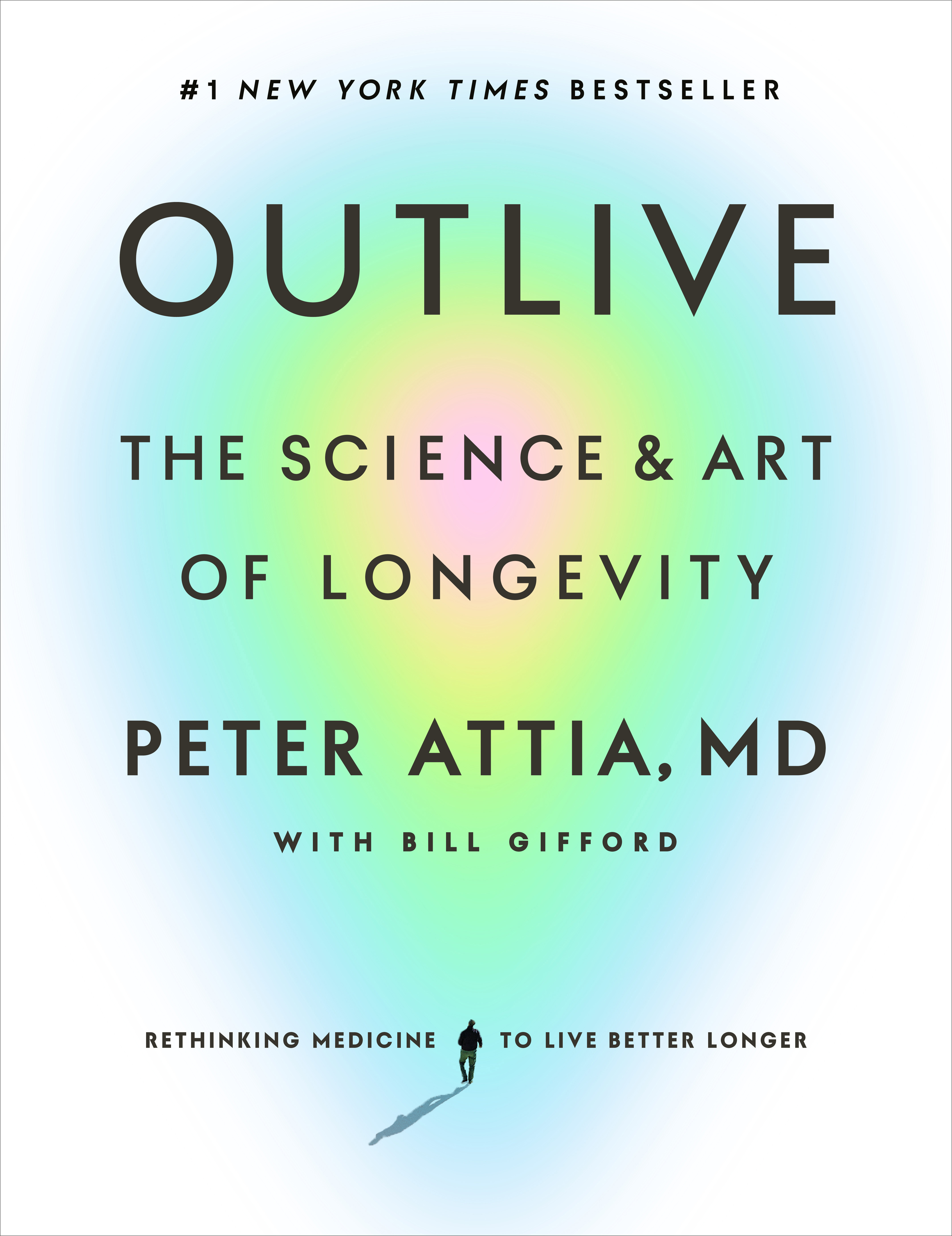
(Recommended by Krishnans)
Wouldn’t you like to live longer? And better? In this operating manual for longevity, Dr. Peter Attia draws on the latest science to deliver innovative nutritional interventions, techniques for optimizing exercise and sleep, and tools for addressing emotional and mental health.
For all its successes, mainstream medicine has failed to make much progress against the diseases of aging that kill most people: heart disease, cancer, Alzheimer’s disease, and type 2 diabetes. Too often, it intervenes with treatments too late to help, prolonging lifespan at the expense of healthspan, or quality of life. Dr. Attia believes we must replace this outdated framework with a personalized, proactive strategy for longevity, one where we take action now, rather than waiting.
This is not “biohacking,” it’s science: a well-founded strategic and tactical approach to extending lifespan while also improving our physical, cognitive, and emotional health. Dr. Attia’s aim is less to tell you what to do and more to help you learn how to think about long-term health, in order to create the best plan for you as an individual. In Outlive, readers will discover:
• Why the cholesterol test at your annual physical doesn’t tell you enough about your actual risk of dying from a heart attack.
• That you may already suffer from an extremely common yet underdiagnosed liver condition that could be a precursor to the chronic diseases of aging.
• Why exercise is the most potent pro-longevity “drug”—and how to begin training for the “Centenarian Decathlon.”
• Why you should forget about diets, and focus instead on nutritional biochemistry, using technology and data to personalize your eating pattern.
• Why striving for physical health and longevity, but ignoring emotional health, could be the ultimate curse of all.
Aging and longevity are far more malleable than we think; our fate is not set in stone. With the right roadmap, you can plot a different path for your life, one that lets you outlive your genes to make each decade better than the one before.
Continue reading
As a daily discipline for at least a week, take time for prayer. Some days it may be for only a minute or two; on other occasions it may be for more lengthy periods. Experiment with the four types of prayer:
Confession: Recognizing and admitting, without guilty feelings, the current state of your life
Thanksgiving: Expressing appreciation for the blessings of your life
Petition: Out of the spirit of your highest ideal, asking for what you feel you need
Praise: Communicating the wonder and awe you feel when you consider the Creator.
By the end of the week, notice whether you can observe any changes in the amount of time and energy you spend on worrying.
Mark Thurston Phd and Christopher Fazel
The Edgar Cayce Handbook for Creating Your Future

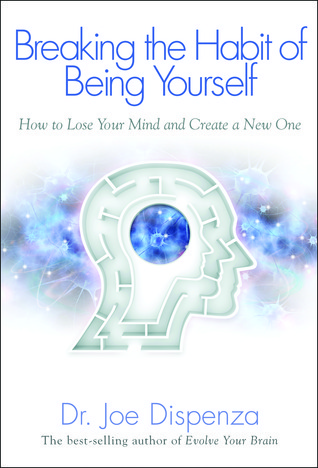
You are not doomed by your genes and hardwired to be a certain way for the rest of your life. A new science is emerging that empowers all human beings to create the reality they choose. In Breaking the Habit of Being Yourself, renowned author, speaker, researcher, and chiropractor Dr. Joe Dispenza combines the fields of quantum physics, neuroscience, brain chemistry, biology, and genetics to show you what is truly possible. Not only will you be given the necessary knowledge to change any aspect of yourself, you will be taught the step-by-step tools to apply what you learn in order to make measurable changes in any area of your life. Dr. Joe demystifies ancient understandings and bridges the gap between science and spirituality. Through his powerful workshops and lectures, thousands of people in 25 different countries have used these principles to change from the inside out. Once you break the habit of being yourself and truly change your mind, your life will never be the same!


So, returning to a critical question, what makes a person resilient to Alzheimer’s? One factor is referred to as “cognitive reserve,” … The greater the amount of knowledge one has amassed and learned, for example through higher education, the greater the number of synapses in one’s brain. Since the degree of dementia in Alzheimer’s patients correlates most closely with loss of synapses, the more synapses you have, the more you can lose before problems set in. Thus, continuing to learn new things is very important as we age. When planning for your retirement, think just as much about your cognitive reserve as about your financial reserve.
The following recommendations have been shown to have the most useful effects on risk reduction—you’ll recognize them from our general advice for a healing lifestyle, although they are more specific here:
Continue reading
 ONE TUSK