Start Ups
Book of the Month – June 2024: Fall in Love with the Problem, not the Solution by Uri Levine
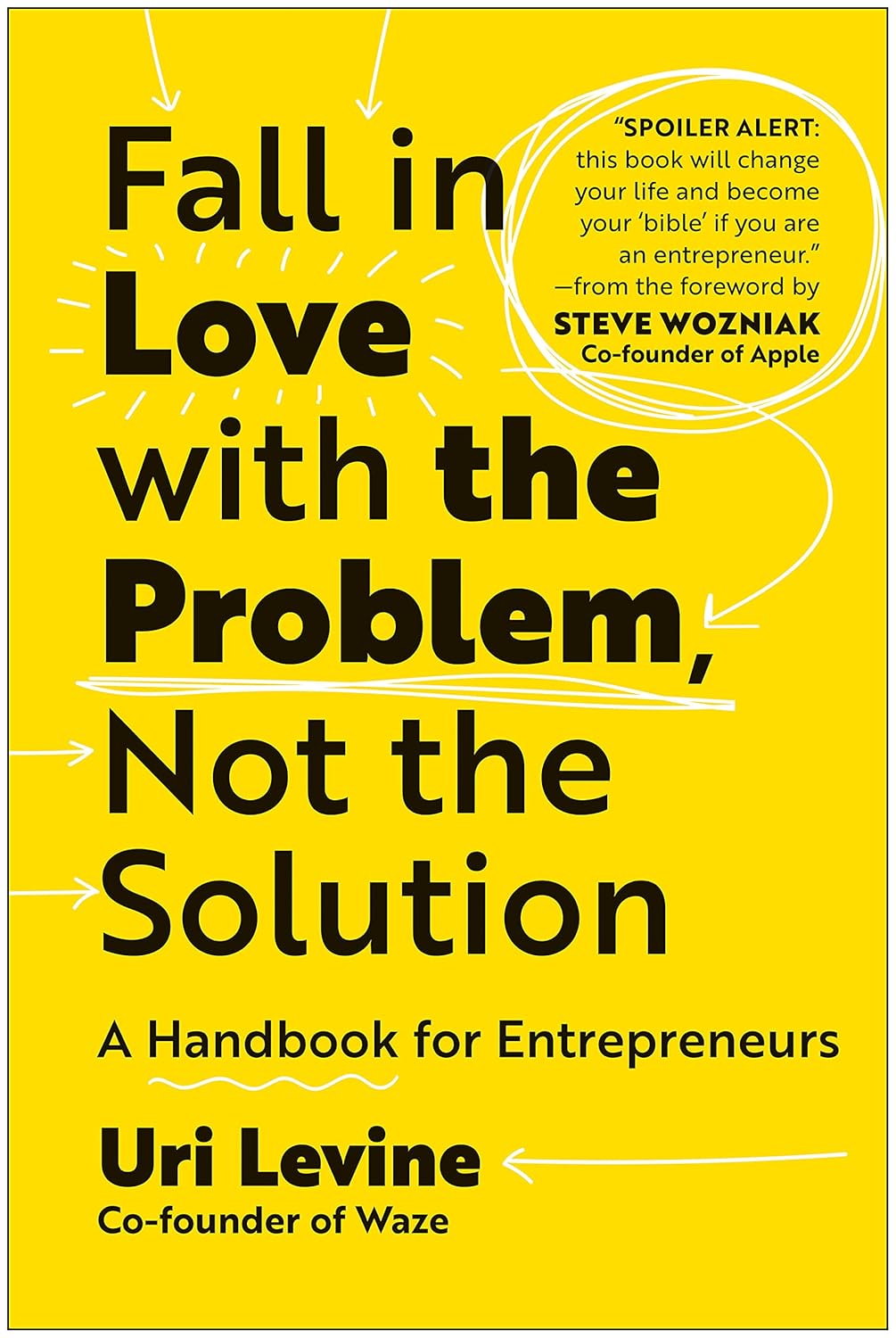
Unicorns—companies that reach a valuation of more than $1 billion—are rare. Uri Levine has built two.
And in Fall in Love with the Problem, Not the Solution, he shows you just how he did it.
As the cofounder of Waze—the world’s leading commuting and navigation app with more than 700 million users to date, and which Google acquired in 2013 for $1.15 billion—Levine is committed to spreading entrepreneurial thinking so that other founders, managers, and employees in the tech space can build their own highly valued companies.
Levine offers an inside look at the creation and sale of Waze and his second unicorn, Moovit, revealing the formula that drove those companies to compete with industry veterans and giants alike. He offers tips on:
- Firing and hiring
- Disrupting “broken” markets
- Raising funding
- Understanding your users
- Reaching product market fit
- Making scale-up decisions
- Going global
- Deciding when to sell
Fall in Love with the Problem, Not the Solution offers mentorship in a book from one of the world’s most successful entrepreneurs, and empowers you to build a successful business by identifying your consumers’ biggest problems and disrupting the inefficient markets that currently serve them.
Continue readingLessons from 30 Years of building
( Recommended by Justin B)
Ask Big Questions
To be clear: I’m not saying you should ask pointed questions that put others on the spot, like “How can you deliver 10% higher productivity?” or “Are you missing anything here?” The kind of questions leaders need to ask are those that invite people to come together to explore major new opportunities that your organization hasn’t identified yet. Here are some examples:
- What is a game-changing opportunity that could create much more value than we have delivered in the past?
- What are emerging unmet needs of our customers that could provide the foundation for an entirely new business?
- How could we leverage the resources of third parties to address a broader range of the needs of our customers?
- How can we move from standardized, mass-market products and services to personalizing our products and services to the specific needs of each customer?
- How can we develop supply networks that would be more flexible in responding to unanticipated disruptions in production or logistics?
- How could we harness sensor technology to create more visibility into how our customers are using our products and use this information to deliver more value and deepen trust with our customers?
Focusing your questions on these kinds of new and big opportunities rather than on the existing activities of the organization can also help you to sidestep your fear that questioning will be seen as a sign of weakness, since there’s no way you could be expected to know the answers.
These broader questions also communicate that you have a sense of ambition, that you want to take the organization way beyond where it is today. And you can bolster your credibility by providing evidence of those long-term trends that underlie your question – for example, emerging technologies that are likely to offer new opportunities, or demographic shifts that will create some significant unmet needs among your customers.
– John Hagel III
Book of the Month – November 2023: Who not How by Dan Sullivan and Dr Benjamin Hardy

( recommended by Justin B)
The world’s foremost entrepreneurial coach shows you how to make a mindset shift that opens the door to explosive growth and limitless possibility–in your business and your life.
Have you ever had a new idea or a goal that excites you… but not enough time to execute it? What about a goal you really want to accomplish…but can’t because instead of taking action, you procrastinate? Do you feel like the only way things are going to get done is if you do them? But what if it wasn’t that way? What if you had a team of people around you that helped you accomplish your goals (while you helped them accomplish theirs)?
When we want something done, we’ve been trained to ask ourselves: “How can I do this?” Well, there is a better question to ask. One that unlocks a whole new world of ease and accomplishment. Expert coach Dan Sullivan knows the question we should ask instead: “Who can do this for me?”
This may seem simple. And it is. But don’t let the lack of complexity fool you. By mastering this question, you will quickly learn how billionaires and successful entrepreneurs like Dan build incredible businesses and personal freedom.
Book of the Month – January 2022 : The Platform Delusion by Jonathan Knee
![The Platform Delusion: Who Wins and Who Loses in the Age of Tech Titans by [Jonathan A. Knee]](https://m.media-amazon.com/images/I/41QFzYc7l6S.jpg)
An investment banker and professor explains what really drives success in the tech economy
Many think that they understand the secrets to the success of the biggest tech companies: Facebook, Amazon, Apple, Netflix, and Google. It’s the platform economy, or network effects, or some other magical power that makes their ultimate world domination inevitable. Investment banker and professor Jonathan Knee argues that the truth is much more complicated–but entrepreneurs and investors can understand what makes the giants work, and learn the keys to lasting success in the digital economy.
Knee explains what really makes the biggest tech companies work: a surprisingly disparate portfolio of structural advantages buttressed by shrewd acquisitions, strong management, lax regulation, and often, encouraging the myth that they are invincible to discourage competitors. By offering fresh insights into the true sources of strength and very real vulnerabilities of these companies, The Platform Delusion shows how investors, existing businesses, and startups might value them, compete with them, and imitate them.
The Platform Delusion demystifies the success of the biggest digital companies in sectors from retail to media to software to hardware, offering readers what those companies don’t want everyone else to know. Knee’s insights are invaluable for entrepreneurs and investors in digital businesses seeking to understand what drives resilience and profitability for the long term.
Relationships vs Transactions
Renowned researcher and author Jim Collins makes his second appearance on The Knowledge Project, this time to share a wealth of life lessons learned from his mentor and collaborator, Bill Lazier. Jim recently released BE 2.0 (Beyond Entrepreneurship 2.0), an ambitious upgrade of his first book Beyond Entrepreneurship, co-authored with Lazier and focused on effective leadership style. Shane discusses all new topics with Jim in their follow-up conversation, including what it means to be a mentor and a father, why we should trust by default, why we confuse living a long life with a great life, and the difference between being afraid of risk and being afraid of ambiguity.
( contributed by Justin)
Beginning of economic populism?
What happened with Gamestop is the beginning of economic populism. Robinhood weaponized the Occupy Wall Street movement, social drove viral interest, and nearly everyone hates Wall Street and Robinhood. There’s a lot to unpack here, political, economic, social, and technological, but understanding how all these themes come together is crucial to understand the future of fintech…..
Wild Hearts and Wild Ideas
My guest today is Niki Scevak, co-founder and partner at Blackbird Ventures. Blackbird is a leading VC firm in Australia and New Zealand and has invested in companies like graphic design platform Canva and autonomous vehicle company Zoox. Our conversation covers the types of wild ideas Blackbird invests in, the landscape of venture and start-ups in Australia and New Zealand, and everything Niki knows about gross margins and customer acquisition. We also introduce a new concept on the show I’m calling Breakdowns, where we dive into a single business, what it does, how it operates, and what makes it tick. I hope you enjoy the conversation.
( contributed by Glenn Barry)
 ONE TUSK