Organisational & Social Transformation
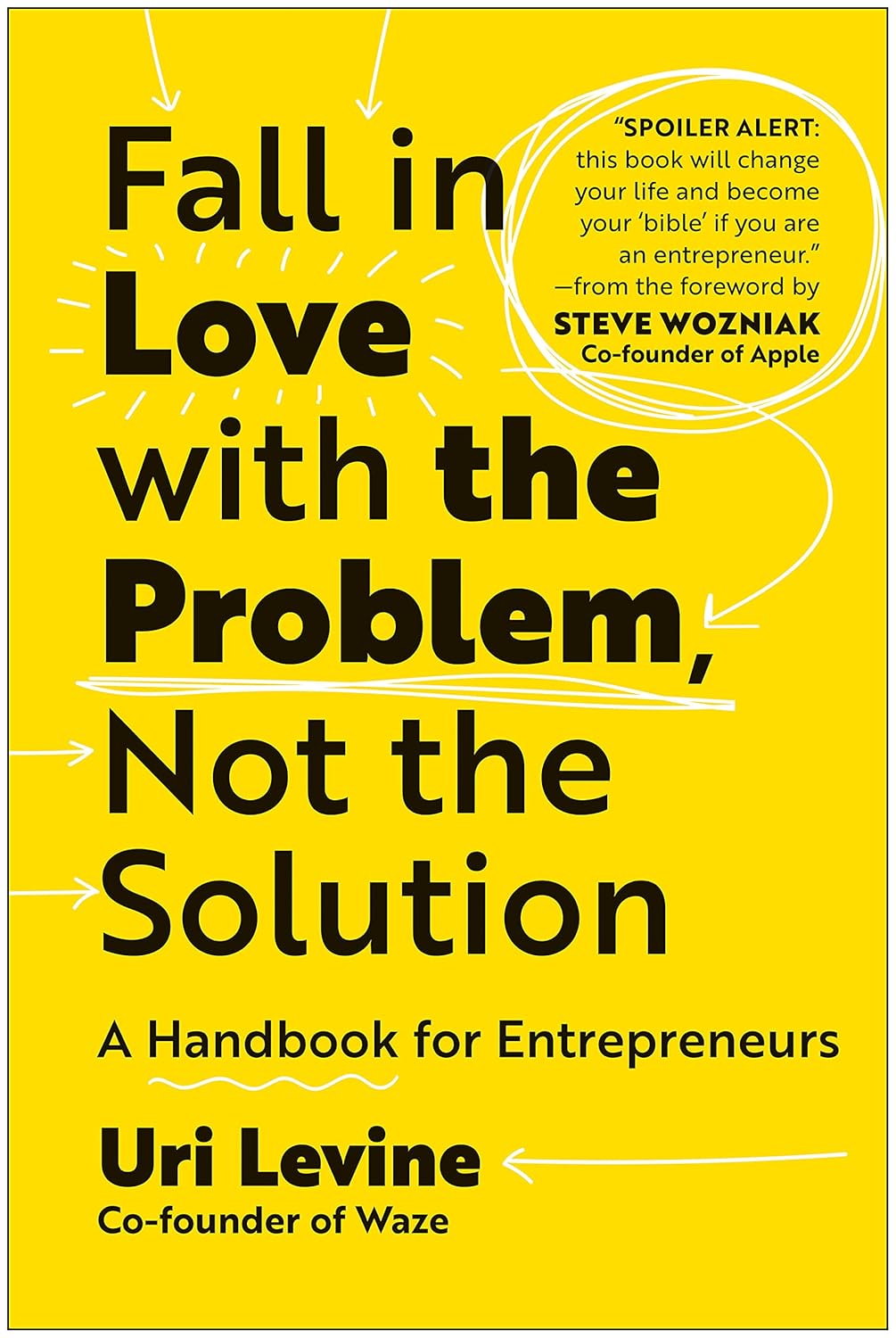
Book of the Month – June 2024: Fall in Love with the Problem, not the Solution by Uri Levine

Unicorns—companies that reach a valuation of more than $1 billion—are rare. Uri Levine has built two.
And in Fall in Love with the Problem, Not the Solution, he shows you just how he did it.
As the cofounder of Waze—the world’s leading commuting and navigation app with more than 700 million users to date, and which Google acquired in 2013 for $1.15 billion—Levine is committed to spreading entrepreneurial thinking so that other founders, managers, and employees in the tech space can build their own highly valued companies.
Levine offers an inside look at the creation and sale of Waze and his second unicorn, Moovit, revealing the formula that drove those companies to compete with industry veterans and giants alike. He offers tips on:
- Firing and hiring
- Disrupting “broken” markets
- Raising funding
- Understanding your users
- Reaching product market fit
- Making scale-up decisions
- Going global
- Deciding when to sell
Fall in Love with the Problem, Not the Solution offers mentorship in a book from one of the world’s most successful entrepreneurs, and empowers you to build a successful business by identifying your consumers’ biggest problems and disrupting the inefficient markets that currently serve them.
Continue readingImagine a world where everyone lives in peace
Imagine what would spring from that global peace—the beautiful flowers of kindness. Imagine a world where society uses its talents, resources, and energy for the good of all. Where the many, many billions of dollars currently spent on defense are used instead to attack disease rather than each other. Where communities and families aren’t fractured by violence and crime but are united, strong, understanding, and caring. Where everyone’s home is safe, comfortable, and welcoming. Where new technologies are designed to serve humankind, helping us prosper. Where there is plentiful food and water, and we happily share what we have with friends, neighbors, and strangers. Where borders are no more than lines on old maps. Where creatures of every shape and size have space to thrive. Where Nature is loved and respected. Where our villages, towns, and cities overflow with gratitude and generosit
Imagine that world….

Photo by Colton Duke on Unsplash
Continue readingSimple and Impactful

Photo by Parsa Mahmoudi on Unsplash
This is too good not to share. I asked a friend who has crossed 70 & is heading towards 80 what sort of changes he is feeling in himself? He sent me the following:
1. After loving my parents, my siblings, my spouse, my children and my friends, I have now started loving myself.
2. I have realized that I am not “Atlas”. The world does not rest on my shoulders.
3. I have stopped bargaining with vegetable & fruit vendors. A few pennies more is not going to break me, but it might help the poor fellow save for his daughter’s school fees.
4. I leave my waitress a big tip. The extra money might bring a smile to her face. She is toiling much harder for a living than I am.
5. I stopped telling the elderly that they’ve already told that story many times. The story makes them walk down memory lane & relive their past.
6. I have learned not to correct people even when I know they are wrong. The onus of making everyone perfect is not on me. Peace is more precious than perfection.
Continue readingLessons from 30 Years of building
( Recommended by Justin B)
Ask Big Questions
To be clear: I’m not saying you should ask pointed questions that put others on the spot, like “How can you deliver 10% higher productivity?” or “Are you missing anything here?” The kind of questions leaders need to ask are those that invite people to come together to explore major new opportunities that your organization hasn’t identified yet. Here are some examples:
- What is a game-changing opportunity that could create much more value than we have delivered in the past?
- What are emerging unmet needs of our customers that could provide the foundation for an entirely new business?
- How could we leverage the resources of third parties to address a broader range of the needs of our customers?
- How can we move from standardized, mass-market products and services to personalizing our products and services to the specific needs of each customer?
- How can we develop supply networks that would be more flexible in responding to unanticipated disruptions in production or logistics?
- How could we harness sensor technology to create more visibility into how our customers are using our products and use this information to deliver more value and deepen trust with our customers?
Focusing your questions on these kinds of new and big opportunities rather than on the existing activities of the organization can also help you to sidestep your fear that questioning will be seen as a sign of weakness, since there’s no way you could be expected to know the answers.
These broader questions also communicate that you have a sense of ambition, that you want to take the organization way beyond where it is today. And you can bolster your credibility by providing evidence of those long-term trends that underlie your question – for example, emerging technologies that are likely to offer new opportunities, or demographic shifts that will create some significant unmet needs among your customers.
– John Hagel III
Book of the Month – November 2023: Who not How by Dan Sullivan and Dr Benjamin Hardy

( recommended by Justin B)
The world’s foremost entrepreneurial coach shows you how to make a mindset shift that opens the door to explosive growth and limitless possibility–in your business and your life.
Have you ever had a new idea or a goal that excites you… but not enough time to execute it? What about a goal you really want to accomplish…but can’t because instead of taking action, you procrastinate? Do you feel like the only way things are going to get done is if you do them? But what if it wasn’t that way? What if you had a team of people around you that helped you accomplish your goals (while you helped them accomplish theirs)?
When we want something done, we’ve been trained to ask ourselves: “How can I do this?” Well, there is a better question to ask. One that unlocks a whole new world of ease and accomplishment. Expert coach Dan Sullivan knows the question we should ask instead: “Who can do this for me?”
This may seem simple. And it is. But don’t let the lack of complexity fool you. By mastering this question, you will quickly learn how billionaires and successful entrepreneurs like Dan build incredible businesses and personal freedom.
Everything is ours already -it is a matter of greater manifestation…

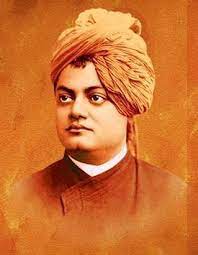
The Vedanta recognises no sin, it only recognises error. And the greatest error, says the Vedanta, is to say that you are weak, that you are a sinner, a miserable creature, and that you have no power and you cannot do this and that. Every time you think in that way, you, as it were, rivet one more link in the chain that binds you down, you add one more layer of hypnotism on to your own soul. Therefore, whosoever thinks he is weak is wrong, whosoever thinks he is impure is wrong, and is throwing a bad thought into the world. This we must always bear in mind that in the Vedanta there is no attempt at reconciling the present life — the hypnotised life, this false life which we have assumed — with the ideal; but this false life must go, and the real life which is always existing must manifest itself, must shine out. No man becomes purer and purer, it is a matter of greater manifestation. The veil drops away, and the native purity of the soul begins to manifest itself. Everything is ours already — infinite purity, freedom, love, and power.
Swami Vivekannda – Practical Vedanta
Thought of the Week – 20th February 2023 (2)

Commander’s Intent is a statement that defines the mission commander’s vision of a successful outcome: It must be clear, concise, and easily understood. It’s the mission’s big picture, the logline. The Commander’s Intent should be easy to identify. First, it answers the five Ws: who, what, when, where, and why? Second, it’s repeated at the beginning and end of the briefing. And third, it begins with the statement: “The single most important thing we must accomplish is…”
Brevity clarifies, and clarity inspires.
The Bezos Blueprint: Communication Secrets of the Worlds greatest salesman by Carmine Gallo
Well, what are you getting out of this constant resentment?

In our present society, the competition is for victimhood. It’s almost hilarious how people want to rush onstage to tell you how they’re the victim. And they’re almost in competition to see who’s the most wronged. Who’s the most wronged gender or race or color? Who’s a victim of money, social position, politics? Everybody’s out there in the competition to see who has been the most wronged. It’s like a moral competition. Who’s the most wronged here? Is it the old people or the young people? The Republicans or the Democrats? Who’s getting the biggest part of the wrong? It’s almost comical when you see it. Everybody just loves to rush on television and say how they’ve been wronged. That’s narcissism—to milk everything for all you can get out of it. And then when you finally see it for what it’s worth, and you see it through the viewpoint of the self-feeding of narcissism, you only feel sorry that people got stuck in it. It’s one thing to, as a passing phase, milk a crisis for all it’s worth, but then there’s a time to get over it. What you want to do is help people get over it and move on in life.
David Hawkins