Renowned researcher and author Jim Collins makes his second appearance on The Knowledge Project, this time to share a wealth of life lessons learned from his mentor and collaborator, Bill Lazier. Jim recently released BE 2.0 (Beyond Entrepreneurship 2.0), an ambitious upgrade of his first book Beyond Entrepreneurship, co-authored with Lazier and focused on effective leadership style. Shane discusses all new topics with Jim in their follow-up conversation, including what it means to be a mentor and a father, why we should trust by default, why we confuse living a long life with a great life, and the difference between being afraid of risk and being afraid of ambiguity.
Elon Musk’s entrepreneurial success is a direct result of his mindset, strategies, and intelligence.
Having known Elon for 20 years, I’ve had the opportunity to watch his meteoric rise into someone who is arguably the greatest entrepreneur of our age.
In this blog, I’ll summarize what every exponential entrepreneur can learn and emulate from Elon’s core success tactics and strategies.
I’ve divided these lessons into 6 sections:
Deep-rooted Passion
Massively Transformative Purpose
Singular, Unwavering Focus
First Principles Thinking
Thinking in Probabilities
Not Settling for “No” / Not Giving Up
Let’s dive in…
1. DEEP-ROOTED PASSION
“I didn’t go into the rocket business, the car business, or the solar business thinking, ‘This is a great opportunity.’ I just thought, in order to make a difference, something needed to be done. I wanted to create something substantially better than what came before.” – Elon Musk
Elon only tackles those problems where he has deep-rooted passion and conviction.
After selling PayPal, with $165M in his pocket, he set out to pursue three Moonshots, and subsequently built three multibillion-dollar companies: SpaceX, Tesla, and SolarCity.
This passion (and the underlying emotional drive) allowed him to push forward through extraordinarily difficult times and take big risks.
You might think it was always easy for Elon, but back in 2008 he was at a lowest low: SpaceX had just experienced its third consecutive failure of the Falcon-1 launch vehicle, Tesla was out of money, SolarCity was not getting financed, and Musk was going through a divorce.
He had to borrow money for basic living. Traumatic times.
Despite the 2008 economic crisis at the time, he bet every penny he had, and eventually everything turned around. Going from being in debt, to the wealthiest person on the planet just 13 years later. Wow, what a journey!
Ultimately, it was his passion, refusal to give up, and drive that allowed him to ultimately succeed and begin to impact the world at a significant scale.
2. CLEAR MASSIVELY TRANSFORMATIVE PURPOSE(S)
Part of Elon’s ability to motivate his teams to do great things is his crystal-clear Massively Transformative Purpose (MTP), which drives each of his companies.
As I always say, social movements, rapidly growing organizations, and remarkable breakthroughs in science and technology are all backed by a powerful MTP.
Elon’s MTP for Tesla and SolarCity is to accelerate the world’s transition to sustainable energy.
To this end, every product Tesla brings to market is focused on this vision and backed by a Master Plan he wrote nearly 15 years ago.
Elon’s MTP for SpaceX is to backup the biosphere by making humanity a multi-planet species.
Elon has been preaching this since the founding of SpaceX back in 2002, even when he was experiencing numerous rocket failures.
“I think fundamentally the future is vastly more exciting and interesting if we’re a spacefaring civilization and a multi-planet species than if we’re or not. You want to be inspired by things. You want to wake up in the morning and think the future is going to be great. And that’s what being a spacefaring civilization is all about.” – Elon Musk
MTPs are like a north star for any exponential entrepreneur and their employees.
They keep all efforts focused and aligned, which helps his organizations grow cohesively even in times of chaos.
And when you combine passion and purpose, that gives you something else…
3. SINGULAR, UNWAVERING FOCUS
Elon is notorious for working 75 – 80 hour weeks, especially in the early days of SpaceX and Tesla.
There were times during Tesla’s early days where a specific problem needed to be solved, so he would sleep under his desk or on the factory floor if he had to. Elon didn’t think about anything else—all he focused on was the task at hand.
And now look at Tesla: it’s a giant transforming the automotive world.
Passion, purpose, and focus. All of these put you into what psychologists call a flow state: a highly enjoyable and meaningful state where work ceases to become work and instead becomes energizing and immersive.
This intensity that Elon brings is different from the kind of intensity that burns people out or causes them to quit jobs. For him, the intensity is energizing—not draining.
4. FIRST PRINCIPLES THINKING
First principles thinking is a mode of inquiry borrowed from physics that is designed to relentlessly pursue the foundations of any given problem from fundamental truths.
Elon has deployed this thinking strategy to give himself an unfair advantage when developing new batteries, a key component for both Tesla and SolarCity.
Here is Elon describing first principles thinking in an interview with Kevin Rose:
“I think it is important to reason from first principles rather than by analogy. The normal way we conduct our lives is we reason by analogy. [When reasoning by analogy] we are doing this because it’s like something else that was done or it is like what other people are doing — slight iterations on a theme.
First principles is kind of a physics way of looking at the world. You boil things down to the most fundamental truths and say, “What are we sure is true?” … and then reason up from there.
Somebody could say, “Battery packs are really expensive and that’s just the way they will always be… Historically, it has cost $600 per kilowatt hour. It’s not going to be much better than that in the future.”
With first principles, you say, “What are the material constituents of the batteries? What is the stock market value of the material constituents?”
It’s got cobalt, nickel, aluminum, carbon, some polymers for separation and a sealed can. Break that down on a material basis and say, “If we bought that on the London Metal Exchange what would each of those things cost?”
It’s like $80 per kilowatt hour. So clearly you just need to think of clever ways to take those materials and combine them into the shape of a battery cell and you can have batteries that are much, much cheaper than anyone realizes.”
First principles thinking works so well because it gives us a proven strategy for editing out complexity and allows entrepreneurs to sidestep the tide of popular opinion.
Now, you might be wondering, “How do you motivate people with brutal facts? Doesn’t motivation flow chiefly from a compelling vision?” The answer, surprisingly, is, “No.” Not because vision is unimportant, but because expending energy trying to motivate people is largely a waste of time. One of the dominant themes that runs throughout this book is that if you successfully implement its findings, you will not need to spend time and energy “motivating” people. If you have the right people on the bus, they will be self-motivated. The real question then becomes: How do you manage in such a way as not to de-motivate people?And one of the single most de-motivating actions you can take is to hold out false hopes, soon to be swept away by events.
Yes, leadership is about vision. But leadership is equally about creating a climate where the truth is heard and the brutal facts confronted. There’s a huge difference between the opportunity to “have your say” and the opportunity to be heard. The good-to-great leaders understood this distinction, creating a culture wherein people had a tremendous opportunity to be heard and, ultimately, for the truth to be heard.
Mother Teresa’s greatness and power arose because she addressed the most noble qualities within human nature—unconditional love and nonjudgmental compassion.
When someone dedicates their life to carrying out the principle of universal truth, that person becomes magnetic. They develop the power of attraction. What they have and what they do are secondary to what they are. It is that quality, which the world acknowledges and brings them, that we term success.
What was it that Mother Teresa acknowledged in others and, by so doing, magnificently brought forth for all of us to see in her? When she ministered to the poor and the sick and the dying in the streets of Kolkata, was she trying to save them from death? Was she trying to raise funds for the poor? No. What she ministered to and acknowledged was the intrinsic truth of human dignity, worth, value, nobility, lovability, and greatness. Those qualities are intrinsic in every human being no matter how abysmal their external life situation may seem to be.
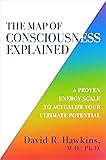
The Map of Consciousness Explained: A Proven Energy Scale to Actualize Your Ultimate Potential by David R. Hawkins
“So please understand from the start, when I’m talking to you, I’m not trying to convert you. I’m not trying to do you any good.I’m just doing my own stuff. I talk this way like birds sing. It amuses me. I enjoy it because I’m interested. I’m full of wonder about this universe. Full of all sorts of thoughts about it and I like to share these with people not in order to interfere with your personal lives or make you dependent on me, heaven forbid. If I had enough people dependent on me I would have no sleep at nights at all, it would be on the phone, be hanging around as I go away. But simply that I think that with our exchange of ideas and rubbing ourselves against each other we may find something of mutual interest. And let’s not make any more ambitious claim for it than that. Because anything beyond that would be getting us into the world of power games. Trying to influence people, trying to control people and I’m not interested in that.”
It’s coming through a hole in the air From those nights in Tiananmen Square It’s coming from the feel That this ain’t exactly real Or it’s real, but it ain’t exactly there From the wars against disorder From the sirens night and day From the fires of the homeless From the ashes of the gay Democracy is coming to the USA It’s coming through a crack in the wall On a visionary flood of alcohol From the staggering account Of the Sermon on the Mount Which I don’t pretend to understand at all It’s coming from the silence On the dock of the bay, From the brave, the bold, the battered Heart of Chevrolet Democracy is coming to the USAIt’s coming from the sorrow in the street The holy places where the races meet From the homicidal bitchin’ That goes down in every kitchen To determine who will serve and who will eat From the wells of disappointment Where the women kneel to pray For the grace of God in the desert here And the desert far away: Democracy is coming to the USASail on, sail on Oh mighty ship of State To the shores of need Past the reefs of greed Through the Squalls of hate Sail on, sail on, sail on, sail onIt’s coming to America first The cradle of the best and of the worst It’s here they got the range And the machinery for change And it’s here they got the spiritual thirst It’s here the family’s broken And it’s here the lonely say That the heart has got to open In a fundamental way Democracy is coming to the USAIt’s coming from the women and the men Oh baby, we’ll be making love again We’ll be going down so deep The river’s going to weep, And the mountain’s going to shout Amen It’s coming like the tidal flood Beneath the lunar sway Imperial, mysterious In amorous array Democracy is coming to the USASail on, sail on O mighty ship of State To the shores of need Past the reefs of greed Through the squalls of hate Sail on, sail on, sail on, sail onI’m sentimental, if you know what I mean I love the country but I can’t stand the scene And I’m neither left or right I’m just staying home tonight Getting lost in that hopeless little screen But I’m stubborn as those garbage bags As time cannot decay I’m junk but I’m still holding up this little wild bouquet Democracy is coming to the USA To the USA
With our questions we make the world. Questions open our minds, our eyes, and our hearts. With our questions we learn, connect, and create. We are smarter, more productive, and able to get better results. We shift our orientation from fixed opinions and easy answers to curiosity, thoughtful questions, and open-minded conversations, lighting the way to collaboration, exploration, discovery, and innovation. I have a vision of workplaces and a society—of individuals, families, organizations, and communities—that are vibrant with the spirit of inquiry and possibility.
– Marilee Adams
“Question Thinking is a system of skills and tools using questions to expand how you approach virtually any situation. You develop the skills to refine your questions for vastly better results in anything you do. That begins with asking questions of ourselves and only then asking them of others.”
“…..Questions drive results…..”
Change Your Questions, Change Your Life: 12 Powerful Tools for Leadership, Coaching, and Life by Marilee Adams and Marshall Goldsmith‘




 ONE TUSK