
Thought of the week – 16th June 2025

A Neighbour , a Pilgrim, a Pope:
In memory of Pope Francis (1936–2025)
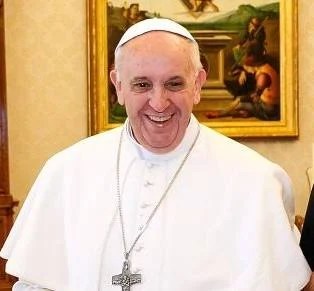
Today, the world bids farewell to a gentle giant of spirit.
Pope Francis—the first non-European, Latin American, and Jesuit Pope in the history of the Church—has left this world. His departure, so soon after the sacred silence of Holy Week, feels like the soft closing of a holy chapter.
As a fellow pilgrim born in Buenos Aires, I cannot help but feel this loss in a personal way. As a child, he lived only a few blocks from where I grew up. We were neighbors—one generation apart.
We even supported the same football team: San Lorenzo. Something as simple as that makes the memory even warmer—two believers, two neighbors, two hinchas sharing a thread of belonging beyond doctrine.
And though we never met, I have long considered him kindred.
While I walk the path of Gaudiya Vaishnavism, I do not feel this in opposition to the spirit of Christianity. In fact, I often say—truthfully and openly—that, in essence, I consider myself a Christian too. How could I not be touched by the life and teachings of Jesus, the wounded healer, the teacher who knelt, the lover who loved unto death?
Today, as I write these words, our ashram in North Carolina welcomes a dear friend: Father Cassian, a Catholic priest and monk, who will stay with us for some time. His presence feels especially poignant today, as we mourn and honor one of the most transformative figures in recent Christian history.
Pope Francis dared to break boundaries—geographical, social, and theological. He championed the poor with tenderness and ferocity. He called for an integral ecology, where care for creation is inseparable from care for the vulnerable. His encyclicals Laudato Si’ and Fratelli Tutti were not merely Catholic texts, but universal appeals to conscience, reminding us that the Earth is not only our common home—it is sacred.
He reached toward those whom others overlooked: the divorced, the queer, the imprisoned, the forgotten. He believed that no one stands outside the circle of God’s mercy. And though his efforts were often misunderstood—by conservatives and progressives alike—he kept walking, one foot in the Gospel, the other in the dirt of our time.
He simplified the papacy. He renounced palatial opulence. He cooked his own meals. He asked us to pray for him, always. And he wept when he spoke of war, refugees, or ecological collapse—not as a politician, but as a father. As a brother of humanity.
Of course, like all great souls, he was not without controversy. While I may not agree with every statement he made or stance he took, I firmly believe in honoring the whole of a life, not its isolated parts. I believe in seeing people not merely for their past, nor even their present, but for their luminous future in God’s grace.
To my Christian brothers and sisters: my heart is with you. This is a sacred day of mourning, of reflection, and also of thanksgiving—for a life that mirrored the Beatitudes more than the headlines. May the same Spirit that breathed through him breathe now into your hearts, offering comfort and conviction.
And to those in my own bhakti community: may we dare to learn from such lives. May we embody that same courage to stand with the marginalized, to speak for the voiceless, to see the sacred in soil and in stranger. May we remember that true religion is not performance, but love in action.
Rest well, dear neighbor.
Rest well, holy pilgrim.
Your feet have kissed many roads—and now they’ve returned Home.
🙏- Swami Padmanabha
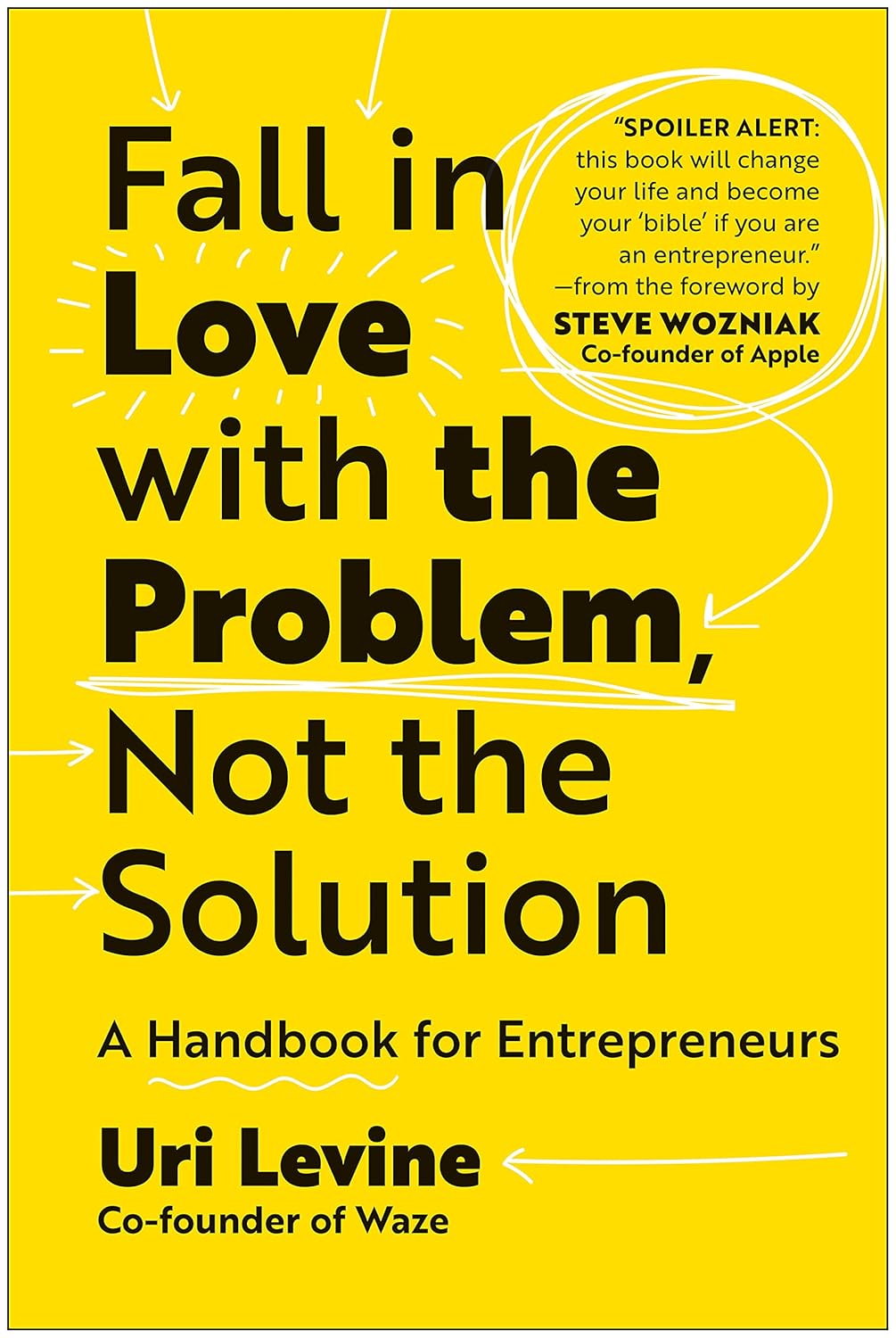
Unicorns—companies that reach a valuation of more than $1 billion—are rare. Uri Levine has built two.
And in Fall in Love with the Problem, Not the Solution, he shows you just how he did it.
As the cofounder of Waze—the world’s leading commuting and navigation app with more than 700 million users to date, and which Google acquired in 2013 for $1.15 billion—Levine is committed to spreading entrepreneurial thinking so that other founders, managers, and employees in the tech space can build their own highly valued companies.
Levine offers an inside look at the creation and sale of Waze and his second unicorn, Moovit, revealing the formula that drove those companies to compete with industry veterans and giants alike. He offers tips on:
Fall in Love with the Problem, Not the Solution offers mentorship in a book from one of the world’s most successful entrepreneurs, and empowers you to build a successful business by identifying your consumers’ biggest problems and disrupting the inefficient markets that currently serve them.
Continue readingWe might learn things quickly, but we often forget things at the same rate—and sometimes we need to remind ourselves of the things we’ve learned.
Here are 25 of those reminders that others taught me.
1. Struggle Is Good
Never say “I can’t take it anymore.” Say “Bring it on!”
2. Don’t Complain
Complaining is the biggest waste of time there is. Either do something about it, and if you can’t, shut up about it.
3. Spend Time With People You Love
That’s your family and best friends. If you don’t have a family, create one. Most people in life are only visitors. Family is for life.
4. Don’t Start A Relationship If You’re Not In Love
I’ve done this more than once. You kind of like someone and think: “We might as well give it a shot.” Not a good idea. You’re either in love, or you are not. Don’t fool yourself. It’s not fair to you and the other person.
5. Exercise Daily
I didn’t get this until recently. A healthy body is where you have to start everything in life. If you can’t build a healthy and strong body, what CAN you build in life?
6. Keep A Journal
No, keeping a journal is not for children. It helps you to become a better thinker and writer. “I don’t want to be a writer” you might think. Well, how many emails and texts do you send a day? Everybody is a writer.
7. Be Grateful
Say ‘thank you’ to everyone and everything. “Thank you for this beautiful day.” “Thankyou for your email.” “Thank you for being there for me.”
8. Don’t Care About What People Think
We all die in the end, do you really think it matters what people think of you?
9. Take More Risks
Don’t be such a wimp.
10. Pick An Industry, Not A Job
If you want to become good at something, you need to spend years and years doing that. You can’t do that if you hop from industry to industry. Pick an industry you love and start at the bottom. You will find the perfect role for you eventually.
11. Lead The Way
When you find yourself in a situation where everyone looks at each other, it’s time for you to lead. You‘re a leader when you decide to become one. There’s no initiation or a title. Just a decision.
12. Money Is Not The Most Important Thing
You have to train yourself not to care about money and focus on providing value instead. Also, don’t become too dependent on the stuff you own — otherwise, the stuff will own you.
Continue readingTo be clear: I’m not saying you should ask pointed questions that put others on the spot, like “How can you deliver 10% higher productivity?” or “Are you missing anything here?” The kind of questions leaders need to ask are those that invite people to come together to explore major new opportunities that your organization hasn’t identified yet. Here are some examples:
Focusing your questions on these kinds of new and big opportunities rather than on the existing activities of the organization can also help you to sidestep your fear that questioning will be seen as a sign of weakness, since there’s no way you could be expected to know the answers.
These broader questions also communicate that you have a sense of ambition, that you want to take the organization way beyond where it is today. And you can bolster your credibility by providing evidence of those long-term trends that underlie your question – for example, emerging technologies that are likely to offer new opportunities, or demographic shifts that will create some significant unmet needs among your customers.
– John Hagel III
The American dream has been a nightmare.
“The American dream is not possible for the Chinese, nor the Indians or the Vietnamese. The American dream is no longer possible for the Americans. We cannot continue to live like this. It is not a sustainable economy.”
“We have created a society in which the rich become richer and the poor become poorer, and in which we are so caught up in our own immediate problems that we cannot afford to be aware of what is going on with the rest of the human family or our planet Earth.
In my mind I see a group of chickens in a cage disputing over some seeds of grain, unaware that in a few hours they will be killed.”
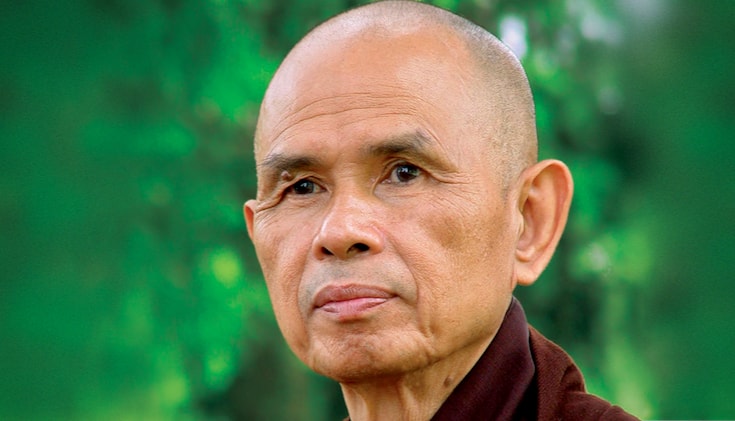
“There are among us men and women who are awakened, but it’s not enough; the masses are still sleeping. They cannot hear the ringing of the bells. We have built a system we cannot control. This system imposes itself on us, and we have become its slaves and victims. Most of us, in order to have a house, a car, a refrigerator, a TV, and so on, must sacrifice our time and our lives in exchange.”
Quotes from an article by Thich Nhat Hanh: The World We Have.

Commander’s Intent is a statement that defines the mission commander’s vision of a successful outcome: It must be clear, concise, and easily understood. It’s the mission’s big picture, the logline. The Commander’s Intent should be easy to identify. First, it answers the five Ws: who, what, when, where, and why? Second, it’s repeated at the beginning and end of the briefing. And third, it begins with the statement: “The single most important thing we must accomplish is…”
Brevity clarifies, and clarity inspires.
The Bezos Blueprint: Communication Secrets of the Worlds greatest salesman by Carmine Gallo
 ONE TUSK