We all carry both of these inside us. Graciousness flows from a place of security and compassion. Harshness often comes from fear and pain we haven’t examined. Both can speak truth—but only one opens doors. Research shows gracious communication builds real connection and lasting growth. The beautiful part? You get to choose, every single day, in every moment.
C.S. Lewis captured something beautiful: “Humility is not thinking less of yourself; it’s thinking of yourself less.”
Gracious people have made peace with themselves enough to genuinely see you. They’re not performing kindness—they’re genuinely curious about your life, your struggles, what matters to you.
Research: Leaders with gracious communication see higher employee engagement and retention. People with emotional intelligence naturally communicate with grace because they’ve learned to recognize pain in others.
Maya Angelou wrote: “There is no greater agony than bearing an untold story inside you.” When someone listens to you—really listens, honors your experience—it changes something. It says: you matter. That’s not weakness. That’s profound power.
Harshness: When We’re Hurting
Marshall Rosenberg understood something important: “All violence is the expression of unmet needs.”
Harsh people aren’t bad people. They’re usually people who are hurting. Maybe they were hurt themselves and learned that toughness means survival. Maybe they’re afraid—of weakness, of losing control, of not being enough. So they build armor out of sharp words.
Research: Harsh language activates the threat-detection center in people’s brains. When someone feels attacked, they can’t actually hear you—they’re just trying to protect themselves. Harsh parenting correlates with anxiety and depression in children, not growth. Harsh leadership gets short-term compliance but builds long-term resentment and burnout.
The painful truth: harshness usually comes from unhealed wounds, not strength. If you recognize yourself here, that’s not a character flaw. It’s an invitation to understand what’s really going on inside you.
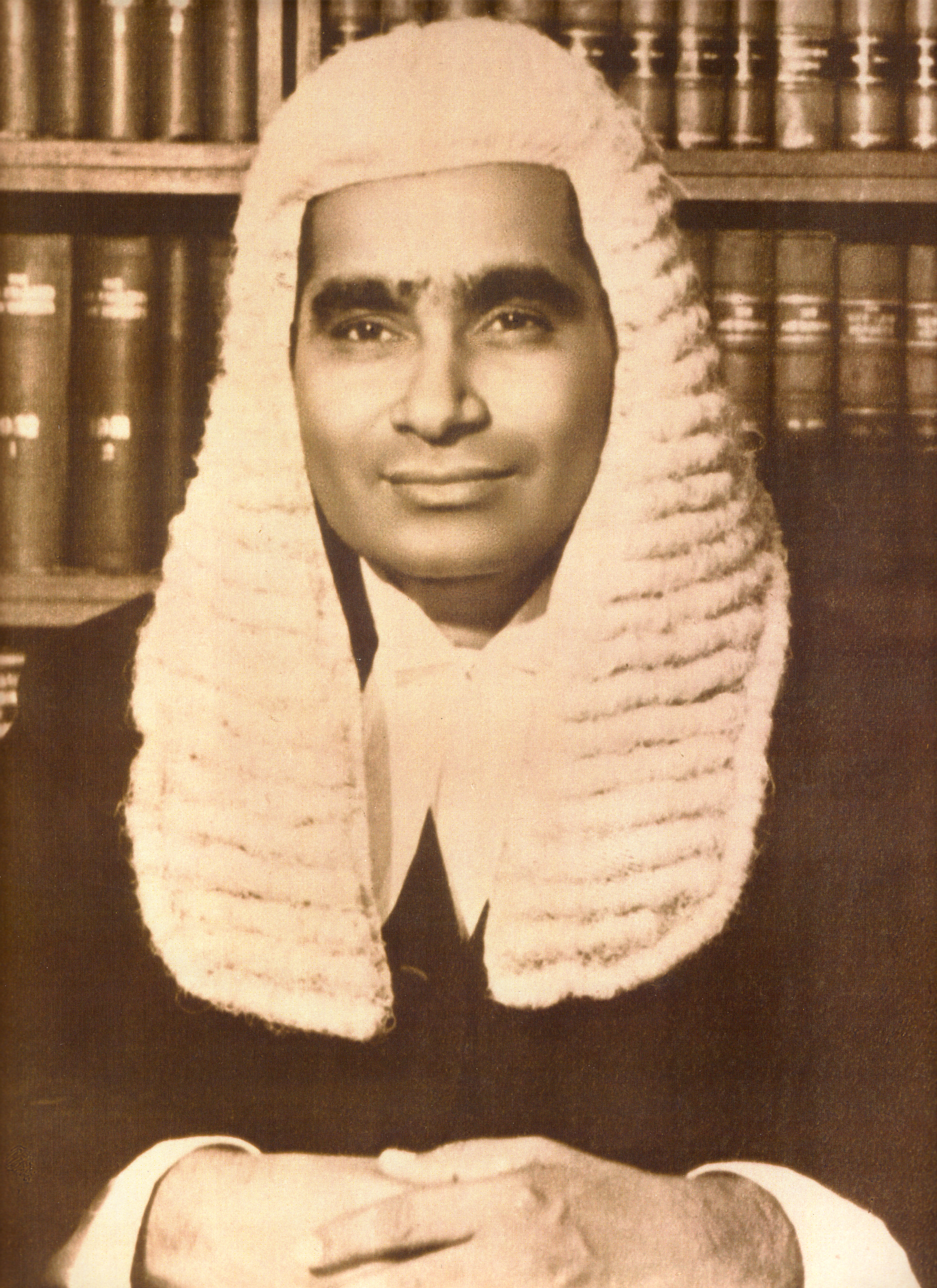
In the annals of Sri Lankan legal history, few figures command as much respect and admiration as S. Nadesan QC—a lawyer, judge’s counselor, human rights champion, and senator who lived by the principle that principle matters more than personal triumph. Though he passed away on December 21, 1986, his legacy continues to inspire lawyers and human rights activists across generations.
From Student to Advocate
Born on February 11, 1904, in Anaicottai, Jaffna, Somasundaram Nadesan’s early life hinted at the unconventional path he would take. A scholarship student at Royal College, Colombo, he abandoned his university studies—failing his Physics Practical exam—to pursue teaching, then law. His detour, however, was not a failure but a redirection toward his true calling.
Nadesan was admitted to the Bar in 1931 with no established connections in the legal profession. What he lacked in networks, he made up for in determination. A fortuitous case representing a chettiar in the Court of Requests became his breakthrough. His skillful handling of the case impressed the business community, and soon he had established a thriving practice through sheer merit and hard work.
The Making of a Lawyer
Even before his legal career began in earnest, Nadesan was shaping his philosophy. A founding member of the Jaffna Youth Congress (JYC) in 1924, he championed radical ideas—calling for poorna swaraj (complete independence) when southern political leaders were still content with dominion status. The JYC stood for a united, secular Ceylon committed to universal values and the elimination of caste barriers. This idealism would permeate everything Nadesan did as a lawyer.
Throughout his career, Nadesan developed formidable expertise spanning criminal law, civil law, constitutional law, labour law, human rights, and defamation. But it was not merely technical brilliance that set him apart—it was his incorruptible commitment to justice.
A Lawyer for the Voiceless
When trade unions faced industrial disputes, they turned to Nadesan. He represented them regularly, never accepting payment. It was, as one colleague noted, a genuine labour of love. Similarly, he took on cases defending sedition charges against trade unionists, challenging government overreach, and defending the fundamental rights of minorities.
In 1943, Nadesan secured the acquittal of Abdul Aziz, a trade unionist facing sedition charges, despite facing a hostile bench. His argument—that criticism of government anti-Indian policies did not constitute treason—demonstrated a lawyer unafraid to challenge authority when justice demanded it.
The Peter Pillai Foundation honored him in 1983 for his contributions to human rights and social justice. In his acceptance speech, Nadesan encapsulated his philosophy:
“The Rule of Law is the foundation of democracy. Democracy is a moral concept. It is something which is pledged to the defence of truth and justice. If we compromise with evil, with injustice, with untruth, we may gain a temporary advantage, but permanent danger will result.”
Landmark Cases: Standing for Principle
Nadesan’s career was marked by several landmark judgments that shaped constitutional jurisprudence:
Kodakan Pillai v. Mudanayake challenged the disenfranchisement of Indian Tamils under new citizenship laws. Nadesan successfully argued that the legislation violated the “solemn balance of rights” in the Soulbury Constitution protecting minorities—though the Privy Council ultimately overturned the victory.
Thiagaraja v Karthigesu established the courts’ authority to issue declarations regarding personal status—a foundational principle in family law.
In the Press Council case, Nadesan argued that the Press Council Bill was fundamentally inconsistent with the First Republican Constitution. The Constitutional Court’s Chairman observed it was the most important case he’d heard during his tenure.
Nadesan’s defence in Saturday Review cases protected freedom of speech and expression during times of government pressure and emergency regulations. Though the Supreme Court ultimately dismissed the petitions, these cases became important legal reference points in defending press freedom.
Perhaps most dramatically, during the turmoil of Black July 1983, when violence against Tamils raged across the country, Nadesan insisted on attending court for the pronouncement of judgment in Hewamanne v. de Silva. “I have never kept judges waiting,” he declared. When he arrived at Hulftsdorp, no judges were present—they arrived an hour later, clearly after being informed of his attendance.
The Judge’s Counsel
What set Nadesan apart was not just his legal acumen but his character. Esteemed seniors of the Bar, including Dr. Colvin R. de Silva, fondly called him “Boss”—a term capturing both respect for his judgment and affection for his character.
Chief Justice Sharvananda said of him: “It can be said of only Mr. Nadesan that he was an all-rounder, quite at home whether it be in the Privy Council, Supreme Court, Election Court, the Income Tax Board of Review or Industrial Arbitrator or Parliamentary Committee.”
For nearly nineteen years, Nadesan served as standing counsel for the Lake House group of newspapers. The newspaper’s editor, Esmond Wickremesinghe, had “implicit faith in Nadesan as a lawyer. His tactics, his court craft—all suited the limitless situations that arose in journalism.”
A Senator’s Voice
Elected to the Senate in 1947 as an independent with no party affiliation, Nadesan took his responsibilities seriously. His speeches were incisive and illuminating. In 1952, following a violent hartal, he delivered what historian James Manor described as “a devastating assault on the government’s conduct during the hartal and on the draconian public security legislation which it had rushed through parliament.”
Remarkably, Nadesan personally visited refugee camps to verify the welfare of displaced people—risking his safety when a mob stopped cars searching for Tamils. Only his Sinhalese driver’s quick thinking saved him from harm.
After the 1971 insurrection, Nadesan used his curfew pass to gather accurate information about what had occurred. His subsequent Senate speech—delivered 39 days after the outbreak—reflected his personal anguish and passion for truth. According to some accounts, this speech was a prelude to the formation of the Civil Rights Movement in 1971.
In 1954, he delivered a forceful speech condemning the forcible removal of Rhoda Miller de Silva, an American citizen, who was taken to the airport and placed on a plane without her husband’s knowledge. His emphasis on fundamental rights and family life helped galvanize international support for her return.
The Man Behind the Barrister
Unlike many senior lawyers, Nadesan was generous to his juniors, acknowledging their efforts and even praising them in court. When C. Ranganathan entered the Bar four years after Nadesan, he found a mentor ready to help him establish himself.
A chronic diabetic in later life, Nadesan recovered from a coma by adopting a rigorous regime of exercise and dietary discipline. His mantra became simple: “Eat fruits, vegetables, and nuts.” Those visiting his chambers were served carrot or pineapple juice and nuts for refreshment.
He lived simply but deliberately, treating work as worship. Whether he succeeded or failed in a case mattered less than the principle he stood for. As one admirer wrote: “He lived—and died—on his feet.”
A Life Guided by Philosophy
Nadesan lived by the philosophy of the Bhagavad Gita, encapsulated in Lord Krishna’s words to Arjuna: “To action man has a right, but not to the fruits thereof.” He met success and defeat with quiet equanimity, believing that struggling with integrity was more important than personal triumph.
He was fundamentally a man of conscience. When charged with breaching parliamentary privilege for his articles criticizing Parliament’s treatment of the Ceylon Observer editor, he was acquitted. His experience and foresight in understanding the separation of powers ultimately validated his defence.
Legacy: An Enduring Beacon
S. Nadesan died at age 81 in vibrant health, physically fit, and intellectually alert—a man who had lived on his terms, guided by principle rather than expediency. Though forty years have passed since his death, his legacy remains luminous:
He demonstrated that excellence in law requires not just technical brilliance but moral courage
He showed that standing for unpopular causes strengthens rather than weakens the rule of law
He proved that a lawyer can serve both the wealthy and the voiceless, and that justice demands both
He lived the democratic principle that the foundation of a free society is the rule of law—not the rule of convenience
As Sri Lanka continues to grapple with questions of justice, human rights, and constitutional governance, Nadesan’s life remains a master class in principled action. He reminds us that what we stand for matters infinitely more than what we gain from standing.
In the end, Nadesan was what the law aspires to produce but so rarely achieves: an extraordinary human being who used his gifts not for personal aggrandizement but for the pursuit of truth and justice. His legacy is not measured in victories won, but in principles upheld—and in the countless lives touched by a lawyer who believed, without reservation, that integrity is the highest calling.
S. Nadesan QC (1904-1986) remains an inspiration to all who believe that law is a noble profession, and that courage in defence of justice is the highest form of courage.
Soulbury Constitution (1947). Constitution of Ceylon (Sri Lanka).
Ceylon Parliamentary Elections (Amendment) Act, 48 of 1949.
Citizenship Act, No. 18 of 1948.
First Republican Constitution of Sri Lanka (1972).
Sixth Amendment to the Constitution of Sri Lanka (1983).
Parliamentary (Powers and Privileges) Act.
Emergency (Miscellaneous Provisions and Powers) Regulations (1983).
Landmark Cases
Abdul Aziz v. The Crown, (1943) – Sedition charges defense.
E.L. Senanayake v. Navaratne, Privy Council – Election petition jurisdiction case.
Kodakan Pillai v. Mudanayake – Citizenship rights and electoral qualification case (Soulbury Constitution challenge).
Thiagaraja v. Karthigesu – Declaratory remedy regarding personal status.
Press Council Case, Constitutional Court – Freedom of the press and constitutionality of Press Council Bill.
Ratanasaro Thero v. Udugampola – Fundamental rights violations by police (Pavidi Handa case).
Visuvalingam v. Liyanage – Saturday Review cases; fundamental rights and freedom of expression.
Hewamanne v. de Silva – Parliamentary privilege and contempt of court.
Attorney General v. Samarakkody – Parliamentary privilege case.
Historical & Contextual References
Manor, J. (1989). The Expedient Utopian: Bandaranaike and Ceylon. Cambridge University Press. [Referenced for the 1952 hartal speech description]
Wickremesinghe, S. (1996). The Road to Justice: Reflections on the Legal Profession in Sri Lanka. [Context for CRM formation, 1971]
Mason, G. George Mason’s Memoirs – Referenced for Lake House newspapers and Esmond Wickremesinghe’s relationship with Nadesan.
Denning, M. The Road to Justice – Lectures on courage in the legal profession, cited for the Thomas Erskine example.
Related Historical Events
Black July (1983) – Communal violence in Sri Lanka; context for Nadesan’s court appearance during the Hewamanne v. de Silva case.
The 1971 Insurrection in Sri Lanka – Context for Nadesan’s Senate speech and founding of the Civil Rights Movement.
Pavidi Handa (‘Voice of Clergy’) Movement (1982) – Referendum campaign against parliamentary term extension.
Institutional Recognition
Peter Pillai Foundation. (1983). Award for Contribution to Human Rights and Social Justice – Presented to S. Nadesan QC.
Additional Context
Sanmugathasan, N. Recollections of S. Nadesan QC – Trade union legal representation.
Ranganathan, C. Q.C. Memoirs – Entry into the Bar and mentorship from Nadesan.
de Silva, A.S. Recollections of S. Nadesan QC. Ceylon Daily News, December 21, 1996. [Referenced for sponsorship to Dharmasoka College]
Moldrich, D. “He lived – and died – on his feet.” Memorial Tribute, 1986. [Referenced for biographical reflection]
Sharvananda, Chief Justice. Judicial observations on S. Nadesan QC’s legal stature and versatility.
Notes on Sources
This blog post is based primarily on the comprehensive tribute written by Dr. Reeza Hameed, published in Colombo Telegraph on December 21, 2025, which draws on personal recollections, judicial observations, historical records, and documented cases. While the article itself serves as the foundational source, the references listed above indicate the primary legal documents, constitutional texts, landmark cases, and contextual historical events that are either directly cited in or relevant to understanding Nadesan’s life and legacy.
The cases cited represent milestones in Sri Lankan constitutional and legal jurisprudence, and where specific case details are referenced in the blog post, they are sourced from the legal documentation and historical records cited above.
Based on decades of Warren Buffett’s shareholder letters, here are the top lessons that recur throughout his writings:
1. The Power of Long-Term Compounding
Buffett emphasizes thinking in decades rather than months or years, noting that short-term market movements are irrelevant to compounding wealth. He often references Albert Einstein’s statement that “compound interest is the eighth wonder of the world” and urges reinvesting profits rather than seeking immediate returns. He reminds shareholders that “a single winning decision can make a breathtaking difference over time,” reinforcing the belief that a few exceptional investments held over decades can drive monumental value.
2. Value Investing with a Margin of Safety
Key themes include avoiding market speculation, evaluating intrinsic business value, and maintaining a margin of safety. In his 1996 letter, Buffett stated: “Your goal as an investor should simply be to purchase, at a rational price, a part interest in an easily-understandable business whose earnings are virtually certain to be materially higher five, ten, and twenty years from now.”
3. Focus on Quality Businesses with Durable Economic Moats
Over six decades, Buffett has emphasized prioritizing high-quality businesses with durable competitive advantages, as seen in Berkshire’s holdings like Apple, Coca-Cola and American Express. In analyzing 1,000 companies, only 25 met tests of economic excellence with average returns on equity over 20% and no year below 15%. These business “superstars” were also stock market superstars, and most sold non-sexy products in much the same manner as they did years prior, suggesting that making the most of an already strong business franchise produces exceptional returns.
4. Disciplined Capital Allocation
Buffett’s letters highlight the mistakes companies make in capital allocation, such as overpaying for acquisitions or issuing debt irresponsibly. He warns against empire-building by CEOs who make acquisitions for the sake of expansion rather than shareholder value. Buffett wrote in 2016: “Every decade or so, dark clouds will fill the economic skies, and they will briefly rain gold. When downpours of that sort occur, it’s imperative that we rush outdoors carrying washtubs, not teaspoons.”
5. Integrity and Quality Management
Buffett values integrity highly in business leaders. He famously stated: “In looking for people to hire, you look for three qualities: integrity, intelligence and energy. And if they don’t have the first, the other two will kill you.” When evaluating a company, investors should pay attention to management’s track record, compensation structure and corporate culture.
6. Patience and Avoiding Market Noise
In his 1984 letter, Buffett famously said, “In the short term, the market is a voting machine but in the long term, it is a weighing machine”—a timeless reminder not to get swayed by market hype and to focus on the fundamental value of a business. Buffett reaffirms that short-term noise is irrelevant; compounding wins in the end.
7. Simplicity and Understanding What You Own
Buffett prefers to keep investments simple, especially during complex market periods. During the dotcom boom, he avoided companies he didn’t understand, emphasizing that investors should focus on businesses that are easily understandable. His ability to distill complex financial concepts into understandable, even delightful prose—as if writing as a wise mentor rather than a distant CEO—is reflected in all his communications.
These five buckets are interconnected – filling one helps to fill another – and they are generally filled in order from left to right. We usually start our professional life acquiring knowledge (school, university, etc.), and when this knowledge is applied, we call it a skill. When you have knowledge and skills you become professionally valuable to others and your network grows. Consequently, when you have knowledge, skills and a network, your access to resources expands, and once you have knowledge, skills, a valuable network and resources, you will undoubtedly earn a reputation.
The “lively” (The New Yorker), “convincing” (Forbes), and “riveting pick-me-up we all need right now” (People) that proves humanity thrives in a crisis and that our innate kindness and cooperation have been the greatest factors in our long-term success as a species.
If there is one belief that has united the left and the right, psychologists and philosophers, ancient thinkers and modern ones, it is the tacit assumption that humans are bad. It’s a notion that drives newspaper headlines and guides the laws that shape our lives. From Machiavelli to Hobbes, Freud to Pinker, the roots of this belief have sunk deep into Western thought. Human beings, we’re taught, are by nature selfish and governed primarily by self-interest.
But what if it isn’t true? International bestseller Rutger Bregman provides new perspective on the past 200,000 years of human history, setting out to prove that we are hardwired for kindness, geared toward cooperation rather than competition, and more inclined to trust rather than distrust one another. In fact this instinct has a firm evolutionary basis going back to the beginning of Homo sapiens.





 ONE TUSK