We all carry both of these inside us. Graciousness flows from a place of security and compassion. Harshness often comes from fear and pain we haven’t examined. Both can speak truth—but only one opens doors. Research shows gracious communication builds real connection and lasting growth. The beautiful part? You get to choose, every single day, in every moment.
C.S. Lewis captured something beautiful: “Humility is not thinking less of yourself; it’s thinking of yourself less.”
Gracious people have made peace with themselves enough to genuinely see you. They’re not performing kindness—they’re genuinely curious about your life, your struggles, what matters to you.
Research: Leaders with gracious communication see higher employee engagement and retention. People with emotional intelligence naturally communicate with grace because they’ve learned to recognize pain in others.
Maya Angelou wrote: “There is no greater agony than bearing an untold story inside you.” When someone listens to you—really listens, honors your experience—it changes something. It says: you matter. That’s not weakness. That’s profound power.
Harshness: When We’re Hurting
Marshall Rosenberg understood something important: “All violence is the expression of unmet needs.”
Harsh people aren’t bad people. They’re usually people who are hurting. Maybe they were hurt themselves and learned that toughness means survival. Maybe they’re afraid—of weakness, of losing control, of not being enough. So they build armor out of sharp words.
Research: Harsh language activates the threat-detection center in people’s brains. When someone feels attacked, they can’t actually hear you—they’re just trying to protect themselves. Harsh parenting correlates with anxiety and depression in children, not growth. Harsh leadership gets short-term compliance but builds long-term resentment and burnout.
The painful truth: harshness usually comes from unhealed wounds, not strength. If you recognize yourself here, that’s not a character flaw. It’s an invitation to understand what’s really going on inside you.
As a daily discipline for at least a week, take time for prayer. Some days it may be for only a minute or two; on other occasions it may be for more lengthy periods. Experiment with the four types of prayer:
Confession: Recognizing and admitting, without guilty feelings, the current state of your life
Thanksgiving: Expressing appreciation for the blessings of your life
Petition: Out of the spirit of your highest ideal, asking for what you feel you need
Praise: Communicating the wonder and awe you feel when you consider the Creator.
By the end of the week, notice whether you can observe any changes in the amount of time and energy you spend on worrying.
Mark Thurston Phd and Christopher Fazel The Edgar Cayce Handbook for Creating Your Future
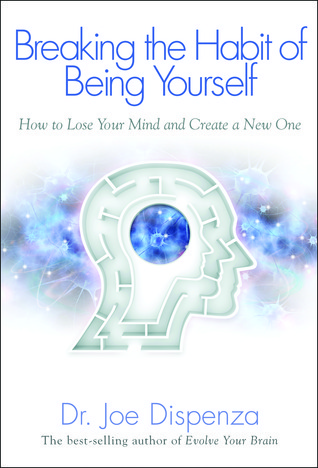
You are not doomed by your genes and hardwired to be a certain way for the rest of your life. A new science is emerging that empowers all human beings to create the reality they choose. In Breaking the Habit of Being Yourself, renowned author, speaker, researcher, and chiropractor Dr. Joe Dispenza combines the fields of quantum physics, neuroscience, brain chemistry, biology, and genetics to show you what is truly possible. Not only will you be given the necessary knowledge to change any aspect of yourself, you will be taught the step-by-step tools to apply what you learn in order to make measurable changes in any area of your life. Dr. Joe demystifies ancient understandings and bridges the gap between science and spirituality. Through his powerful workshops and lectures, thousands of people in 25 different countries have used these principles to change from the inside out. Once you break the habit of being yourself and truly change your mind, your life will never be the same!
Journaling is impactful because it creates a unique space where multiple powerful psychological processes converge:
It externalises internal chaos. The simple act of moving thoughts from your mind to paper transforms abstract worries into manageable, concrete problems. This shift from internal rumination to external observation gives you psychological distance and clarity you can’t achieve through thinking alone.
It activates neuroplasticity (brain’s ability to change and adapt due to experience). Writing engages both analytical and creative brain regions simultaneously, literally rewiring neural pathways. The physical act of writing (especially by hand) strengthens memory formation and emotional processing in ways that typing or just thinking cannot match.
It breaks the illusion of permanence. When you write down fears, anger, or confusion, you often discover they’re more temporary and changeable than they felt in your head. Seeing “I’m terrible at everything” on paper reveals its absurdity in a way that thinking it doesn’t.
It creates a witness to your life. Journaling makes you both the observer and the observed, developing a kind of compassionate self-awareness. You begin treating yourself with the same curiosity and kindness you’d show a friend telling you their story.
It builds emotional resilience. Regular journaling literally practices the skill of processing difficult emotions. Each time you write through pain, confusion, or challenge, you strengthen your capacity to handle future difficulties.
It reveals your authentic voice. Without audience or judgment, your true thoughts, values, and desires emerge. Many people discover who they really are through journaling, separate from who they think they should be.
It creates forward momentum. Writing clarifies not just what is, but what could be, naturally leading to insights about next steps and positive change.
“The most important thing you learn from writing is about yourself.” — Ray Bradbury








 ONE TUSK