Month: June 2024
Thought of the Week – 24th June 2024(2)

Thought of the Week – 24th June 2024

Book of the Month – June 2024: Fall in Love with the Problem, not the Solution by Uri Levine
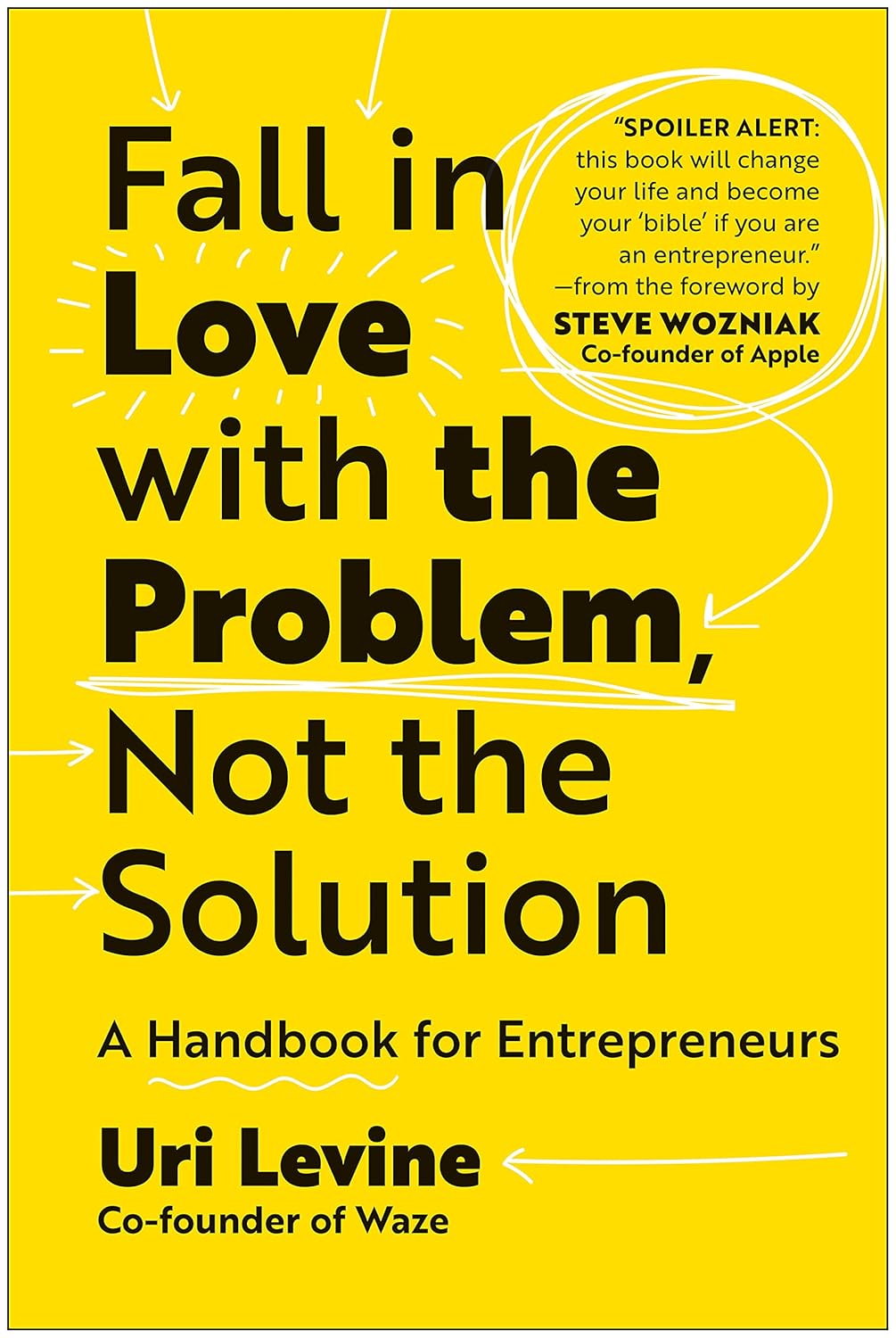
Unicorns—companies that reach a valuation of more than $1 billion—are rare. Uri Levine has built two.
And in Fall in Love with the Problem, Not the Solution, he shows you just how he did it.
As the cofounder of Waze—the world’s leading commuting and navigation app with more than 700 million users to date, and which Google acquired in 2013 for $1.15 billion—Levine is committed to spreading entrepreneurial thinking so that other founders, managers, and employees in the tech space can build their own highly valued companies.
Levine offers an inside look at the creation and sale of Waze and his second unicorn, Moovit, revealing the formula that drove those companies to compete with industry veterans and giants alike. He offers tips on:
- Firing and hiring
- Disrupting “broken” markets
- Raising funding
- Understanding your users
- Reaching product market fit
- Making scale-up decisions
- Going global
- Deciding when to sell
Fall in Love with the Problem, Not the Solution offers mentorship in a book from one of the world’s most successful entrepreneurs, and empowers you to build a successful business by identifying your consumers’ biggest problems and disrupting the inefficient markets that currently serve them.
Continue readingThought of the Week – 17th June 2024 (2)

Thought of the Week – 17th June 2024

Thought of the Week – 10th June 2024(2)

Never enter a relationship without having first created value in that relationship. Never stop creating value and nurturing your relationships. Always ask “What’s in it for them?” rather than “What’s in it for me?” Know what the other person cares about. Get to know them, their context, and their goals. Give relevant value. Don’t waste their time. Do your homework. If you want to develop transformational relationships, then approach relationships in a transformational, rather than transactional, way. Bring a result to the table. Make the pie bigger for everyone involved. Don’t come with big promises of future results. Bring immediate results. Don’t promise what you can’t deliver. Be a generous giver who is truly committed to service and growth, not status. Be nice to the people you meet on the way up because they are the same people you meet on the way down. Be grateful in large and small ways to the people in your life and you’ll attract incredible abundance.
–Dan Sullivan
Thought of the Week – 10th June 2024 (1)

Check regularly on the negative suggestions that people make to you. You do not have to be influenced by destructive heterosuggestion. All of us have suffered from it in our childhood and in our teens. If you look back, you can easily recall how parents, friends, relatives, teachers, and associates contributed in a campaign of negative suggestions. Study the things said to you, and you will discover much of it was in the form of propaganda. The purpose of much of what was said was to control you or instill fear into you. This heterosuggestion process goes on in every home, office, factory, and club. You will find that many of these suggestions are for the purpose of making you think, feel, and act, as others want you to and in ways that are to their advantage.
-Joseph Murphy
Thought of the Week – 3rd June 2024 (2)
Imagine a zebra on the savannah, where the most stressful event will be to flee from a lion for survival. Once the immediate danger has passed, it will settle and calm down quickly. Humans, on the other hand, can remain traumatized by imagining and ruminating on what might have happened. Our capacity to anticipate, imagine, or ruminate can stimulate the threat system continuously, leading to effects that are detrimental to both our physical and mental health.
-Agnes M.F. Wong
Thought of the Week – 3rd June 2024

His Holiness the Dalai Lama noted that “Compassion is not religious business; it is human business. It is not a luxury . . . it is essential for human survival.” He later wrote, “However capable and skilful an individual may be, left alone, he or she will not survive. However vigorous and independent one may feel during the most prosperous periods of life, when one is sick or very young or very old, one must depend on the support of others. . . . I believe that at every level of society—familial, tribal, national, and international—the key to a happier and more successful world is the growth of compassion.”
-Roshi Joan Halifax
 ONE TUSK