Book of the Month – December 2021

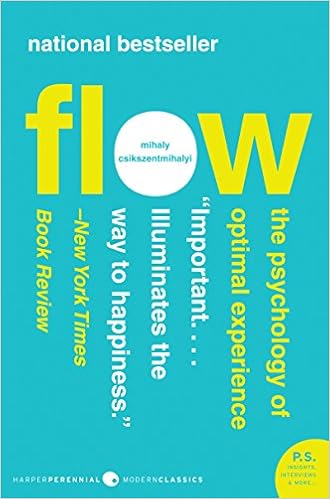
Psychologist Mihaly Csikszentmihalyi’s famous investigations of “optimal experience” have revealed that what makes an experience genuinely satisfying is a state of consciousness called flow. During flow, people typically experience deep enjoyment, creativity, and a total involvement with life. In this new edition of his groundbreaking classic work, Csikszentmihalyi demonstrates the ways this positive state can be controlled, not just left to chance. Flow: The Psychology of Optimal Experience teaches how, by ordering the information that enters our consciousness, we can discover true happiness and greatly improve the quality of our lives.
Continue reading

What you cherish , you hold

“We would like to say one last thing about cherishing. What you cherish is something that you are aligned to, in one way or another. What you cherish, you hold. Can you imagine, for a moment, if you were the thing to be cherished, exactly as you are, in this moment in time, exactly as you stand before yourself? May you still be treasured, may you be cherished, may you be known in love. If you will allow us now, we will surround you in love and we will open your frequency to a whisper: You are loved, regardless of what you have been taught, how you have been treated, how you have treated yourself. You are deeply loved as are all men, as are all women, as are all. Simply allow, right now, the self to receive and to be still and know. I know who you are, I know what you are, I know how you serve. And I am one with the power that I am with in frequency, in love, and in my own worth.”

– The Book of Knowing and Worth: A Channeled Text by Paul Selig

The real ‘You’ Comes and Goes…..

“You cannot catch hold of it, nor can you get rid of it. In not being able to get it, you get it. When you speak it is silent. When you are silent it speaks.”

Zen Poem

You can’t make radical changes in the pattern of your life until you begin to see yourself exactly as you are now….

Photo by Clay Banks 

You can’t make radical changes in the pattern of your life until you begin to see yourself exactly as you are now. As soon as you do that, changes will flow naturally. You don’t have to force anything, struggle, or obey rules dictated to you by some authority. It is automatic; you just change. But arriving at that initial insight is quite a task. You have to see who you are and how you are without illusion, judgment, or resistance of any kind. You have to see your place in society and your function as a social being. You have to see your duties and obligations to your fellow human beings, and above all, your responsibility to yourself as an individual living with other individuals. And finally, you have to see all of that clearly as a single unit, an irreducible whole of interrelationship. It sounds complex, but it can occur in a single instant. Mental cultivation through meditation is without rival in helping you achieve this sort of understanding and serene happiness.

Mindfulness in Plain English: 20th Anniversary Edition by Henepola Gunaratana

Book of the Month – September 2021 : Essays on the Gita by Sri Aurobindo

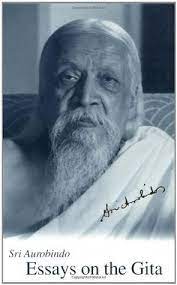
“The peculiarity of the Gita among the great religious books of the world is that it does not stand apart as a work by itself, the fruit of the spiritual life of a creative personality like Christ, Mohammed or Buddha or of an epoch of pure spiritual searching like the Veda and Upanishads, but is given as an episode in an epic history of nations and their wars and men and their deeds and arises out of a critical moment in the soul of one of its leading personages face to face with the crowning action of his life, a work terrible, violent and sanguinary, at the point when he must either recoil from it altogether or carry it through to its inexorable completion…. The teaching of the Gita must therefore be regarded not merely in the light of a general spiritual philosophy or ethical doctrine, but as bearing upon a practical crisis in the application of ethics and spirituality to human life.” – Sri Aurobindo (Essays on the Gita pp.9)

Continue reading

No Death No Fear

image
Thích Nhất Hạnh

“The day my mother died I wrote in my journal, “A serious misfortune of my life has arrived.” I suffered for more than one year after the passing away of my mother. But one night, in the highlands of Vietnam, I was sleeping in the hut in my hermitage. I dreamed of my mother. I saw myself sitting with her, and we were having a wonderful talk. She looked young and beautiful, her hair flowing down. It was so pleasant to sit there and talk to her as if she had never died. When I woke up it was about two in the morning, and I felt very strongly that I had never lost my mother. The impression that my mother was still with me was very clear. I understood then that the idea of having lost my mother was just an idea. It was obvious in that moment that my mother is always alive in me.

Continue reading

There are many who do not care about Name or Fame they do whatever needs to be done ……

The story of Hanuman and Valmiki


When Valmiki completed his Ramayana, Narada wasn’t impressed. ‘It is good, but Hanuman’s is better,’ he said. 

‘Hanuman has written the Ramayana too?!’ Valmiki didn’t like this at all and wondered whose Ramayana was better. So he set out to find Hanuman. 

At Kadali-Vana, grove of plantains, he found Ramayana inscribed on seven broad leaves of a banana tree.
He read it and found it to be perfect. The most exquisite choice of grammar and vocabulary, precise and melodious. He couldn’t help himself and started to cry.

‘Is it so bad?’ asked Hanuman
‘No, it is so good’, said Valmiki.

‘Then why are you crying?’ asked Hanuman.
‘Because after reading your Ramayana, no one will read mine,’ replied Valmiki.

Hearing this Hanuman simply tore up the seven banana leaves stating, ‘Now no one will ever read Hanuman’s Ramayana.’

hanumanji


Continue reading